

Table of Contents
Introduction
Curry leaves, also named sweet neem leaves or kadi patta, are fragrant leaves normally used in Indian cuisine to add flavor and fragrance to different dishes. They come from the curry tree or plant (Murraya koenigii), which is aboriginal to India and Sri Lanka.
These leaves have a distinctly citrusy and little bitter taste and are often utilized in South Indian cuisine, particularly in curries, chutneys, rice dishes, and soups. They are cooked in hot oil at the start of cooking to release their flavor and aroma, improving the dish’s taste.
Apart from their culinary uses, they are also believed to have some health advantages. They are prosperous in antioxidants, vitamins such as vitamins A, B, and C, & also minerals like calcium, phosphorus, and iron. These leaves are also called for their potential medicinal properties, including aiding digestion, boosting hair health, and exhibiting anti-inflammatory effects.
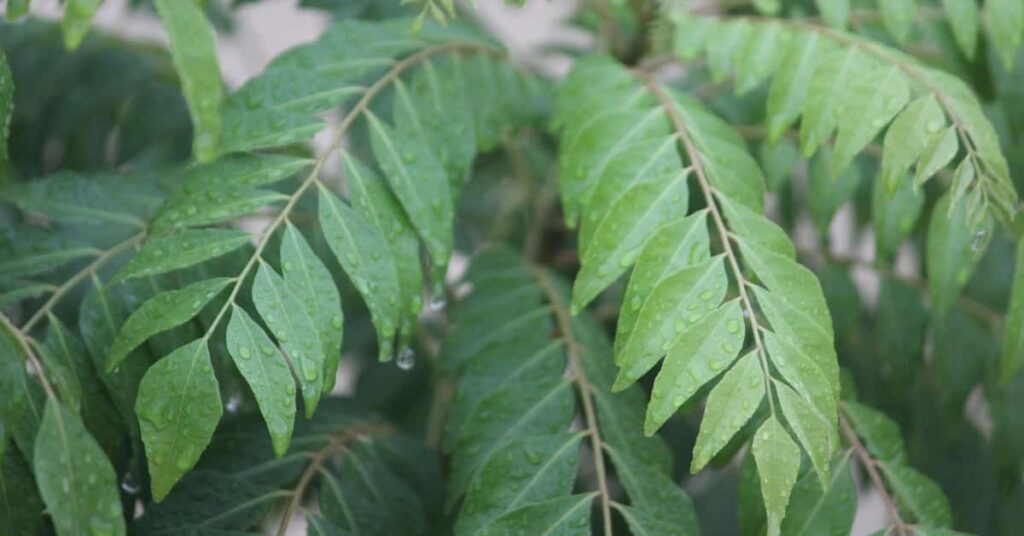
Curry leaves
Curry leaves are a part of a little deciduous aromatic shrub, scientifically called Murraya koenigii, belonging to the family Rutaceae. It can be considered a natural medicinal plant. South Asia is home to this plant, which is found in nations such as Sri Lanka, China, Bangladesh, and India. In India, it is found at the base of the Himalayas and in Maharashtra, Kerala, Tamil Nadu, and Assam.
The plant has vibrant leaves that grow through-out spring, summer, and monsoon, & fall off in winter. There are considerations in Tamil and Kannada literature that describe Murraya koenigii as ‘Kari, ‘which suggests ‘spiced sauce’ utilized as a flavouring agent for vegetables. It is identified as the most popular spice and seasoning in India. It is typically known as Kadipatta or Mitha neem in Hindi, Karuvepillei in Tamil, and Kariveppilee in Malayalam.
Nutritional Profile (Approximate per 100g of fresh leaves):
- Calories: 108 kcal
- Carbohydrates: 18.7 g
- Fiber: 6.4 g
- Protein: 6.1 g
- Calcium: 830 mg (Excellent source)
- Iron: 0.93 mg
- Phosphorus: 57 mg
- Vitamin A (as beta-carotene): 7560 µg (Very high)
- Vitamin C: 4 mg

Curry leaves benefits
1. Powerful Antioxidant Properties:
Curry leaves are very rich in plant elements like alkaloids, glycosides, & phenolic compounds that act as powerful antioxidants. These compounds, such as mahanimbine, help neutralize harmful free radicals in your body, thereby lowering oxidative stress. High oxidative stress is linked to chronic diseases like heart disease and cancer. Animal investigations have shown that curry leaf extract may protect against oxidative harm to the brain, heart, and kidneys.
2. Aids Weight Loss:
These leaves aid weight management by enhancing digestion, lowering cholesterol, & potentially enhancing metabolism.
3. May Help Manage Diabetes:
Research shows that this leaf may help control blood sugar. They contain compounds that may slow down the breakdown of starch into glucose, preventing sudden spikes in blood sugar levels. Animal investigations have demonstrated that curry leaf extract can significantly reduce high blood sugar levels & improve insulin activity. Some human studies using curry leaf powder have also shown promising results in controlling fasting blood glucose levels in people with conditions such as type 2 diabetes.
4. Anti-inflammatory Properties:
Compounds found in these leaves possess anti-inflammatory properties that may help lower inflammation in your body, providing relief from various inflammatory conditions or issues.
5. Supports Heart Health:
Adding curry leaves to your diet may improve heart health by addressing risk factors and conditions such as high cholesterol and triglycerides. Animal studies suggest that curry leaf extract can help lower “bad” LDL cholesterol & triglyceride levels. The antioxidants in the leaves also help prevent cholesterol oxidation, a key step in the formation of arterial plaque.
6. Improves Skin Health:
Curry leaves are great in nutrients such as vitamin E, which may assist in nourishing the skin, improving its texture, & protecting against skin-related issues.
7. Promotes Hair Health:
While more rigorous human investigations are needed, anecdotal evidence and some research suggest that curry leaves are beneficial for hair. They are very rich in antioxidants, amino acids, & beta-carotene, that may strengthen hair follicles and reduce hair fall. The antifungal and antibacterial properties may also help combat dandruff and scalp infections. Traditional practices involve using curry leaf-infused oil to nourish the scalp and potentially delay premature graying.
8. Supports Liver Health:
They have antioxidants that support liver function by detoxifying your body & promoting the elimination of toxins, thereby supporting overall liver health.
9. Aids Digestion:
They have been utilized in traditional medicine to treat digestive conditions. They are believed to have mild and light laxative properties and can help stimulate digestive enzymes, which may aid digestion and reduce bloating and gas. They have also been used to treat diarrhea and constipation.
10. Potential Anti-Cancer Effects:
Some studies conducted in test tubes and animals have shown that curry leaf extract may have anti-cancer properties. Compounds like mahanimbine have demonstrated the ability to inhibit the growth or development of specific cancer cells & induce apoptosis (programmed cell death) in breast cancer cells. However, more human research is needed in this area.
11. Boosts Eye Health:
They are an excellent source of Vitamin A, especifically in the form of beta-carotene. Vitamin A is essential for maintaining great vision & protecting the cornea. Adequate intake may help prevent conditions such as night blindness and dry eyes.
12. Neuroprotective Properties:
The antioxidants in these leaves may help protect the brain from oxidative harm, that is connected to neurodegenerative diseases or issues like Alzheimer’s. Animal investigations suggest that curry leaf extracts may have a protective effect on the nervous system.

How to Use Curry Leaves:
- Culinary: The most familiar way is to season them in hot oil or ghee at the start of cooking dishes like curries, dals, rice, and chutneys. This releases their aroma and flavor.
- Tempering/Tadka: In Indian cuisine, a common practice known as “tempering” or “tadka” involves frying spices in oil, butter, or ghee & adding them to dishes or food at the end of cooking to enrich flavor. Curry leaves are often utilized in tadka to add an extra layer of fragrance and taste to the dish.
- Powder: Dried curry leaves can be ground into a powder and added to spice mixes, soups, or taken with warm water.
- Herbal Tea: It can be used to create herbal tea. Cooking fresh curry leaves in water and straining the liquid can make a healthy, aromatic tea. Some individuals enjoy it for its potential health advantages.
- Chewing: Chewing a few fresh leaves daily on an empty stomach is considered beneficial for blood sugar control and digestion.
- Health Advantages: They are very rich in antioxidants, vitamins (for example, A, B, C, & E), and minerals. They are considered to have various health advantages, including aiding digestion, promoting hair health, lowering cholesterol levels, managing diabetes, and exhibiting anti-inflammatory properties. Nevertheless, more scientific research is required to confirm many of these potential health advantages.
- Medicinal Usage: In traditional medicine systems like Ayurveda, these leaves have been utilized for their potential medicinal properties. They are supposed to support digestive health, improve eyesight, & enhance overall well-being. Nevertheless, it’s necessary to consult a healthcare professional before utilizing them for medicinal purposes.
- Aromatherapy: The aroma of curry leaves is used often in aromatherapy for its relaxing and stress-relieving properties. Some individuals find the scent soothing and utilize it in essential oil diffusers and aromatherapy treatments.
- Hair Oil and hair care: Infuse coconut or olive oil with curry leaves by heating them together, then cool and apply to the hair and scalp.
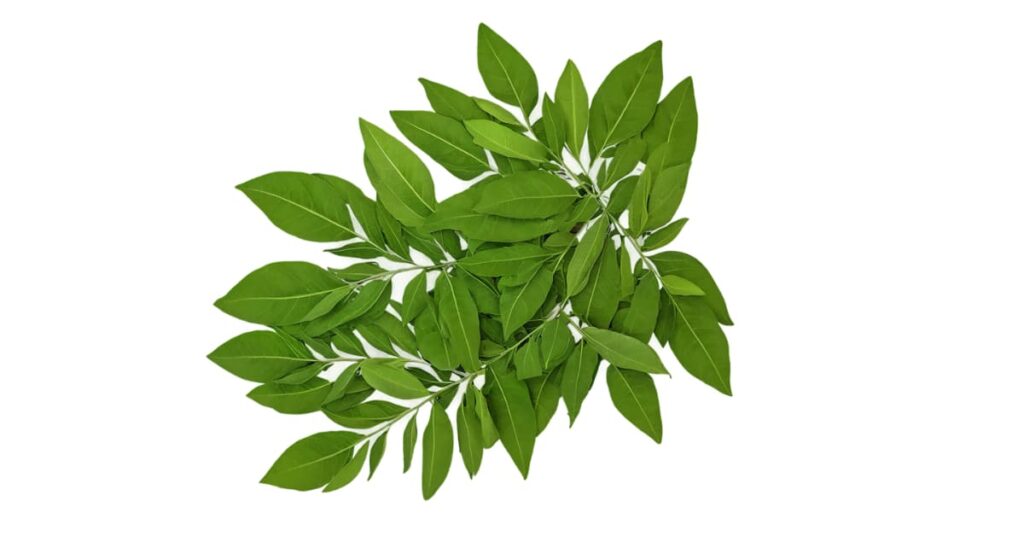
Curry leaves for hair.
Curry leaves benefit hair by nourishing follicles, fighting dandruff, and preventing premature graying, thanks to their rich antioxidant, protein, and vitamin content. They can be used in various topical applications like hair masks and rinses, or consumed as part of a diet for overall hair health.
Benefits of curry leaves for hair
- Strengthens hair follicles: Nutrients like beta-carotene and protein fortify hair roots, which can reduce hair fall and breakage.
- Promotes scalp health: Their antioxidant, anti-inflammatory, and antifungal properties can hydrate the scalp, fight dandruff, and prevent infections.
- Enhances hair growth: They stimulate blood circulation to the scalp, which supports the delivery of nutrients to the hair follicles and can stimulate new growth.
- Prevents premature graying: Antioxidants in curry leaves combat oxidative stress, a key factor in the premature aging of hair.
- Adds shine and softness: They can help condition the hair & improve its overall texture and shine.
Curry leaves’ scientific name.
Curry leaves are a part of a little deciduous aromatic shrub, scientifically called Murraya koenigii, belonging to the family Rutaceae. It can be considered a natural medicinal plant. South Asia is home to this plant, which is found in nations such as Sri Lanka, China, Bangladesh, and India.
Curry leaves are in English, Hindi, and Urdu.
In English, curry leaves are called “curry leaf.” In Hindi and Urdu, they are called Kari Patta. The plant is also known by other names in different languages and has various uses in cooking and traditional medicine.
- English: Curry Leaf
- Hindi: Kari Patta (करी पत्ता) or Meetha Neem (मीठा नीम)
- Urdu: Kari Patta (کری پتہ)
Conclusion
The curry tree, a special citrus native to India and Sri Lanka, has become almost interchangeable with Indian cuisine. As part of the citrus family, curry leaves have a strong, fragrant flavor similar to that of lemongrass.
Used as an herb, leaves pack a much subtler flavor than curry powder, lending a complex depth to any dish. When cooked into a dish, they enhance other flavors, giving Indian food its fragrant, robust character. It has a somewhat sweet taste, earning it the nickname sweet neem leaves.
More than just a delicious herb in Asian cooking, curry leaves offer several health benefits. In fact, they’re generally used in Ayurvedic medicine, a holistic practice originating in India over 3,000 years ago.