

Table of Contents
Introduction
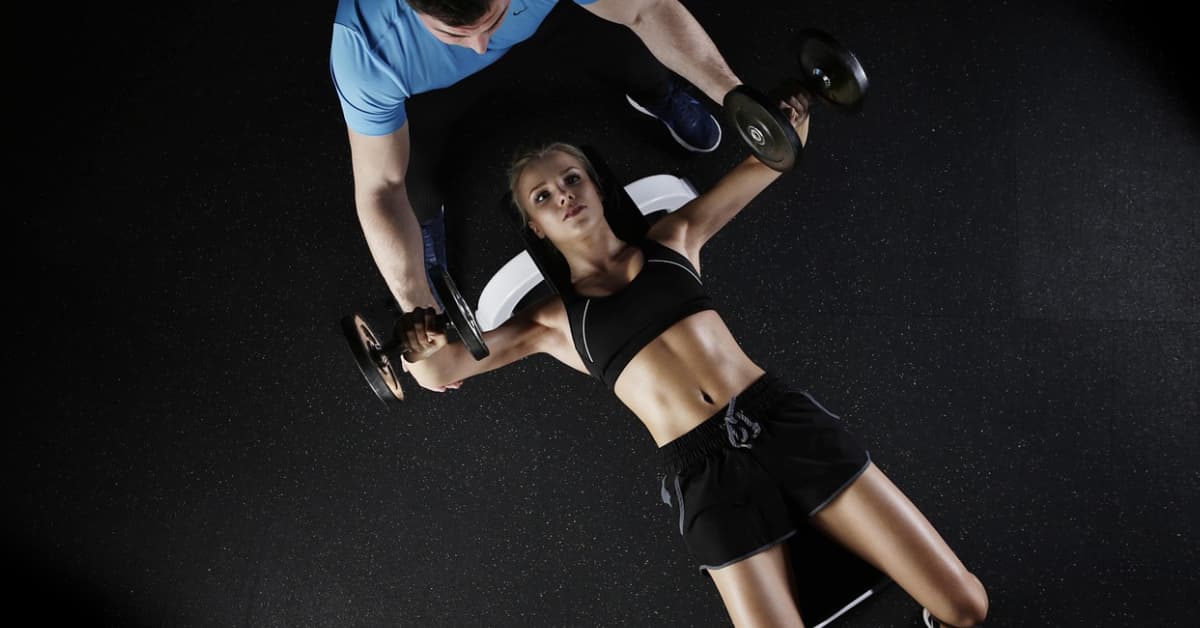
The Dumbbell Fly is a classic isolation movement or exercise especially designed to target and sculpt the pectoralis major (chest) muscles. Unlike compound pressing exercises that heavily recruit the triceps, the Fly concentrates almost exclusively on the techniques of shoulder adduction—basically the motion of bringing the arms together as if hugging a large tree. By lying on a bench and dropping weights in a wide arc to the sides, this movement allows a deep stretch of the chest fibers at the bottom and a focused contraction at the Top. It is widely favored by fitness enthusiasts for its ability to enhance muscle definition, visually extend the chest, and improve shoulder girdle flexibility.
Dumbbell Fly
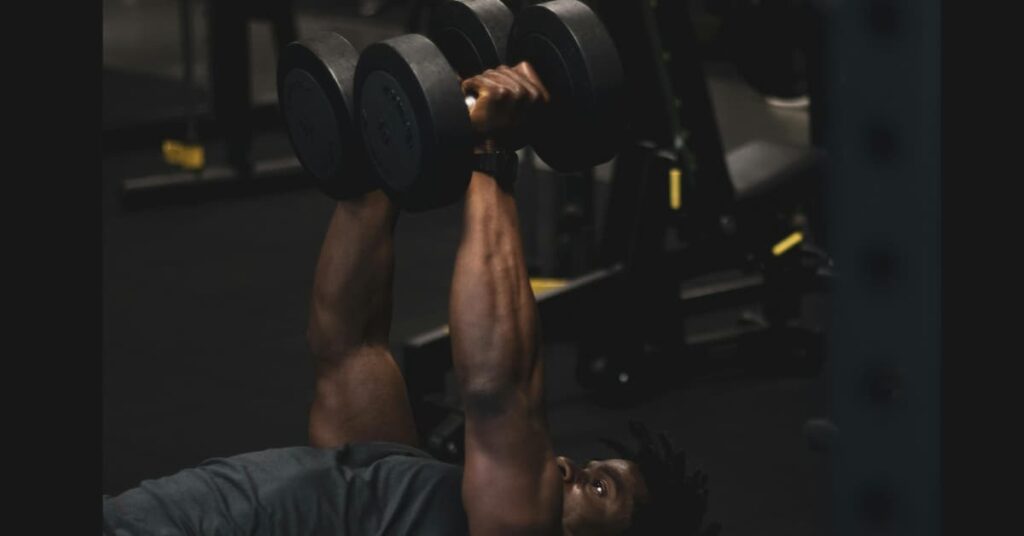
The Dumbbell Fly is a fundamental resistance movement or exercise that prioritizes muscle isolation & range of motion over raising heavy weights. While standard presses build raw power by moving weight away from the body, the Fly focuses on the extension and tension of the pectoral muscles through a broad, arc-like movement. This unique mechanism targets the outer chest fibers during the descent and forces the inner chest to work hard to bring the weights back to the center. Because it minimizes triceps involvement, it is a fantastic finishing move to exhaust the chest muscles and stimulate hypertrophy (growth) after the heavy compound lifts are complete.
The Dumbbell Fly and the Bench Press are often paired together in chest workouts, but they serve two very distinct purposes. While the Bench Press emphasizes pushing power, the Fly emphasizes muscle tension and stretching.
The Dumbbell Fly muscles worked.
This exercise works the upper-body “pushing” muscles, but because of the broad arc of motion, it shifts the focus almost entirely to the chest.
1. Primary Muscle (The Target)
- Pectoralis Major: This is the large fan-shaped muscle of the chest. The fly primarily targets the sternal head (the middle & lower parts of the chest) and is one of the finest exercises for expanding the “inner chest” line.
- Action: It works by adduction, pulling the arms toward the body’s centerline (like hugging a tree).
2. Secondary Muscles (The Helpers)
- Anterior Deltoid (Front Shoulder): The front part of the shoulder helps the arm cross the front of the body.
- Note: If this movement is too much on the shoulders, the form may be too broad, or you might be reducing the weights too far.
3. Stabilizer Muscles (The Support)
- Biceps Brachii: You might be surprised to feel the biceps working. They act as “dynamic stabilizers” to prevent the elbow from straightening entirely or snapping under the load.
- Triceps: They stay contracted isometrically (without moving) to keep the arm locked in that slight bend.
- Forearms: The wrist flexors keep your wrist straight and stable while holding the Dumbbell at an angle.
How to do the Dumbbell fly
- Pick up the dumbbells using a neutral grip (palms facing in). Position the dumbbells at the hip crease, & sit down on the bench.
- To get into position, lie back & keep the weights close to the chest. Once you are in position, take a deep breath, after that press the dumbbells to lockout at the Top.
- Slightly retract the shoulder blades, unlock the elbows, & slowly lower the dumbbells laterally or sideward while maintaining the elbow angle.
- Once the dumbbells reach chest level, and reverse the movement by squeezing the pecs together & bringing the dumbbells back to their starting position.
- Without allowing the dumbbells to touch, begin the next repetition, and continue until the set is completed.
Dumbbell Fly benefits
Here are the key advantages:
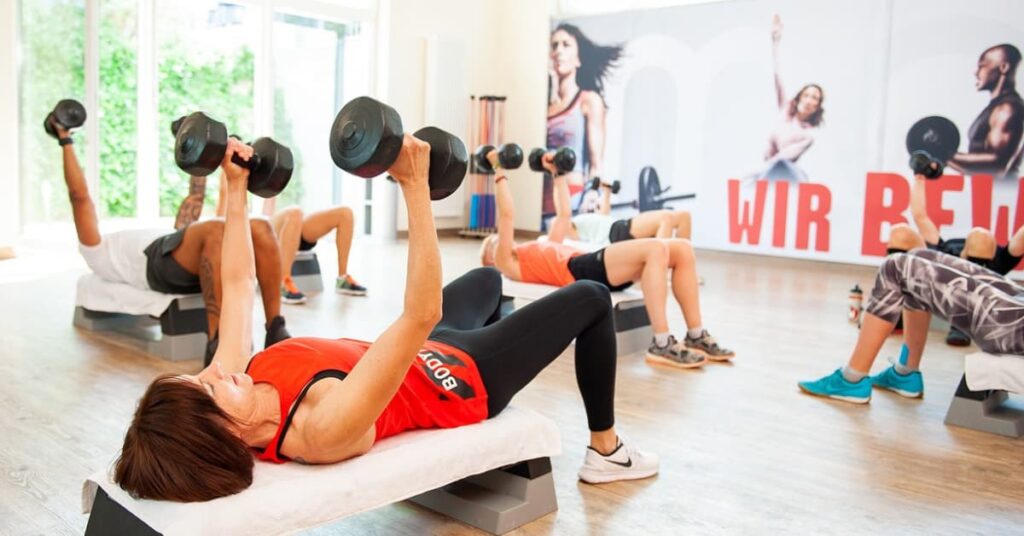
1. Superior Muscle Isolation
The most significant advantage of the fly is that it withdraws the triceps from the movement.
- Pure Chest Focus: In a bench press, the triceps often fatigue before the chest does. The fly provides that your pectorals hit failure first, making it an actual isolation movement.
- Sternal Head Targeting: The motion of bringing the arms together (adduction) is the direct function of the chest muscles, indicating intense activation of the inner chest fibers at the Top of the rep.
2. Hypertrophy via “Stretch Under Load.”
The Dumbbell Fly places maximum tension on the muscles when they are fully lengthened (at the bottom of the movement).
- Muscle Fiber Recruitment: Stretching a muscle under load makes high mechanical tension and microtears in the fibers. It is a powerful trigger for muscle growth (hypertrophy), especially for the outer chest.
- Fascial Stretching: Regularly performing this exercise can help stretch the fascia (the connective tissue that sheathes the muscle), potentially permitting the muscle to expand and grow.
3. Improved Flexibility and Posture
Because this is a “chest opening” activity, it acts as a loaded stretch.
- Shoulder Mobility: It helps reduce tightness in the front deltoids & chest muscles, which are often stiff from sitting at desks or hunching over phones.
- Postural Correction: Opening the thoracic cavity helps counteract “rounded shoulders” and improve overall upper-body posture.
4. Better Mind-Muscle Connection
Many lifters struggle to “feel” their chest performing during heavy bench presses.
- Learning to Squeeze: Because the exercise is slower and controlled, it guides you on how to contract the pecs consciously. This enhanced neural connection often carries over to your heavy presses, making you a better bencher in the long run.
Dumbbell Fly Variations
1. Incline Dumbbell Fly
The Incline Dumbbell Fly is an isolation movement or exercise specifically designed to target the upper chest (clavicular head) and the “shelf” of the pectorals near the collarbone. To perform it, you set an adjustable bench to a 30- to 45-degree angle, lie back with your feet planted firmly, and retract your shoulder blades to create a stable base. Starting with the dumbbells pressed up above the chest and the palms facing each other (neutral grip), you lower the weights out to your sides in a wide arc, and maintaining a slight, fixed bend in your elbows throughout the movement.
The goal is to lower the weights until you feel a deep stretch in your upper chest—usually when your elbows are even with your shoulders—and then reverse the motion as if you are “hugging a large tree,” squeezing your pecs hard at the Top without letting the dumbbells clang together.
2. Flat Dumbbell Fly
The Flat Dumbbell Fly is a classic isolation exercise or movement used to develop overall chest mass, explicitly targeting the sternal head (the large, middle portion of the pectorals). You begin by lying on a flat bench with your feet planted on the floor and your shoulder blades pinched together to protect your shoulder joints. Start with the dumbbells held directly above your chest with palms facing each other.
Reduce the weights out to the sides in a vast, sweeping arc, maintaining a slight, fixed bend in your elbows (roughly 10–15 degrees) to take the stress off the joints. Lower the weights until your elbows are level with your torso to feel a significant stretch across the chest, then reverse the motion by squeezing the pecs to bring the weights back to the Top, visualizing the movement as wrapping your arms around a barrel.
3. Decline Dumbbell Fly
The Decline Dumbbell Fly is an isolation exercise primarily targeting the lower pectorals (costal head), helping to carve out the distinct lower line of the chest. To perform it, you secure your legs under the rollers of a decline bench set to about a 30-degree decline, then lie back. Starting with the dumbbells pressed above your lower chest with palms facing each other, you open your arms in a vast, controlled arc. Because of the decline angle, this variation effectively minimizes deltoid (shoulder) involvement, placing the majority of the load on the pecs.
It is often considered the most shoulder-friendly of the three variations. You reduce the weights until you feel a deep stretch without hyperextending the shoulder, then reverse the motion, focusing on squeezing the lower chest muscles to bring the weights back together.
4. Incline Dumbbell Fly with a twist
The Incline Dumbbell Fly with a Twist is a dynamic variation or kind that intensifies the peak contraction of the upper chest fibers. You set up exactly like a standard incline fly—bench at 30 to 45 degrees, feet planted, and shoulder blades retracted. As you lower the weights, you maintain the standard neutral grip (palms facing each other) to get a safe, deep stretch.
However, as you bring the weights back up, gradually rotate your wrists outward (supinate) so that by the time you reach the Top, your palms are facing each other and your pinky fingers are close to touching. This twisting motion forces the upper pectoral muscles to shorten further than a standard fly allows, creating a much harder “squeeze” at the Top of the movement.
5. Reverse Dumbbell Fly
The Reverse Dumbbell Fly (also known as the Bent-Over Rear Delt Fly) is a pulling exercise that targets the posterior deltoids (rear shoulders) and upper back muscles (rhomboids and trapezius), essentially working the exact opposite muscles of the chest flies you previously asked about.
To perform it, stand with the feet shoulder-width apart and hinge at the hips until the torso is almost parallel to the floor, and keeping the back flat and core tight. With dumbbells hanging down and palms facing each other, raise the arms out to the sides in a wide arc until they are level with your shoulders. Unlike the chest fly, where you squeeze the front of your body, here you focus on pinching the shoulder blades together & driving the elbows toward the ceiling.
6. Standing Dumbbell Fly
The Standing Dumbbell Fly, also known as the Scoop Fly, is a functional variation that targets the upper chest without a bench. It is crucial to understand that when you perform a horizontal fly motion while standing, gravity pulls the weights downward rather than backward, shifting the work entirely to your shoulder muscles. Therefore, to effectively hit the chest, you must use a low-to-high “scooping” motion.
To perform it, stand with the feet shoulder-width apart & hold the dumbbells at the sides, palms facing forward (supinated). Keeping a slight bend or curve in the elbows, lift the weights forward and up in a diagonal arc, bringing them together at roughly chin or eye level. This movement path effectively mimics the function of the upper pectoral fibers, forcing them to contract hard to lift the weight against gravity.
7. Bent Over Dumbbell Fly
The Bent Over Dumbbell Fly is a staple isolation exercise primarily used to build the posterior deltoids (rear shoulders) and the upper back muscles, specifically the rhomboids and middle traps. To perform it correctly, stand with the feet hip-width apart & hinge forward at the hips up until your torso is almost or nearly parallel to the floor, keeping the back flat & the knees little bent to protect your lower back.
Let the arms hang straight down, palms facing each other (neutral grip). From this position, lift the dumbbells out to your sides in a vast, sweeping arc—like a bird opening its wings—until your arms are level with your shoulders. The focus should be on pinching your shoulder blades together at the very Top of the movement to maximize the contraction in the upper back, then lowering the weights slowly back to the starting position without letting them swing.
Precautions and Common Errors
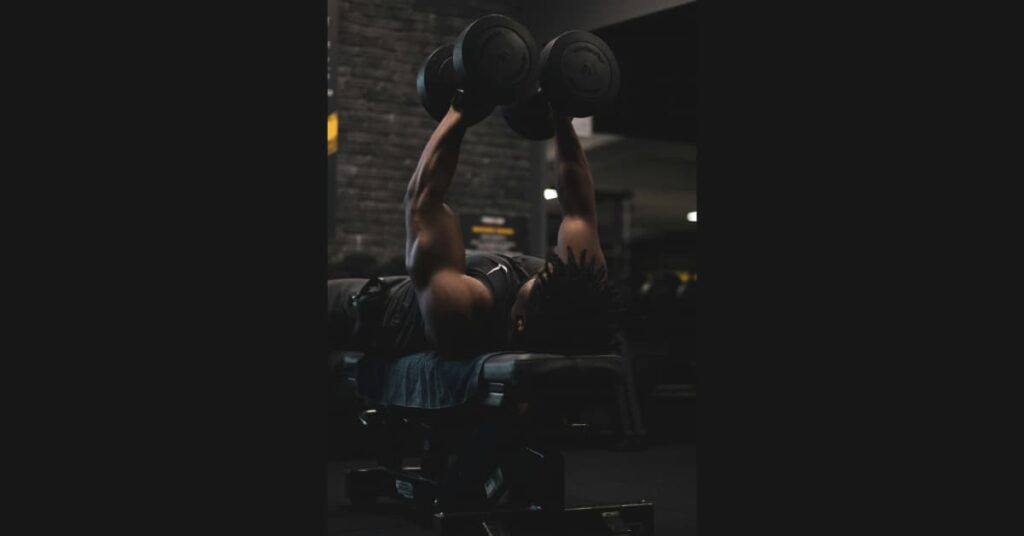
Here are the critical precautions and common errors to ensure you build muscle without injury.
Common Errors
1. Straightening the Arms (Locking Elbows) The most frequent mistake is performing the movement with completely straight arms. It shifts the stress from the pectoral muscles directly onto the elbow joints and the anterior deltoids (front shoulders).
- Correction: Maintain a soft bend in your elbows (approximately 10 to 15 degrees) throughout the entire movement. Think of the position as “hugging a large tree” or “wrapping your arms around a barrel.” This bend should be locked; do not bend and extend your elbows during the rep, or it becomes a press.
2. Excessive Range of Motion (Going Too Deep) Many lifters believe that “more stretch equals more growth,” but lowering your elbows significantly below the level of the bench places the shoulder joint in a vulnerable position. It can lead to rotator cuff strains, tears, or anterior capsule irritation.
- Correction: Stop the descent when your elbows are level with your torso or slightly above the shoulder joint. You should feel a stretch in the chest muscles, not pain in the shoulder socket. If you have a history of shoulder issues, doing these on the floor (Floor Fly) is a safer alternative, as the ground physically limits your range of motion.
3. Clanging the Weights at the Top. Bringing the dumbbells together until they touch or clang at the Top of the movement is a common habit that actually reduces the exercise’s effectiveness. When the weights are stacked directly over your shoulders, gravity is pulling them straight down through your bones, meaning there is almost zero tension on the chest muscles.
- Correction: Stop the movement about 1–2 inches before the dumbbells touch. This “constant tension” technique keeps the pectoral muscles engaged for the entire set.
4. Ego Lifting (Using Too Much Weight) The Fly is an isolation exercise, not a compound power movement like the Bench Press. Using heavy weights forces your body to recruit secondary muscles (shoulders and triceps). It often leads to bending the elbows too much to compensate, effectively turning the fly into a bad bench press.
- Correction: Drop the weight. You should likely use 30–40% less weight than you use for dumbbell presses. The focus is on the stretch and the squeeze, not the total load.
Essential Precautions
1. “Pack” Your Shoulders Before you even lift the weights, retract your shoulder blades (pinch them together) and drive them down into the bench. It provides a stable platform for you to press from and protects the shoulder joint. If your shoulders are rolled forward or “loose,” you significantly increase the risk of impingement.
2. Safe Entry and Exit Getting heavy dumbbells into position can be dangerous.
- Setup: Sit on the bench with your dumbbells resting vertically on your thighs. Kick your knees up one at a time to help propel the weights to your shoulders as you lie back.
- Dismount: Do not drop the weights to the side with straight arms; this can tear a rotator cuff. Instead, bring your knees up to the weights, or bring the weights to your chest, sit up, and then place them down.
3. Wrist Neutrality Do not let your wrists bend backward (extension) under the weight of the dumbbell. It puts unnecessary strain on the wrist joint and reduces your leverage. Keep your wrists straight and strong, as if you were punching the ceiling.
4. Control the Tempo: Never use momentum to bounce out of the bottom position. The transition from lowering to lifting should be smooth and controlled. Bouncing at the bottom—where the shoulder is most vulnerable—is the fastest way to cause an injury. A good cadence is 2 seconds down, a slight pause, and 1 second up.
Conclusion
The Dumbbell Fly is a fundamental resistance movement or exercise that prioritizes muscle isolation & range of motion over raising heavy weights. While standard presses build raw power by moving weight away from the body, the Fly focuses on the extension and tension of the pectoral muscles through a broad, arc-like movement.