

Table of Contents
Introduction
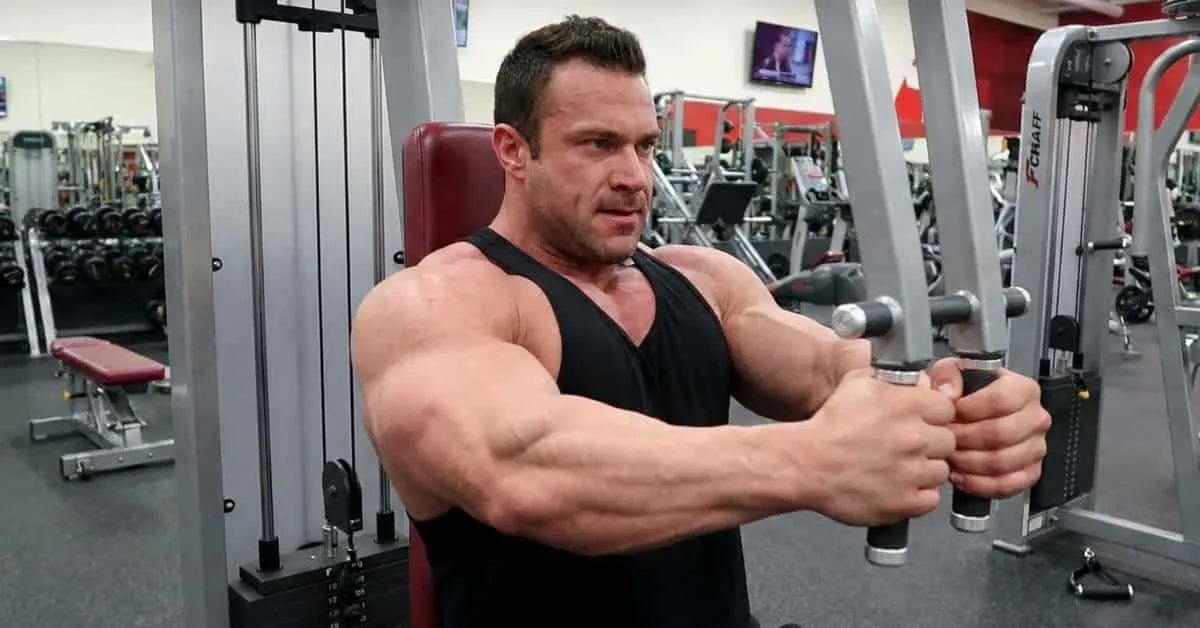
The Pec Deck, also understood as the machine fly, is a machine-based isolation movement that specifically targets and strengthens the pectoralis major muscles in the chest. Unlike compound exercises or movements like the bench press, which require you to balance the weight and engage the triceps and shoulders, the Pec Deck stabilizes the body against a back pad, permitting you to focus entirely on the “squeezing” motion of bringing the arms together. This movement pattern, understood as shoulder adduction, places constant tension on the chest fibers throughout the whole range of motion, making it a fantastic exercise for building muscle definition and isolating the inner chest without the risk of injury often associated with heavy free weights.
Pec Deck
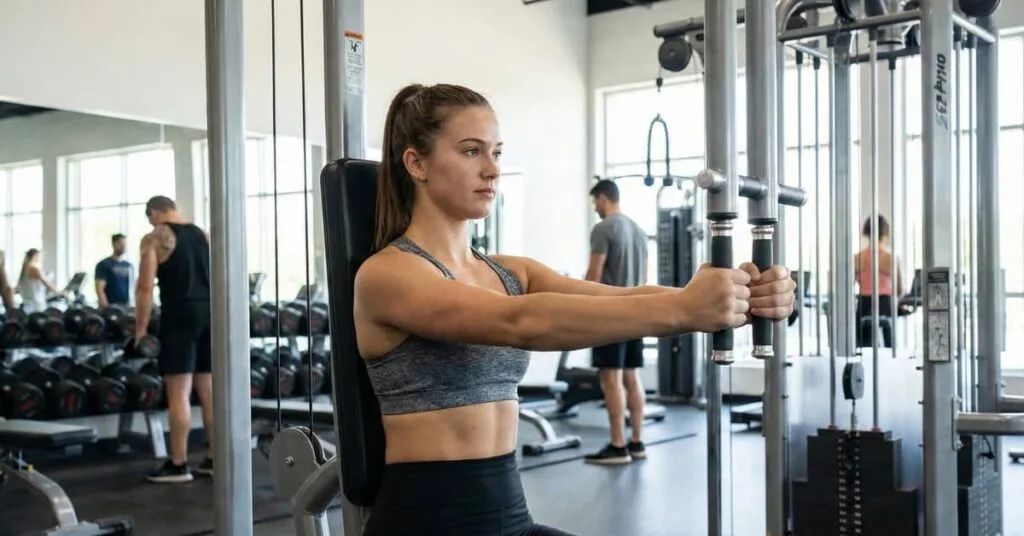
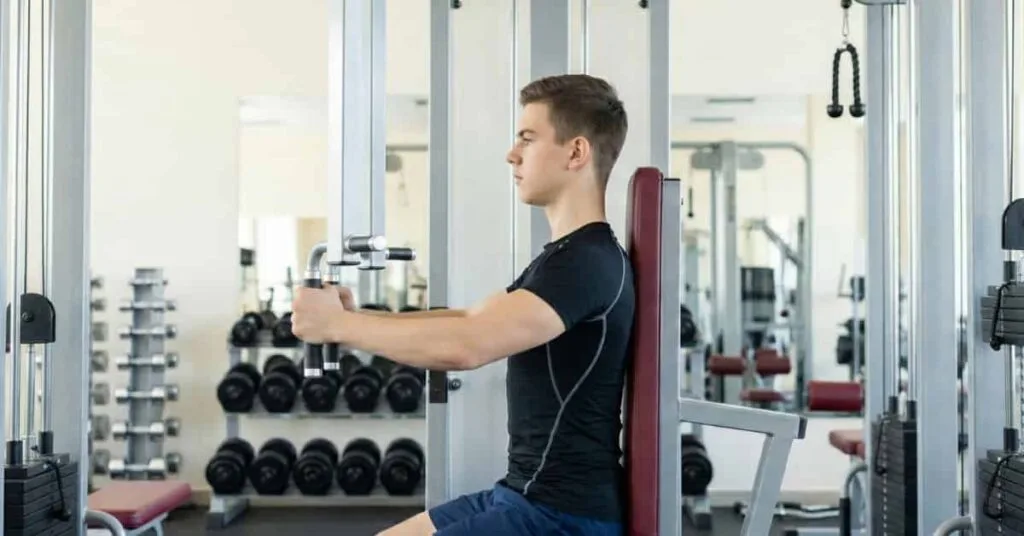
The Pec Deck is a gym machine that is great for building chest muscles without lifting heavy weights. You sit on the Machine with the back flat against the pad and use the arms to push the handles or pads together in front of you, similar to the motion of giving someone a big bear hug. Because the Machine supports your body and guides your movement, it is very safe and easy to use, permitting you to focus completely on squeezing the chest muscles to make them more powerful and more defined.
Pec Deck Instruction
To perform the Pec Deck (Machine Fly) accurately and safely, follow these step-by-step instructions.
1. Set up the Machine
- Seat Height: Modify the seat so that when you sit down & grab the handles, the elbows and wrists are at the same height as your shoulders (or slightly below). You do not want the hands to be higher than your shoulders.
- Weight: choose a weight that helps you to perform 10–12 repetitions with reasonable control. Don’t start too heavy.
2. Get into Position
- Sit with the back firmly pressed against the back pad.
- Keep your feet flat on the floor for stability.
- Grab the handles (or place your forearms against the pads, depending on the machine type). Your elbows should have a slight bend—do not lock the arms straight.
3. The Movement (The Squeeze)
- Exhale & slowly bring the handles together in front of the chest in a smooth arc.
- Imagine you are trying to hug a large tree barrel.
- When your hands meet in the middle, pause for 1 second and squeeze your chest muscles hard.
4. The Return
- Inhale & slowly return the handles to the starting position.
- Control the weight all the way back; do not let the weights slam down.
- Stop when your arms are in line with your shoulders (or slightly back until you feel a gentle stretch. Do not let your arms go too far back, as this can strain your shoulders.
Pec Deck Benefits
Here are the key benefits of incorporating the Pec Deck into your chest workout:
1. Pure Chest Isolation
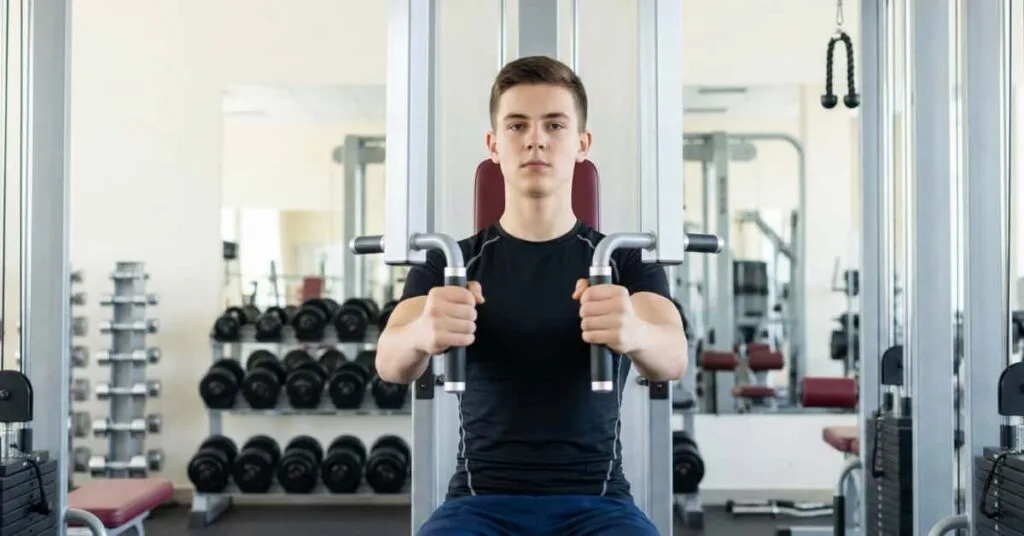
The most significant advantage of this machine is that it is a single-joint (isolation) exercise. Unlike the Bench Press, which relies heavily on your triceps and shoulders, the Pec Deck forces your pectoralis major (chest muscles) to do almost all the work. It makes it perfect for targeting the chest if your triceps tend to tire out first on other exercises.
2. Constant Tension
When you use dumbbells for a chest fly, you lose tension at the very top of the movement because gravity pulls the weights straight down through your bones, not against your muscles. The Pec Deck machine uses a pulley system that keeps consistent resistance on your chest muscles throughout the whole range of motion, particularly during the “squeeze” at the center.
3. Reduced Injury Risk
Because the machine locks you into a fixed path of motion, there is less risk of:
- Dropping weights on your face or body.
- Overextending your shoulder joints (if the machine stops are set correctly).
- Losing your balance. It’s safer for beginners or those recovering from an injury than free weights.
4. Inner Chest Development
While you cannot technically isolate just the “inner” chest, the Pec Deck allows for a powerful, sustained contraction when your hands meet in the middle. This deep squeeze helps maximize muscle fiber recruitment in the sternal head of the pecs, contributing to that “separation” line in the middle of the chest.
5. Easy to Learn
It has a very low learning curve. You don’t need to worry about stabilizing a barbell or coordinating two dumbbells so that you can focus entirely on the mind-muscle connection.
Pec Deck Variations
Here are the main variations of the Pec Deck exercise. Some involve using the machine differently, while others use the same movement pattern with different equipment.
1. Reverse Pec Deck (Rear Delt Fly)
Most Pec Deck machines are “two-in-one.” By adjusting the handles to swing all the way back and sitting facing the machine (chest against the back pad), you can turn this into a rear-shoulder exercise.
- Target: Rear Deltoids (back of the shoulder) and Upper Back.
- How: Sit facing the pad, grab handles with palms facing down or neutral, and pull your arms back until they are in line with your shoulders.
2. Single-Arm (Unilateral) Pec Deck
Instead of bringing both arms together, you perform the reps with just one arm while the other rests.
- Target: Chest (with added Core stability).
- Benefits: This is excellent for fixing muscle imbalances (if one side of your chest is stronger than the other). It also forces your obliques (side abs) to work hard to keep your body straight on the seat.
3. Butterfly (Elbow Pad) vs. Long Arm (Handle)
Depending on your gym, you might encounter two different styles of the machine itself. These are mechanical variations:
- The Butterfly (Pads): Your arms are bent at 90 degrees, and your forearms press against pads.
- Focus: This removes the biceps from the movement almost entirely, isolating the chest purely.
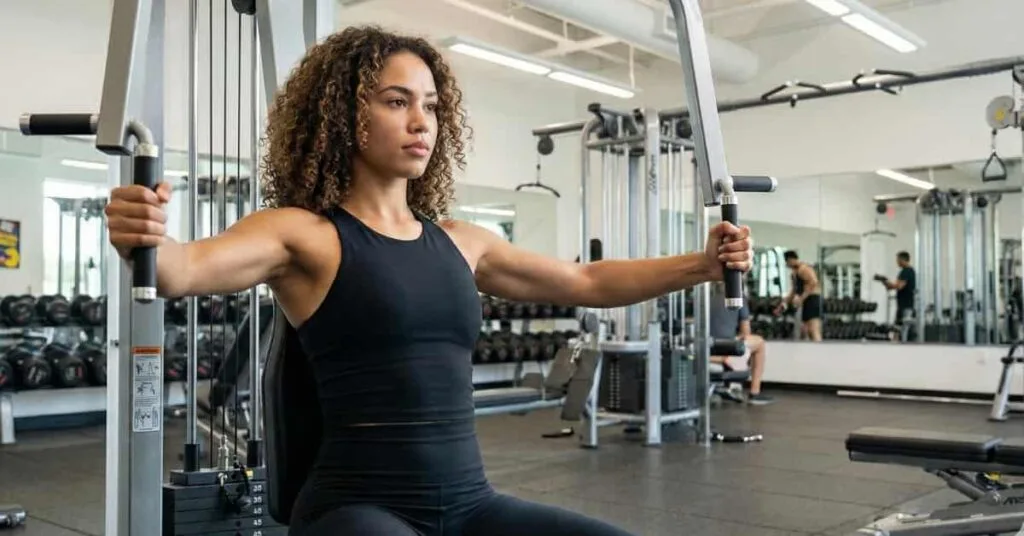
- The Long Arm (Handles): Your arms are mostly straight, holding handles out wide.
- Focus: This mimics the dumbbell fly more closely and requires slightly more arm stabilization.
4. Cable Crossover (The “Free Motion” Variation)
If the Pec Deck machine is taken, the Cable Crossover is the closest substitute.
- Target: Chest (Upper, Middle, or Lower, depending on pulley height).
- Difference: Cables require much more stability than the seated machine. You have to stand and balance, which engages your core more but makes it harder to isolate the chest as strictly as with the Pec Deck.
5. Dumbbell Fly
The classic free-weight version.
- Target: Chest.
- Difference: As mentioned in the “Benefits” section, dumbbells lose tension at the top of the rep (when hands are touching). The Pec Deck keeps tension constant.
Pec Deck Alternative
If you don’t have access to a Pec Deck machine, here are the best alternatives categorized by what equipment you have available.
1. Best Free-Weight Alternative: Dumbbell Fly
It is the classic substitute. It mimics the same “hugging” motion as the Pec Deck.
- Equipment: Dumbbells and a bench (flat or incline).
- How to do it: Lie on a bench holding dumbbells above your chest. Lower them slowly out to the sides in a wide arc (like opening your wings) until you feel a stretch, then bring them back together at the top.
- Pro Tip: Keep the elbows slightly bent to protect your joints.
2. Best Gym Alternative: Cable Crossover
It is often considered better than the Pec Deck because it requires you to stabilize your body while moving the weight.
- Equipment: Cable machine (two pulleys).
- How to do it: Stand between two cable towers. Grab the handles, step forward slightly, and pull your hands together in front of your chest.
- Why it’s great: Unlike dumbbells, cables provide constant tension, meaning your chest muscles are working hard even at the very top of the movement.
3. Best Home Alternative: Resistance Band Fly
If you are working out at home without heavy weights, this is perfect.
- Equipment: Resistance band.
- How to do it: Wrap the band around a sturdy pole (or door anchor) behind you. Hold the handles and perform the same “hugging” motion standing up.
- Advantage: As you stretch the band, it gets harder, giving you a powerful “peak contraction” (squeeze) at the end.
4. Best Bodyweight Alternative: Wide Push-Ups
While not an isolation exercise, this is the best way to target the chest without any equipment.
- How to do it: Get into a push-up position, but place your hands wider than your shoulders.
- Why it works: The wider stance forces your chest to do more work than your triceps.
Common Errors and Precautions
Here are the key precautions in minor, easy-to-remember points:
- Adjust Seat Height: Ensure handles are at chest level, not above your shoulders.
- Don’t Lock Elbows: Keep a slight bend in your arms to protect joints.
- Limit the Stretch: Stop when your arms are in line with your body; don’t let them go too far back.
- Keep Back Flat: Keep your spine and head pressed firmly against the back pad.
- No Swinging: Move the weight slowly; don’t use Momentum.
- Use Foot Lever: If available, use the foot pedal to bring the handles forward before starting to avoid muscle tears.
- Lighten the Weight: Focus on the squeeze, not heavy lifting.
Common Errors (What NOT to do)
- 1. The “T-Rex” Arm (Elbows Too Low)
- The Mistake: Letting your elbows drop far below your shoulders while squeezing.
- The Risk: This shifts the tension away from your chest and puts unhealthy stress on your rotator cuff (shoulder joint).
- Correction: Keep your elbows lifted so your upper arm is parallel to the floor.
- 2. Overstretching (Going Too Far Back)
- The Mistake: Letting the handles pull your arms way behind your body during the return phase, thinking a “deeper stretch” is better.
- The Risk: This is the #1 cause of shoulder injury on this machine. It over-rotates the shoulder capsule.
- Correction: Stop the return movement when your arms are in line with your body (or slightly in front of your shoulders). You don’t need to touch the weights to the stack every time.
- 3. Head Popping Forward (Chicken Neck)
- The Mistake: Pushing your head forward off the pad as you squeeze the handles together.
- The Risk: Strains the neck muscles and creates poor spinal alignment.
- Correction: Keep the back of your head glued to the pad. If you can’t, the weight is too heavy.
- 4. Using Momentum
- The Mistake: Swinging the weights quickly to get them moving.
- The Risk: You are using inertia, not muscle. This can lead to tearing a muscle when the weight “catches” at the bottom.
- Correction: Perform the rep slowly (2 seconds in, 2 seconds out).
Conclusion
The Pec Deck is a gym machine that is great for building chest muscles without lifting heavy weights. You sit on the Machine with the back flat against the pad and use the arms to push the handles or pads together in front of you, similar to the motion of giving someone a big bear hug. Because the Machine supports your body and guides your movement, it is very safe and easy to use, permitting you to focus completely on squeezing the chest muscles to make them more powerful and more defined.
[…] with Control: Inhale as you lower the chest toward the floor. Keep the elbows at a 45-degree angle to the […]