

Table of Contents
Introduction
The push-up is a fundamental compound bodyweight exercise or movement which serves as a cornerstone of strength training, targeting the pectorals, triceps, & deltoids while engaging the core and lower body for stabilization. Its abiding popularity stems from its versatility and efficiency: it needs no specialized tools and offers multiple variations to suit any fitness level, from beginners to elite athletes. By using one’s own body’s weight as resistance, the push-up not only builds upper-body strength and muscular endurance but also improves functional health by strengthening posture and bone density.

Push-up
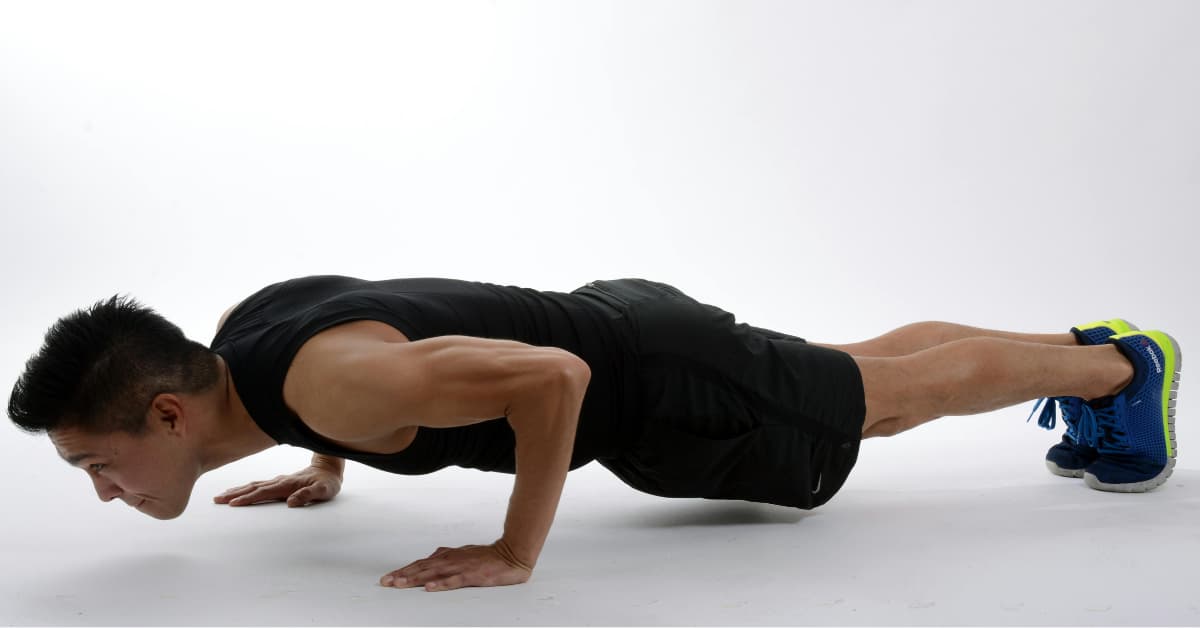
The push-up is a foundational compound bodyweight exercise or workout that functions as a closed-kinetic chain movement or exercise, suggesting the extremities remain in a fixed position against a stable surface while the body moves. It is highly considered in physical activity for its ability to simultaneously develop the pectoralis major, anterior deltoids, & triceps brachii, all while demanding effective isometric tension from the core, glutes, & quadriceps to maintain a rigid, plank-like posture.
The best part about push-ups is that you can easily change them to fit your strength level. Just by shifting your hand position or tilting your body (e.g., leaning against a wall or a bench), you can make the exercise easier or more challenging and target different muscles. Beyond the muscle hypertrophy, the push up also serves as a crucial benchmark for functional upper-body power & cardiovascular endurance, and fostering joint stability in the shoulders and wrists that translates directly into everyday physical tasks.
How to Do a Push-Up
To execute a proper push up, follow these easy and practical steps:
- Set the Base: Begin in a high plank position with the hands just wider than shoulder-width apart and the feet hip-width apart.
- Align Your Body: Maintain a straight line from the head to the heels. Squeeze the glutes & core to keep the hips from sagging or sticking up.
- Lower with Control: Inhale as you lower the chest toward the floor. Keep the elbows at a 45-degree angle to the body.
- Push Back Up: Exhale and drive through the palms to return to the starting position, keeping the body moving as a single, rigid unit.
- Full Range: Aim to get the chest about 2–3 inches from the floor for a full range of motion.

Push-up benefits
Push ups are among the most effective and convenient exercises you can do. Because they engage or capture multiple muscle groups at one time, they offer a wide range of physical and health benefits:
1. Builds Functional Upper-Body Strength
Push-ups are a “multi-muscle” exercise because they move several joints at once. Instead of just working one spot, they strengthen your chest, shoulders, and the back of your arms (triceps) simultaneously. This strength carries over into daily life, making it easier to complete tasks like lifting a heavy door, carrying groceries, or moving furniture.
2. Enhances Core Stability and Posture
To perform a push up perfectly, your core must act as a “stabilizing bridge.” This constant engagement strengthens the abdominals, obliques, & lower back. A stronger core leads to better posture, decreases the risk of lower back pain, & improves your overall balance.
3. Supports Cardiovascular Health
Because push ups recruit large muscle groups across the whole body, they force the heart to work harder to deliver oxygenated blood to those tissues. When done in higher repetitions or as part of a circuit, they provide a cardiovascular workout that may improve heart health & endurance.
4. Protects Joints and Bones
- Shoulder Health: By strengthening the small stabilizer muscles around the shoulder (the rotator cuff), push-ups support and protect the joint from injury.
- Bone Density: As a weight-bearing movement, push-ups put healthy stress on the bones, helping maintain and improve bone density and lowering the risk of osteoporosis as you age.
5. Increased Metabolic Rate
Building lean muscle mass through resistance training, like push-ups, can boost the resting metabolic rate. Muscle tissue also burns more calories at rest than fat tissue, and also aiding in long-term weight management.
6. Versatility and Accessibility
One of the most meaningful advantages is that they require zero equipment and very little space. They are also infinitely scalable; whether you are a beginner doing wall push-ups or an athlete doing “clapping” plyometric push ups, there is always a way to challenge yourself.

Push-up Variations
Defining the variations into categories: Beginner (low load), Intermediate (standard/slight tweaks), and Advanced (explosive/unilateral). It helps the user navigate based on their current ability. Push-ups are highly versatile. You can change the difficulty or target distinct muscles just by adjusting the body angle, hand placement, or explosiveness.
1. Beginner Variations (Easier)
These lower the amount of body weight you have to lift.
- Wall Push-ups: Stand facing a wall and lean into it. It is the best starting point for absolute beginners.
- Incline Push-ups: You can place the hands on a raised surface (such as a bench, sofa, or sturdy table). The higher the surface, the more comfortable the exercise.
- Knee Push-ups: Perform a standard push-up, keeping your knees on the floor. It lowers the load by about 50%.
2. Intermediate Variations (Standard Challenge)
These add type or concentrate on specific muscle groups.
- Wide Push-ups: Place your hands much wider than shoulder-width apart. It emphasizes the chest muscles.
- Diamond (Narrow) Push-ups: Place the hands together under the chest so your index fingers and thumbs form a diamond shape. It primarily targets the triceps.
- Pike Push-ups: Lift the hips high so the body forms an inverted “V.” This shifts the focus to your shoulders.
3. Advanced Variations (Harder)
These need significant strength, balance, or power.
- Decline Push-ups: Put the feet up on a chair or bench while keeping the hands on the ground. It moves harder because it pushes more of the body weight onto the upper chest & shoulders.
- Plyometric (Clap) Push-ups: Push up explosively so the hands leave the ground, clapping them before landing. It builds power & speed.
- Archer Push-ups: Keep one arm straight out to the side while the other does most of the pushing. It is a stepping stone to the One-Arm Push-up.

Common Errors to Fix
- Sagging Hips (The “Cobra”): Many individuals let their lower back arch and hips sink toward the floor. It pushes the spine and takes the work away from the core.
- The Fix: Imagine someone is about to punch you in the stomach; tighten your abs and squeeze your glutes to stay flat.
- Flaring Elbows (The “T” Shape): Pointing the elbows straight out to the sides at ninety degrees puts immense pressure on the shoulder joints & can lead to rotator cuff issues.
- The Fix: Tuck the elbows so they form an arrow shape (about 45 degrees) relative to the body.
- Piking Hips (The “Mountain”): Sticking the butt too high in the air often happens when the chest/arms aren’t strong enough to lift your full weight.
- The Fix: Switch to an incline push-up (hands on a bench or table) to maintain a straight line.
- Half-Reps: Only going halfway down or failing to lock out at the top decreases muscle growth and strength gains.
- The Fix: Focus on quality over quantity. Lower the chest until it’s about 2 inches from the floor, then push back until the arms are fully extended.
Important Precautions
- Warm Up Your Wrists: Push-ups place significant weight on the wrists. Before beginning, do a few wrist circles & stretches to prepare the joints.
- Neck Alignment: Don’t look up at the wall or tuck the chin to look at the feet. Keep your eyes focused about 6 inches in front of your hands to keep your neck neutral.
- Control the Descent: Avoid “dropping” to the floor. Use a controlled tempo (e.g., 2 seconds down, 1 second up) to ensure the muscles are doing the work, not momentum.
- Listen to Pain: Muscle burning is regular; sharp joint pain is not. If you feel sharp pain in the shoulders, elbows, or wrists, stop and check the form or switch to a lighter variation.
- Breathe: It sounds simple, but many individuals hold their breath. Inhale on the way down and exhale as you push up.
Conclusion
To wrap things up, the push-up is one of the best ways to build a strong and fit upper body. It’s a complete workout that strengthens your chest, shoulders, arms, and core all at once, while also helping your heart and keeping your joints healthy. The best part is that anyone can do them anywhere—no gym or equipment needed. Whether you are just starting or are an experienced athlete, doing push-ups correctly and safely is a perfect way to stay strong and healthy for life.
[…] exclusive bodyweight movement that bridges the gap between horizontal pressing (like the ordinary push-up) and vertical pressing (like the handstand push-up or overhead press). By hinging at the hips and […]
[…] amazing exercise for everyone, whether you are just starting out or already fit. Instead of doing a push-up on the floor, you put your hands on something higher, like a bench, a table, or a step. This makes […]