

Table of Contents
Introduction
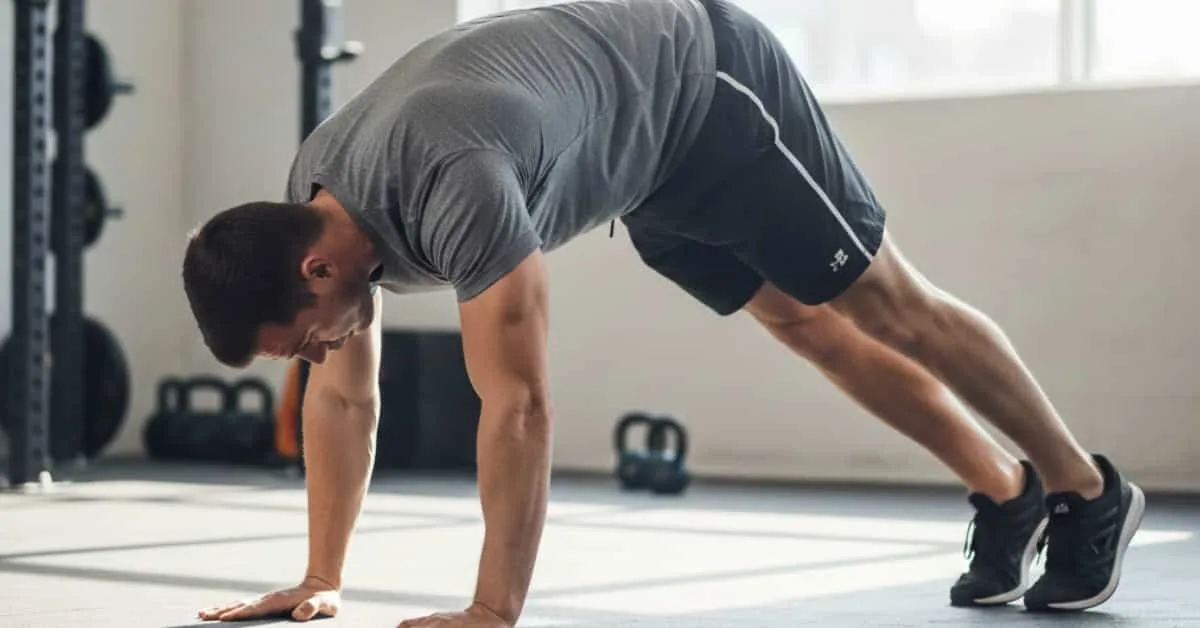
The Pike Push Up is an exclusive bodyweight movement that bridges the gap between horizontal pressing (like the ordinary push-up) and vertical pressing (like the handstand push-up or overhead press). By hinging at the hips and driving the glutes toward the ceiling, you make an inverted “V” shape. This geometric shift reorients your center of gravity, placing the majority of the body weight onto the anterior and medial deltoids rather than the pectoral muscles.
Beyond just creating boulder shoulders, this movement is a cornerstone of calisthenics and functional fitness. It demands effective scapular health and overhead mobility, teaching the learner how to stabilize the shoulder joint while under load. Because it needs no equipment, it serves as the ultimate “anywhere” alternative to the heavy dumbbell or barbell shoulder press.

Pike Push up
The Pike Push-Up is a standard push-up modified to focus on the shoulders rather than the chest. Suppose a regular push-up is like a “bench press” using your own weight; the pike push-up is like an overhead shoulder press. It is the go-to exercise for anyone who wants strong, sculpted shoulders without buying heavy dumbbells or joining a gym.
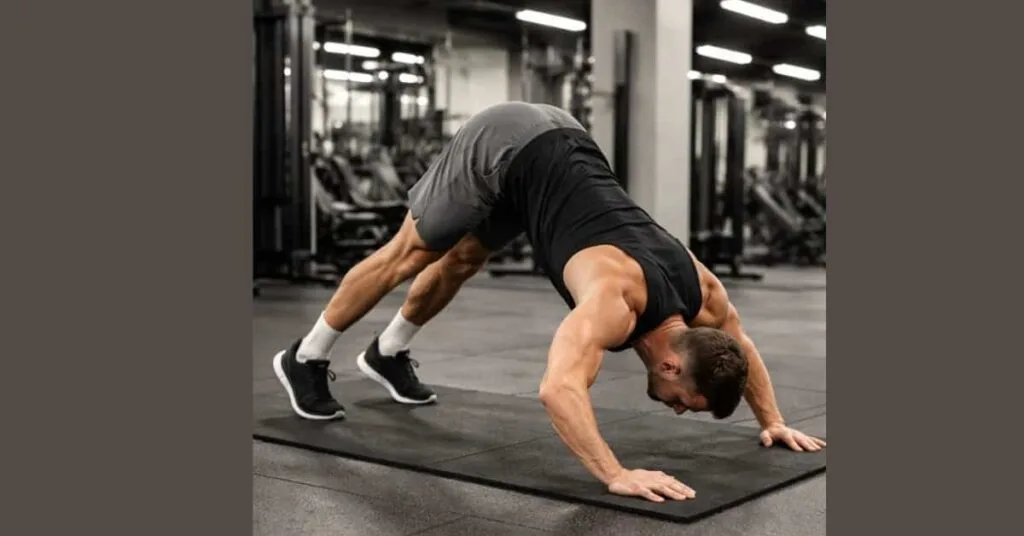
To do it, keep the hands and feet on the ground, but lift the hips high into the air so the body looks like an upside-down “V.” From this position, lower the head toward the floor and push back up. This simple change in angle shifts the “work” from the chest to the shoulders and arms.
Pike push-up muscles target
The pike push-up is a powerful “compound” exercise, meaning it uses multiple joints and muscle groups at once. While it is famous for being a shoulder-builder, it actually needs the entire upper body and core to work together.
Primary Muscles (The Heavy Lifters) of Pike Push up
These are the muscles that actually move the body up and down.
- Anterior Deltoids (Front Shoulders): This is the primary target. Because of the inverted “V” angle, the front shoulders bear the majority of the weight that would typically be on the chest in a regular push-up.
- Triceps Brachii (Back of Arms): These muscles are responsible for straightening the arms. They work overtime in the pike position to push you back up to the start.
- Medial Deltoids (Side Shoulders): These assist the front shoulders in stabilizing the vertical press.
Secondary Muscles (The Support Crew) of Pike Push up
These muscles help with the activity or provide necessary stability so you don’t collapse.
- Upper Pectorals (Upper Chest): While the lower chest is less active, the upper chest fibers help with the initial push from the bottom.
- Serratus Anterior (Side of Ribs): This muscle keeps your shoulder blades pinned firmly against your ribcage, preventing “winging” and keeping the joint safe.
- Trapezius (Upper Back/Neck): Your traps work to stabilize the shoulder blades and help control the movement as you lower the head toward the floor.
Stabilizers (The Foundation)
These muscles don’t move the weight, but they hold your body in the “pike” shape.
- Core (Abs & Obliques): Your core acts as a brace, keeping your hips high and your spine neutral.
- Quadriceps: Your thighs remain engaged to keep your legs straight, and your weight is shifted forward onto your hands.
Pike push-up benefits
The pike push-up is one of the most versatile bodyweight exercises available. Because it bridges the gap between horizontal and vertical pressing, it offers unique advantages for both health and athletic performance.
Here are at least 12 key benefits of performing Pike Push Up:
1. Build Powerful Shoulders
While standard push-ups focus on the chest, the pike position shifts the load to your anterior and lateral deltoids. It is widely considered the best bodyweight exercise for building shoulder size and strength.
2. The Path to Handstands
It is the essential foundation for mastering the Handstand Push-Up. It builds the specific overhead pressing power and shoulder endurance needed to hold yourself upside down safely.
3. Increased Core Stability
Maintaining an inverted “V” shape requires constant tension in your abs and obliques. It develops a strong, stable trunk, which translates into better balance in other sports.
4. No Equipment Needed
Unlike the overhead press, which requires a barbell or dumbbells, pike push-ups can be done anywhere—at home, in a park, or while traveling—making it impossible to miss a workout.
5. Improved Hamstring Flexibility
To hold a deep pike position with straight legs, you must have active flexibility in the hamstrings and calves. Regular practice naturally stretches and lengthens the back of the legs.
6. Scapular Health and Control
The movement requires the shoulder blades (scapulae) to rotate and stabilize properly. This “scapular upward rotation” is vital for preventing shoulder impingement and maintaining joint health.
7. Highly Scalable Difficulty
You can easily adjust the intensity:
- Easier: Place your hands on a bench.
- Harder: Elevate your feet on a box to put more weight on your shoulders.
8. Enhanced Tricep Definition
The lockout at the top of a pike push-up puts immense stress on the triceps. It’s an excellent way to tone and strengthen the back of your arms.
9. Better Posture
By strengthening the upper back and shoulders, pike push-ups help pull your shoulders back and realign your spine, countering the “hunched” posture often caused by sitting at desks.
10. Functional “Real-World” Strength
Vertical pushing is a fundamental human movement. Strengthening this pattern makes everyday tasks—like lifting a heavy box onto a high shelf—much easier and safer.
11. Increased Bone Density
As a weight-bearing exercise that puts significant load through the wrists, elbows, and shoulders, it helps stimulate bone growth and density in the upper body.
12. Cardiovascular Boost
Because it is a compound movement that engages the shoulders, arms, back, core, and legs simultaneously, it demands more oxygen and raises your heart rate faster than isolated exercises.

Pike Push Up for shoulders
To maximize shoulder growth with the Pike Push-Up, shift your technique from a “standard” push-up mindset to a “vertical press” mindset. This exercise is the best bodyweight alternative to a heavy overhead barbell press because it forces your anterior deltoids to carry the majority of your body weight.
The “Tripod” Technique (Crucial for Shoulders)
The biggest mistake people make is lowering their head straight down between their hands. It turns the move into a chest exercise and can hurt your shoulders.
- The Shape: Your head should move forward as you descend, so that at the bottom, your head and your two hands form a triangle (tripod) on the floor.
- The Elbows: Keep the elbows tucked in at a 45-degree angle. Do not let them flare out to the sides, as this puts unnecessary stress on the shoulder joint.
- The Finish: At the top of the rep, “push the floor away” and shrug your shoulders slightly toward your ears to fully engage the traps and deltoids.
Pike Push Up alternatives
If you find pike push-ups too tricky, or if you want to add variety to your shoulder training, there are several practical alternatives ranging from beginner-friendly moves to weighted gym exercises.
Bodyweight Alternatives (No Equipment)
- Decline Push-Ups: Place the feet on a chair or bench while keeping the body in a straight line. This angle shifts the load from the chest to the shoulders, acting as a “middle ground” between a regular push-up and a pike push-up.
- Plank to Downward Dog: Start in a high plank and push the hips back into the “V” shape. It builds the shoulder stability and hamstring flexibility needed for the whole exercise without the intense pressing weight.
- Hindu Push-Ups: This is a flowing movement: start in a pike position, “swoop” your chest toward the floor into a cobra stretch, then push back. It targets the shoulders and also involves more of the chest and triceps.
- Wall Handstand Holds: Simply kicking up against a wall and holding the position builds massive isometric shoulder strength and gets you used to being inverted.
Gym & Weighted Alternatives
- Dumbbell Overhead Press: This is the most direct weighted equivalent. It mimics the same vertical pushing path while allowing you to control the weight you are lifting precisely.
- Barbell Military Press: A classic strength builder. Because the bar is stable, you can often lift more weight than with dumbbells, leading to significant shoulder hypertrophy.
- Z-Press: Sitting flat on the floor with your legs out in front of you while pressing dumbbells overhead. It removes the help from your legs and forces your shoulders and core to do all the work.
- Landmine Press: Pushing one end of a barbell up from a standing or kneeling position. It creates an angled press that is very “joint-friendly” for people with shoulder pain.
Beginner-Friendly Regressions
- Incline Pike Push-Ups: Perform the pike push-up with your hands on a bench or a sturdy table. By raising your hands, you reduce the weight your shoulders have to lift.
- Knee Pike Push-Ups: Keep your knees on the floor rather than your feet, but still keep your hips high. It shortens the “lever” of your body, making the movement much lighter.
Pike Push Up Precautions and Common Errors
To master the pike push-up, you must treat it as a skill rather than just a mindless exercise. Because you are inverted, the potential for injury—specifically to the rotator cuff or neck—is higher than with a standard push-up.
Common Errors to Avoid
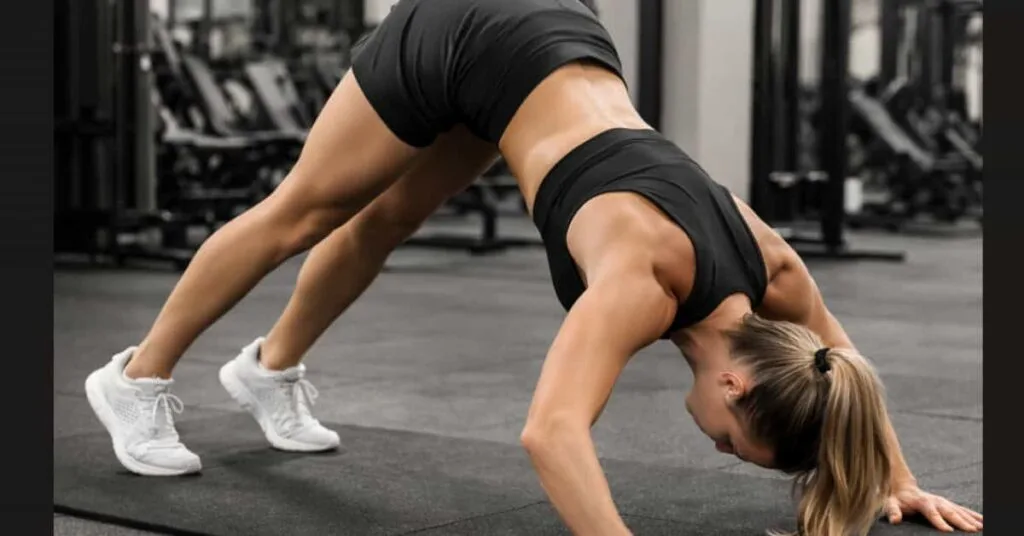
- Elbow Flaring: Letting your elbows point out to the sides like a “T” puts massive stress on the shoulder joint. Instead, keep them tucked at a 45-degree angle relative to your body.
- The “Head-Between-Hands” Mistake: Most beginners lower their head straight down. It puts the weight on your upper chest rather than your shoulders. You should lower your head in front of your hands.
- Arching the Back: If your lower back caves, your core has disengaged. It turns the move into an awkward incline chest press, putting your spine at risk.
- Bent Knees: While keeping legs straight requires hamstring flexibility, bending them significantly reduces the load on your shoulders.
- Partial Reps: Stopping halfway through the movement limits your strength gains. Aim to get your forehead as close to the floor as possible (without hitting it).
Critical Precautions of Pike Push Up
- The Tripod Rule: At the bottom of the movement, your head and your two hands should form a triangle (tripod) on the floor. If they are in a straight line, your form is incorrect.
- Watch the Dizziness: Being inverted can cause lightheadedness. Always stand up slowly after a set, and avoid this exercise if you have high blood pressure or issues with vertigo.
- Wrist Health: This move puts significant pressure on the wrists. If you feel sharp pain, use parallettes or dumbbells as handles to keep your wrists in a neutral, straight position.
- Shoulder Warm-Up: Never jump into pike push-ups cold. Perform 2-3 minutes of arm circles, band pull-aparts, or cat-cow stretches to lubricate the shoulder joints.
Conclusion
The Pike Push-Up stands as one of the most effective and accessible tools for developing elite upper-body strength. By mastering this movement, you aren’t just building larger shoulders; you are creating the foundational overhead stability, core control, and scapular health required for advanced calisthenics and functional daily life. It serves as the ideal bridge for those transitioning from basic fitness to advanced bodyweight mastery, like the handstand push-up.
[…] Pike Push-ups (Harder for Shoulders): Put your hands on the floor, then pike the hips high so the body forms an “A.” It focuses almost entirely on your shoulders. […]