

Table of Contents
Introduction
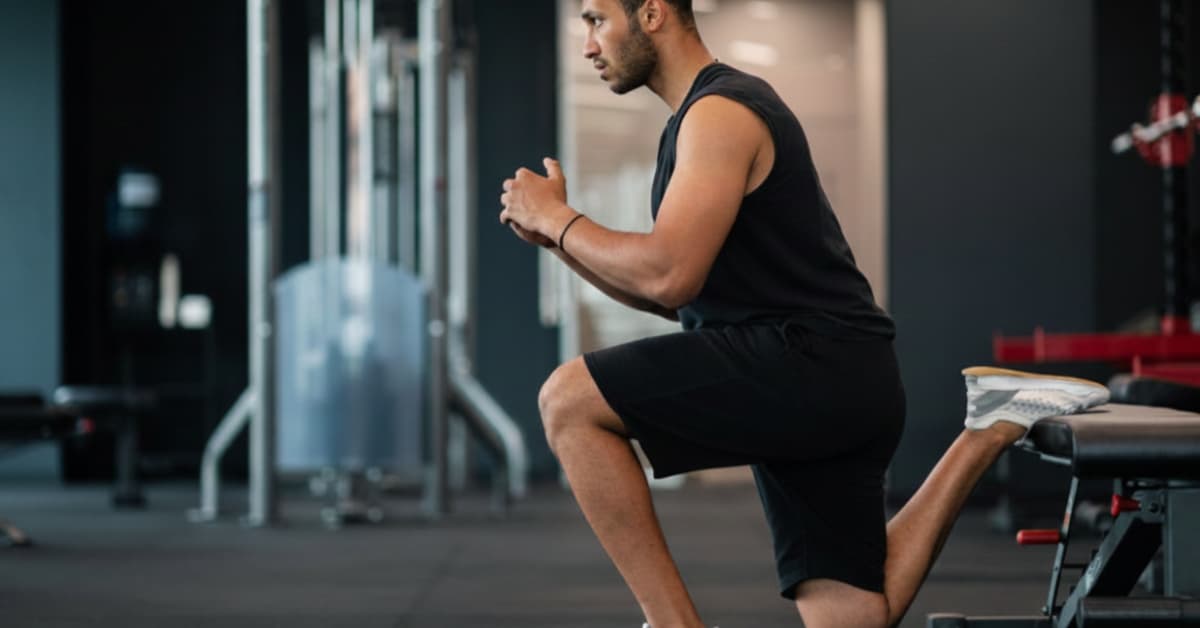
The Bulgarian split squats is a beneficial unilateral lower-body exercise or movement that targets the quadriceps, glutes, and hamstrings while simultaneously challenging core stability & balance. Unlike a traditional split squat, instead of keeping both feet on the floor like a regular or normal split squat, you place your back foot up on a bench or chair. It shifts almost all your weight, about 80% – 90% onto your front leg. Because one leg does most of the work, it is a great way to address strength gaps between your legs, build muscle, and boost power.
Plus, it’s easier on your spine than a heavy barbell squat because you don’t have to balance a huge weight across your shoulders. Because it demands significant hip mobility and coordination, it is frequently considered both one of the most productive and the most physically demanding activities in a strength-training repertoire.
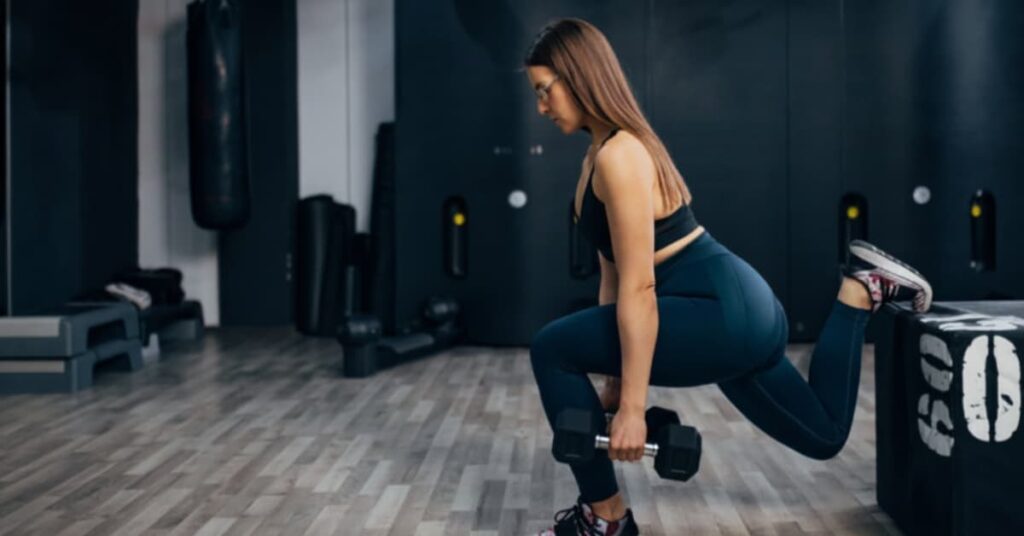
Bulgarian split squats
The exercise is a compound movement, as it involves numerous joints (hips, knees, ankles) & muscle groups (quads, glutes, hamstrings, core, calves) working together in a single movement, making it excellent for building overall lower body strength, balance, and correcting imbalances, unlike isolation moves that focus on a single muscle. It is famous for its versatility, as it can be biased toward the quadriceps by maintaining an upright torso or toward the glutes by leaning slightly forward. Because it places less stress on the lower back than barbell back squats, it is often the preferred choice for athletes seeking to build serious leg power and hypertrophy without excessive spinal loading.
Bulgarian split squats instruction
- Setup: Stand a few feet in front of a bench and place the rear foot (laces down) on the bench’s edge.
- Stance: Keep feet hip-width apart for balance & don’t stand on a “tightrope.”
- Descent: Drop the back knee straight down toward the floor under control.
- Alignment: Keep the front knee tracked over the toes and avoid letting it cave inward.
- Torso: Lean a little forward for glutes and stay upright for quads.
- Drive: Push firmly through the heel and midfoot of the front leg to stand back up.
- Core: Keep the chest up and abs tight to prevent the lower back from arching.
- Balance: If wobbly, stare at a fixed point on the floor about 3 to 5 feet in front of you.
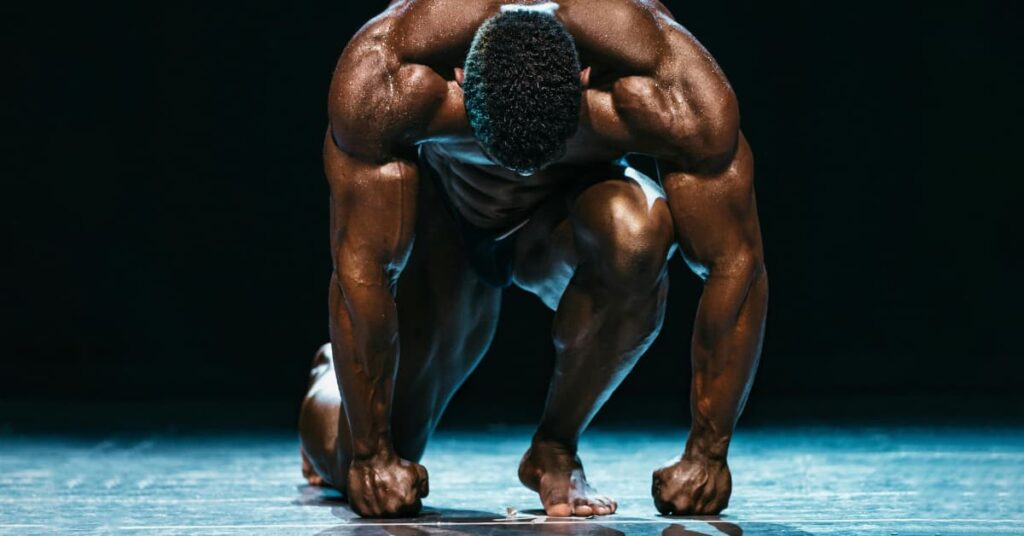
Bulgarian split squats target the muscles.
1. Primary Muscles Targeted
These muscles do the heavy lifting to move your weight:
- Quadriceps: The four muscles on the front of your thigh. They are the primary or leading movers responsible for extending your knee.
- Gluteus Maximus: The most remarkable muscle in your buttocks. It drives hip extension to push you back up to the starting position.
- Adductor Magnus: The large muscle on the inner thigh that helps stabilize the hip & assists in extending the leg.
2. Secondary & Stabilizing Muscles
These muscles support the movement and maintain your balance:
- Hamstrings: Located on the back of the thigh, they act as stabilizers to support the knee and hip.
- Gluteus Medius & Minimus: The side glute muscles that prevent your pelvis from tilting and keep your knee from caving inward.
- Core (Abs & Obliques): These muscles contract intensely to keep your torso upright and prevent wobbling.
- Erector Spinae: The muscles, together with the spine, that maintain a neutral back posture.
- Calves (Gastrocnemius & Soleus): These stabilize the ankle of the front leg to keep your foot firmly planted.
Bulgarian split squats benefits
The Bulgarian split squats is widely considered one of the best “bang-for-your-buck” leg exercises because it offers a unique mix of strength, muscle growth, and health benefits.
1. Muscle Growth & Strength
- Severe Hypertrophy: By putting 80% to 90% of your weight on one leg, you create massive tension in the quads and glutes, which is the key to building muscle.
- Corrects Imbalances: Since each leg works independently, your stronger side can’t “cheat” for the weaker one. This helps fix uneven muscle size and strength.
- High Load Potential: Unlike some balance-heavy exercises (like pistol squats), the rear foot acts as a stabilizer, allowing you to hold heavy dumbbells and lift significant weight.
2. Health & Safety
- Saves Your Back: Because you aren’t balancing a heavy barbell on the shoulders, there is much less “axial loading” (compression) on the spine. This makes it a great alternative if you have lower back issues.
- Hip Flexibility: The back leg receives a deep stretch in the hip flexors, helping combat the tightness caused by sitting all day.
- Joint Friendly: It requires less ankle mobility than a traditional squat and can actually help strengthen the small stabilizer muscles that protect your knees.
3. Athletic Performance
- Better Balance: It forces the core and “side glutes” (glute medius) to work overtime to keep you from falling over, improving the overall stability.
- Real-World Power: Most athletic movements (running, jumping, climbing) happen one leg at a time. This exercise trains your body to produce power in that specific way.
Bulgarian split squats Variations.
Bulgarian split squats variations let you adjust the difficulty level or shift the focus to various muscle groups. Here are the most common versions:
1. Muscle-Focus Variations
- Glute-Dominant: Take a wider stance (with the front foot farther out) & lean the torso forward at a 30-degree angle. This stretches the glutes more at the bottom.
- Quad-Dominant: Keep the front foot closer to the bench and maintain a completely upright torso. It forces the front knee to track forward, putting more load on the quads.
2. Equipment & Loading Variations
- Goblet: Hold one dumbbell or kettlebell against the chest. It is the easiest weighted version for beginners and allows the tortoise to stay so upright.
- Dumbbell (Suitcase): Hold a dumbbell in each hand at the sides. It allows for the heaviest weight but requires more grip strength.
- Barbell: Place a barbell across your upper back. It is an advanced version that drastically increases the balance challenge.
- Smith Machine: Perform the squat using the guided rails of a Smith machine. It removes the balance requirement, allowing you to focus purely on pushing maximum weight.
3. Intensity & Range Variations
- Deficit: Place your front foot on a small platform or weight plate. It allows you to drop your hips even lower than floor level for a deeper stretch.
- Heel-Elevated: Place a small wedge or plate under the heel of your front foot. It increases knee range of motion and is excellent for quad growth.
- Plyometric (Jump): Perform the movement explosively so your front foot leaves the ground. It builds athletic power and speed.
- Assisted: Hold onto a wall or a squat rack with one hand while performing the movement. It is perfect for beginners who struggle with balance.
Bulgarian split squats comparison with other exercises
- Split squats vs Bulgarian split squats: While both exercises share a similar lunging pattern, the fundamental difference lies in stability and intensity. In a standard split squat, both feet remain flat on the floor, and providing a stable base that makes balancing easier and is ideal for beginners or those lifting very heavy weights. In contrast, the Bulgarian split squats needs you to place the back foot on a bench or platform. This elevation shifts approximately 80% – 90% of your weight onto the front leg & allows for a deeper range of motion. Because it is harder to balance, the Bulgarian version recruits more stabilizer muscles. It creates greater mechanical tension in the glutes and quads, creating it a superior choice for muscle growth and correcting strength imbalances. However, it requires significantly more coordination and hip flexibility than the traditional version.
- Bulgarian split squats vs pistol squat: While both are elite single-leg movements, the Bulgarian split squats is primarily a muscle-building exercise, whereas the pistol squat is a high-level skill. In a Bulgarian split squats, your back foot is supported on a bench, providing enough stability to lift heavy weights (like dumbbells or a barbell), making it the superior choice for building glute and quad size. In contrast, the pistol squat is a “true” single-leg squat, with the non-working leg held out in front of you. It requires extreme balance, core strength, & ankle mobility, often making the movement more about flexibility & control than raw muscle growth. Essentially, use the Bulgarian version if you want to get stronger and bigger, & the pistol squat if you’re going to master bodyweight control and athleticism.
- Bulgarian split squats vs. lunges: While both are famous unilateral movements, the key distinction lies in their dynamic vs. static mechanics. A lunge is a dynamic activity in which you step forward, backward, or sideways, requiring significant coordination & “deceleration” as you shift your weight on each rep. It makes lunges highly functional for athletes who need to move and change direction quickly. On the other hand, the Bulgarian split squat is a static exercise in which your feet stay planted throughout the set, with the rear foot elevated. This fixed position allows you to focus purely on the “up and down” motion, providing a deeper range of motion and making it much easier to load with heavy weights. Ultimately, if your goal is athleticism and coordination, lunges are king; if your goal is maximum muscle growth and strength, the Bulgarian split squat is the superior choice.
Precautions and common errors
Common Errors (What to Avoid)
- The “Tightrope” Stance: Placing the back foot directly behind the front foot makes balancing almost impossible.
- Fix: Keep your feet hip-width apart (like they are on train tracks).
- The “Hop” Test: Spending the whole set hopping around because your front foot is too close or too far from the bench.
- Fix: Sit on the bench, extend one leg straight out, and mark where your heel lands. That is your ideal front-foot placement.
- Pushing with the Back Leg: Beginners often try to “help” with the back leg. It can strain the back knee and reduce the work on your target muscles.
- Fix: Think of the back foot as a “kickstand” only. 90% of your power should come from your front heel.
- Rising onto Toes: If your front heel lifts off the ground, your foot is likely too close to the bench, putting excessive stress on your knee joint.
- Fix: Keep your front foot flat and move it forward slightly.
Safety Precautions
- Bench Height: Using a bench which is too high can force your lower back to arch painfully.
- Tip: The platform should be roughly knee-height or slightly lower.
- Knee Alignment: Ensure your front knee tracks in line with the middle toe. If it “caves” inward (valgus), it can lead to ACL or meniscus strain.
- Spinal Position: Avoid “rounding” your back or looking down at your feet.
- Tip: Keep your chest “proud” and pick a spot 5 feet ahead of you on the floor to stare at for balance.
- Existing Injuries: If you have active knee or lower back pain, start with a regular Split Squat (both feet on the floor) before graduating to the elevated version.
Conclusion
In conclusion, the Bulgarian split squat is the most effective single leg exercise for anyone looking to build serious lower body strength & muscle without straining the lower back. While it is famously challenging & needs a high degree of balance and mental grit, its ability to fix muscle imbalances & improve athletic power is unmatched by traditional bilateral squats. Whether you prioritize it for glute development or quad growth, the key to success lies in mastering a stable setup & maintaining controlled form. If you may push through the initial “burn” and stability challenges, this movement will undoubtedly become one of the most rewarding components of your strength training routine.
[…] Bulgarian Split Squats: Elevating the rear foot on a bench forces the front leg to handle the majority of the weight. To maximize quad engagement, keep the torso upright rather than leaning forward. […]
[…] squat is one of the most effective & safest exercises you can do to build a more substantial lower body and a healthier back. Because you hold the weight in front of you, it naturally fixes your posture […]