

Table of Contents
Introduction
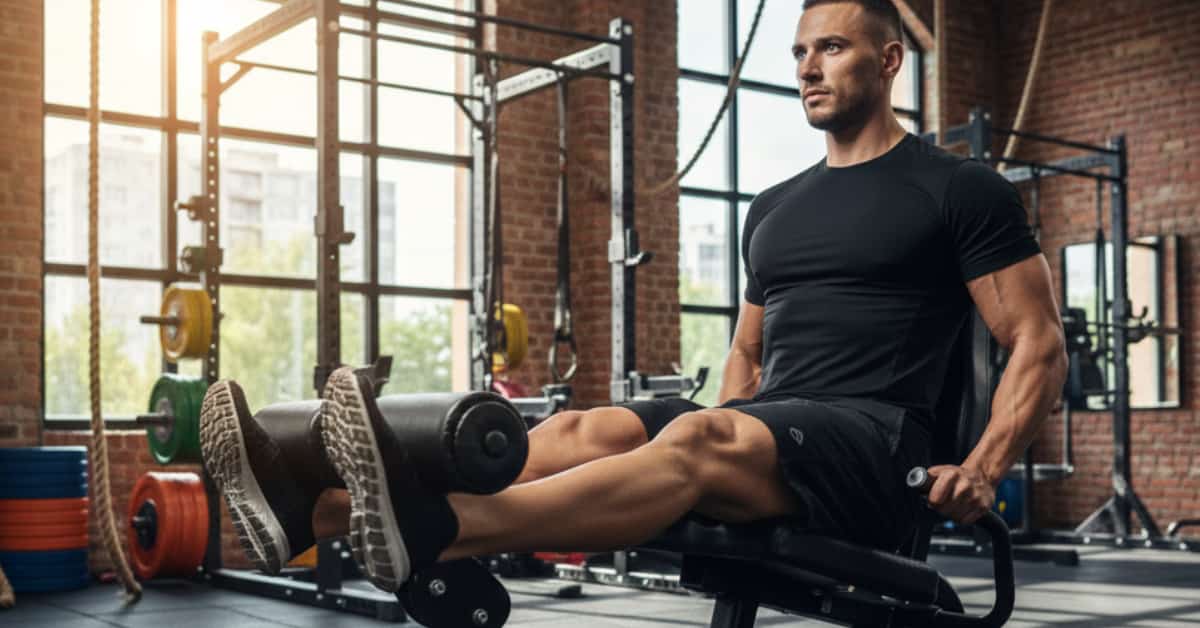
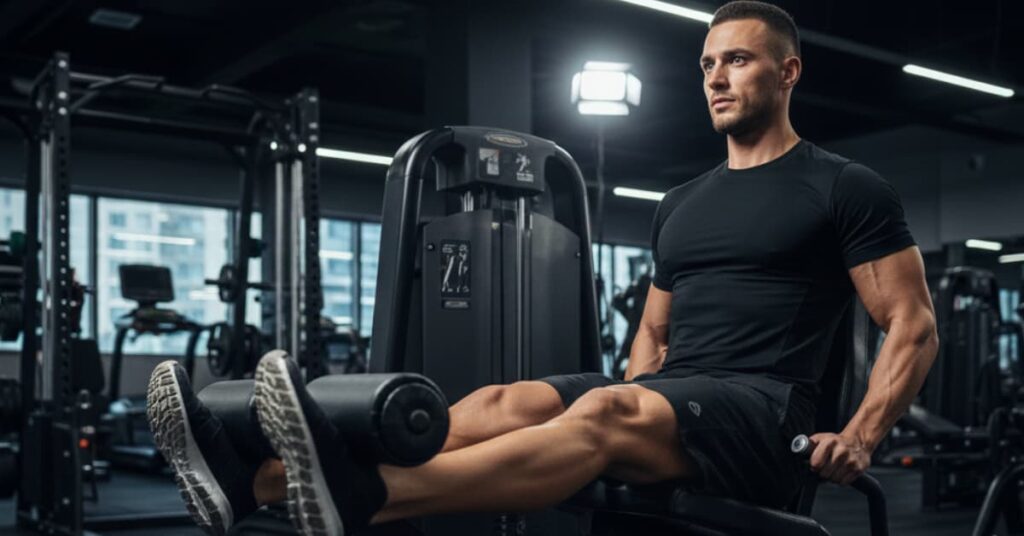
The leg extension is a famous isolation exercise or movement mainly designed to target & strengthen the quadriceps muscles on the front of the thighs or legs. Generally performed on a specialized lever machine, the activity involves sitting with the back supported and straightening the knees against resistance. Unlike compound movements or exercises such as squats or lunges, which engage multiple muscle groups simultaneously, the leg extension particularly isolates the four heads of the quadriceps: the rectus femoris, vastus lateralis, vastus medialis, & vastus intermedius. This makes it a valuable tool for building muscle mass, correcting leg strength imbalances, and supporting knee stability through managed, single-joint movements.
Leg Extension
In addition to building muscle size, the leg extension is often used in physical therapy and athletic conditioning to improve patellar stability and enhance functional knee extension. Because it offers a precise range of motion and adjustable resistance, it is an ideal activity for targeting the vastus medialis (VMO), the teardrop-shaped muscles near the knee that are vital for proper joint tracking. While it is often debated in fitness circles regarding its “open-chain” nature, when executed with controlled tempo and appropriate weight, the leg extension delivers a unique level of mechanical tension on the quadriceps that is challenging to replicate with free-weight movements alone.
Leg Extension Target Muscles
The direct target is the Quadriceps Femoris, which is really a group of four distinct muscle “heads.” Here is the breakdown of how they are engaged:
1. The Primary Targets (The Quadriceps)
- Rectus Femoris: This is the enormous muscle that runs down the center of the thigh. It is unique because it crosses both the hip and the knee. A study suggests that seated leg extensions target this muscle more than squats do.
- Vastus Lateralis: Discover on the outer side of the thigh. This muscle creates the “outer sweep” or width of the leg.
- Vastus Medialis: The teardrop-shaped muscle on the inner side of the thigh near the knee. It is essential for knee stability and tracking of the kneecap (patella).
- Vastus Intermedius: Situated deep in the center of the thigh, underneath the rectus femoris. You cannot see it from the surface, but it delivers significant power for extending the knee.
2. The Stabilizers
While the quads do 100% of the “heavy lifting,” other muscles act as secondary stabilizers to keep the body in the seat:
- Core (Abs/Obliques): Engage to keep the torso upright and prevent the hips from lifting off the seat.
- Forearms/Grip: Used when holding the side handles to anchor yourself against the weight.
- Hamstrings: Though they are not being “worked” in terms of growth, they act as antagonists to assist in stabilizing knee joint during the exercise or movement.
Leg Extension Benefits
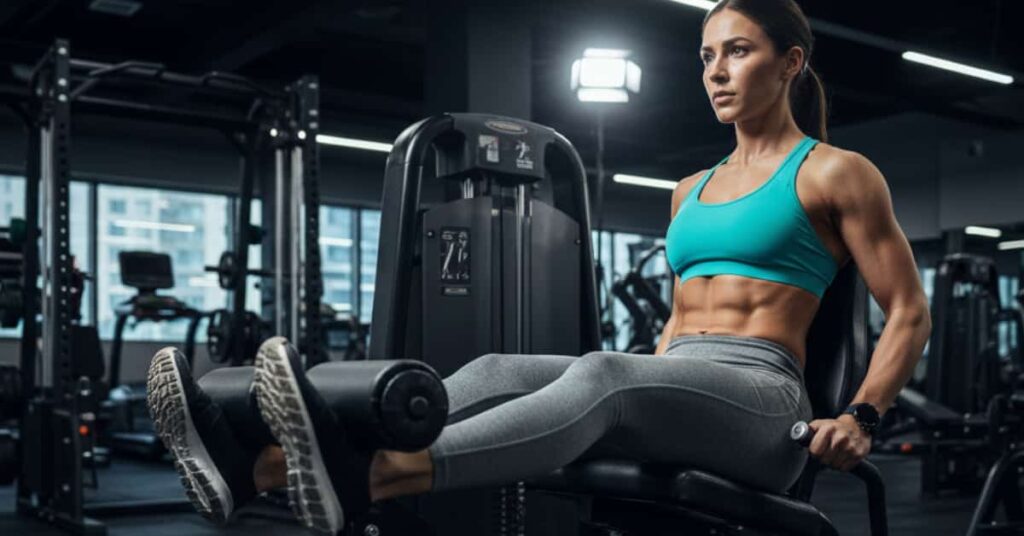
The leg extension is far more than just a “finisher” at the end of a workout. Because it is one of the few activities that allows for pure isolation of the quadriceps, it offers tremendous physiological and practical advantages:
1. Superior Quadriceps Hypertrophy
Unlike squats or leg presses, where the glutes and lower back often fatigue first, the leg extension forces the quadriceps to do 100% of the work. It is incredibly effective for developing the Rectus Femoris, which analysis suggests is not fully developed during compound exercises like squats because it crosses both the hip and knee joints.
2. Knee Stability and Rehabilitation
Physical therapists frequently use leg extensions to rebuild strength after ACL (Anterior cruciate ligament) surgery or knee injuries.
- Patellar Tracking: Strengthening the Vastus Medialis (VMO), the “teardrop” muscle, helps ensure the kneecap stays in its proper groove during movement.
- Ligament Support: By strengthening the tendons & muscles surrounding the joint, you create a natural “brace” which protects the knee during high-impact activities like running or jumping.
3. “Pre-Exhaustion” and Safety
For lifters with lower back issues or limited mobility, the leg extension can be utilized as a pre-exhaust tool. By doing extensions before squats, you can fatigue the quads so that you don’t need to use excessively heavy weights on the squat rack to feel a “burn,” thereby decreasing the compressive load on the spine.
4. Correcting Muscle Imbalances
Using a machine that allows for unilateral (single-leg) work is essential for identifying and fixing strength gaps. Most individuals have a “dominant” leg that takes over during a squat; the leg extension provides that each leg carries its own weight, preventing long-term postural issues.
5. Beginner-Friendly Mastery
Since the machine follows a fixed path of motion, there is a very low “learning curve.” Newbies can train to near failure with a much lower risk of injury than with free-weight exercises that require complex balance and coordination.
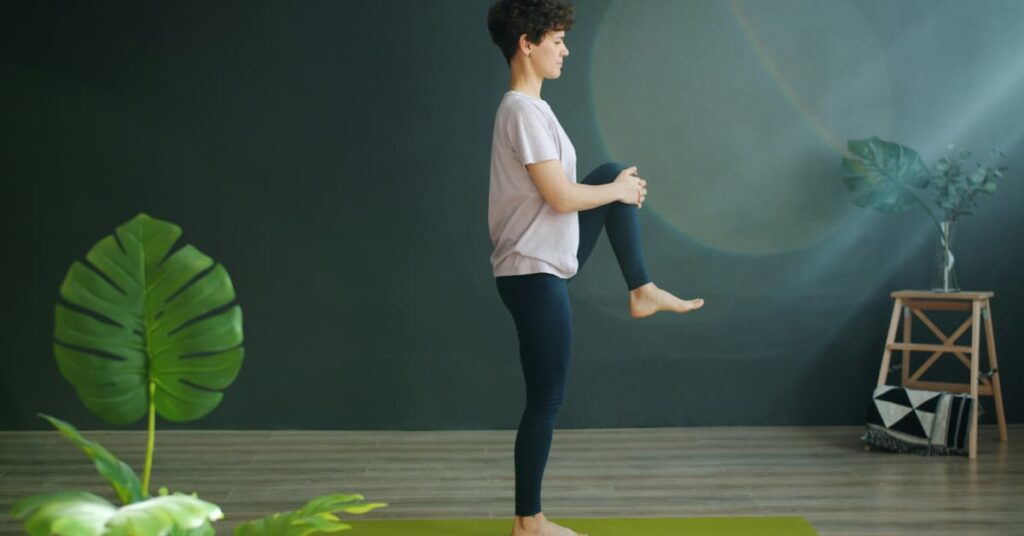
Leg Extension Alternatives
If you don’t have access to a leg extension machine or want to switch up the routine, there are several valuable ways to isolate or emphasize the quadriceps. These options range from bodyweight exercises to free-weight movements that mimic the knee-extension mechanic.
1. Pure Isolation Alternatives (No Machine)
These exercises most closely match the “single-joint” nature of the leg extension:
- Reverse Nordic Curls: Often named the “natural leg extension.” While kneeling on a mat, you slowly lean the torso backward while keeping the hips locked straight. It puts immense eccentric tension on the quads.
- Dumbbell Leg Extensions: Sit on a tall bench or chair so the feet hang freely. Squeeze a dumbbell between the feet and perform the extension movement exactly as you would on a machine.
- Sissy Squats: A classic bodybuilding move where you lean back while squatting, pushing the knees forward. It removes glute involvement and places the entire load on the quadriceps.
2. Quad-Dominant Compound Movements
These “multi-joint” exercises can be squeezed to shift the focus away from the glutes & onto the thighs:
- Cyclist Squats (Heel-Elevated Squats): By placing the heels on a 1–2-inch block or weight plate, you allow the knees to travel farther forward. It mechanically forces the quads to work harder than in a standard squat.
- Bulgarian Split Squats: Elevating the rear foot on a bench forces the front leg to handle the majority of the weight. To maximize quad engagement, keep the torso upright rather than leaning forward.
- Spanish Squats: Wrap a heavy resistance band around a pole and then around the back of the knees. As you squat, the band pulls the knees forward, forcing you to use the quads to “fight” the tension on the way up.
3. Home & Low-Equipment Options
- Resistance Band Extensions: Anchor a band behind a chair leg and loop it around the ankle. Extend the leg against the band’s tension.
- Wall Sits: An isometric hold that builds endurance. To increase the difficulty, try a single-leg wall sit to ensure both legs are equally strong.
- Step-Ups: Using a bench or sturdy box, step up while focusing on driving through the ball of your foot. It emphasizes the “teardrop” muscle (VMO).
Leg Extension Variations
While the standard seated version is most common, there are several leg extension variations you may use to change the intensity, target specific weaknesses, or adapt the exercise to the equipment.
1. Machine Variations
- Unilateral (Single-Leg) Extensions: By using one leg at a time, you can prevent the dominant leg from taking over. It is the gold standard for correcting muscle imbalances and is often utilized in physical therapy.
- Isometric Holds: Instead of constant activity, you extend the legs and hold the “lockout” position for 10–30 seconds. It builds immense time under tension and is excellent for strengthening the tendons around the knee.
- Pause Reps: Stop for 2 seconds at the top of every rep. It eliminates momentum and forces the rectus femoris (the middle quad muscle) to stay fully contracted.
- Partial Reps (Pulse Reps): After completing a full set, perform small “pulses” in the top third of the activity. It supports the muscle under peak tension to maximize the metabolic “burn.”
2. Positioning Variations (Toe Angling)
You can subtly shift which part of the quad is doing the most work by changing the direction the toes point:
- Toes Inward: Shifts the emphasis to the vastus lateralis (the outer quad “sweep”).
- Toes Outward: Shifts the focus to the vastus medialis (the inner “teardrop” muscle).
- Toes Up (Dorsiflexion): Keeps the focus purely on the quads.
- Toes Pointed Away (Plantarflexion): This can help people feel a deeper contraction in the lower part of the quad, though it may be less comfortable for some.
3. Non-Machine Variations (At Home/Alternative)
- Resistance Band Extensions: Sit on a chair and anchor a band behind you. Loop the other end around the ankle. It provides “ascending resistance,” meaning the exercise gets harder as the leg gets straighter.
- Dumbbell Seated Extensions: Sit on a tall bench and hold a dumbbell between your feet. It needs more stabilizer activation to keep the weight balanced as you extend.
- Terminal Knee Extensions (TKEs): Done standing with a band behind the knee. You push the knee back against the band until the leg is straight. It is a “functional” variation used extensively for knee rehab and patellar tracking.
4. Advanced Variations
- Negative-Accentuated Extensions: Use two legs to lift the weight, then remove one leg and lower the weight slowly (3–5 seconds) with just the other leg. It uses the fact that the muscles are stronger during the “lowering” phase.
- Lean-Back Extensions: By leaning the torso back during the movement, you stretch the rectus femoris at the hip, which can promote greater muscle growth in the upper thigh.
Leg Extension Precautions and Common Errors
While the leg extension is a strong tool for isolating the quads, it is often criticized for the stress it can place on the knee joint, specifically the ACL and the patellofemoral joint (the space behind the kneecap). Using proper form and machine setup is necessary to reap the advantages without injury.
1. Critical Machine Setup
Most “bad” experiences with leg extensions stem from a poor setup. Ensure these three points are aligned before you start:
- The Pivot Point: Look for the circular axis (often marked with a red or silver dot) on the side of the machine. The knees must be completely aligned with this axis. If the knees are too far forward or back, it creates a “shearing” force that grinds the joint.
- The Backrest: Adjust the seat so the back is flat against the pad, and the knees are resting snugly against the edge of the seat.
- The Ankle Pad: The pad should rest just above the ankles, not on the shins or the feet. Placing it too enormous increases pressure on the knee joint itself.
2. Common Errors to Avoid
- Locking the Knees: Avoid “slamming” the knees into a locked position at the top. Instead, straighten the legs fully but keep a “soft” knee (about 5° of flexion) to keep the tension on the muscle rather than the joint.
- Lifting the Hips: If the weight is too heavy, the body will instinctively try to lift the hips off the seat to use momentum. Use the side handles to pull yourself down into the chair, keeping the glutes glued to the pad.
- Using Momentum: Swinging the weight up quickly and letting it drop fast removes the work from the quads and risks a tendon snap. Use a controlled tempo (e.g., 2 seconds up, 1-second squeeze, 2 seconds down).
- Inconsistent Foot Position: Letting the feet flop or rotate wildly during a set can cause uneven pull on the kneecap. Keep the toes pointed up (dorsiflexed) to keep the quads fully engaged.
3. Safety Precautions
- The “Danger Zone”: For those with existing ACL issues or patellar pain, the most stressful part of the movement is the last 30 degrees (near full extension). In these cases, it is often safer to work in a partial range of motion (90° to 45°).
- Avoid Maximum Weights (1RMs): The leg extension is not a “power” lift. It is designed for higher repetitions (10–15+). Using extremely heavy weights for low reps (1–5) places excessive stress on the knee’s connective tissues.
- Pre-Existing Injuries: If you have had a recent ACL reconstruction, always consult a physical therapist before using this machine, as “open-chain” activities can sometimes pull on the new graft prematurely.
Conclusion
In summary, the leg extension is a highly specialized tool that offers benefits that compound movements cannot replicate. Isolating the quadriceps through a single-joint mechanical action provides a unique stimulus for muscle hypertrophy, particularly of the rectus femoris & the vastus medialis (VMO).