

Table of Contents
Introduction
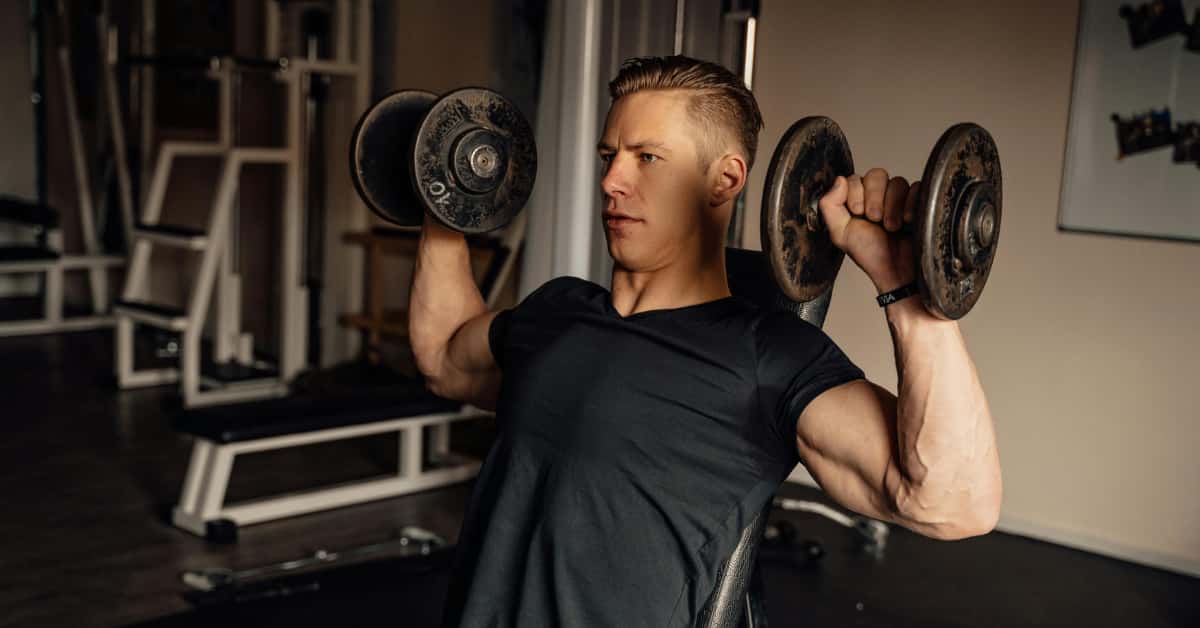
The Dumbbell Shoulder Press, also understood as the overhead press, is a fundamental compound exercise or movement that builds strength and muscle mass in the upper body. By pressing two dumbbells vertically from shoulder height to a fully extended or expanded position above the head, the movement mainly targets the anterior (front) and lateral (side) deltoids, while also engaging the triceps, upper pectorals, and trapezius. Unlike the barbell version, using dumbbells allows for a more natural range of motion & aids in identifying & correcting muscle imbalances between the left & right sides. Whether performed seated for greater isolation or standing to increase core stability, it remains a staple for improving overhead power and functional fitness.
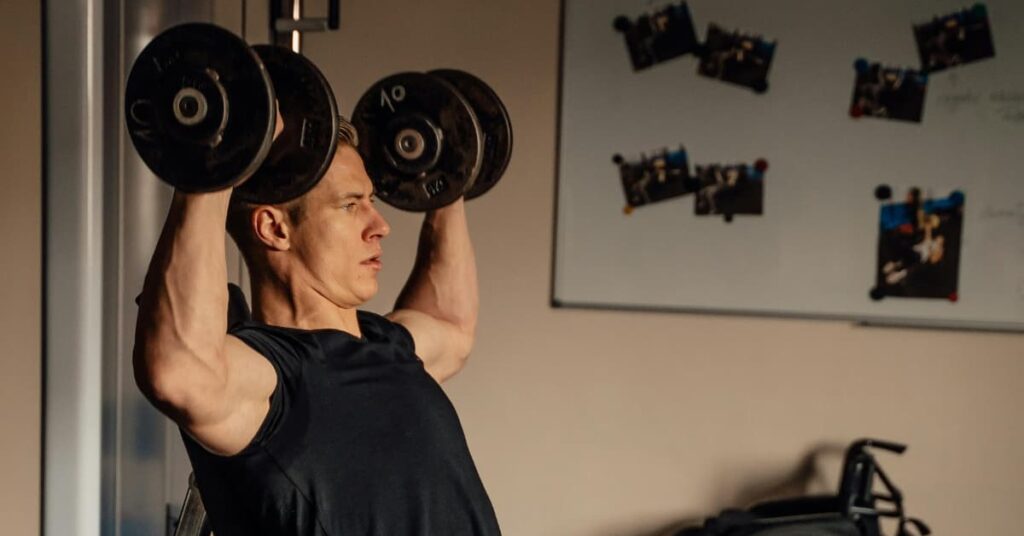
Dumbbell Shoulder Press
In addition to its muscle-building benefits, the dumbbell shoulder press is highly valued for its ability to enhance shoulder health and joint stability. Because the weights are moved independently, the exercise forces the smaller rotator cuff muscles to activate throughout the movement or activity to stabilize the shoulder joint. This multi-planar control not only promotes better posture but also translates directly into everyday activities, such as reaching for objects or lifting luggage. For athletes and fitness enthusiasts alike, mastering this lift lays a critical foundation for more advanced movements like push presses and snatches, making it an essential component of a well-rounded strength-training program.
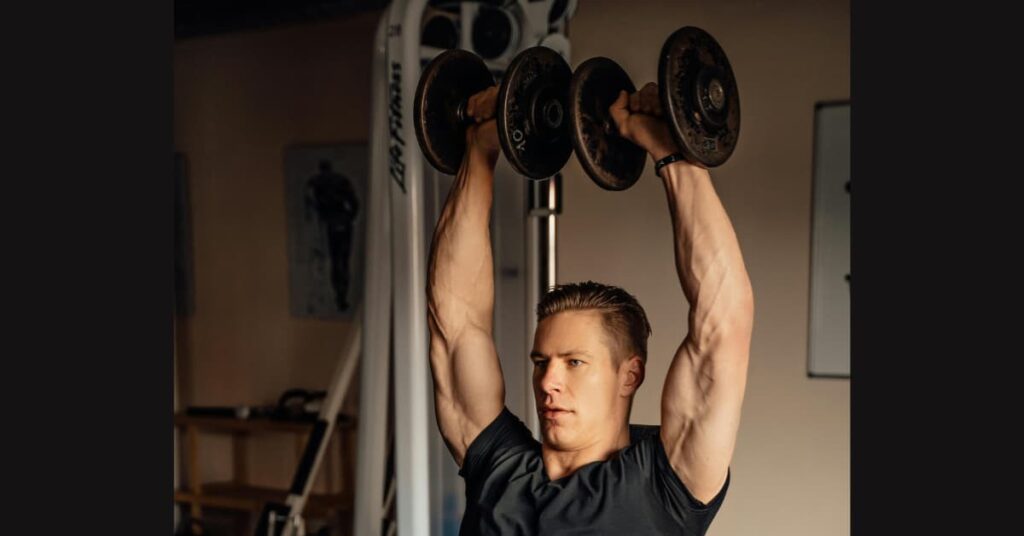
Dumbbell shoulder presses target muscles.
The Shoulder Press is a compound movement or exercise, meaning it recruits multiple muscle groups and joints simultaneously. While it is primarily a shoulder builder, its independent nature requires significant contributions from several stabilizing and secondary muscles.
Primary Muscles (The Prime Movers)
These muscles do the heavy lifting and are the primary targets of the exercise:
- Anterior Deltoids (Front Delts): The strongest driver of the movement, responsible for pressing the weight upward.
- Lateral Deltoids (Side Delts): These provide the “width” to the shoulders and are more activated in the dumbbell version than in the barbell press because the weights can be moved slightly farther to the sides.
- Triceps Brachii: Located on the back of the arms, the triceps engage to extend the elbows and lock out the weight at the top of the rep.
Secondary & Stabilizing Muscles
These muscles support the lift, maintain the posture, & ensure joint safety:
- Upper Trapezius: Helps stabilize and rotate the shoulder blades as the arms move overhead.
- Upper Pectorals (Clavicular Head): The uppermost part of the chest assists during the initial push from shoulder height.
- Rotator Cuff: A group of four small muscles that work overtime to keep the shoulder joint stable while you balance two independent weights.
- Core (Abs and Obliques): In the standing version, the core must remain braced to prevent the lower back from arching and keep the torso upright.
- Serratus Anterior: Often called the “boxer’s muscle,” it sits along the ribs and helps stabilize the shoulder blade (scapula) throughout the range of motion.
Dumbbell Shoulder Press Form and Instructions
The essential points for the Dumbbell Shoulder Press:
Quick Setup & Form
- Starting Position: Sit or stand tall with dumbbells at ear height.
- Grip: Palms facing forward or slightly inward (45-degree angle).
- Elbows: Keep elbows somewhat in front of the shoulders (the “scapular plane”).
- The Press: Push straight up until arms are extended but not locked out.
- The Descent: Lower the weights slowly and with control back to ear level.
Dumbbell Shoulder Press Benefits
The Dumbbell Shoulder Press is widely considered one of the most effective movements for building a strong, aesthetic upper body. Here are 9 key benefits of including it in the routine:
- Muscle Hypertrophy: It is a premier exercise for building mass in the deltoids, specifically the anterior (front) and lateral (side) heads, giving shoulders a rounded, “capped” look.
- Corrects Imbalances: Because each arm moves independently, the stronger side cannot compensate for the weaker side. It helps identify and fix strength and size asymmetries.
- Greater Range of Motion: Unlike a barbell, which is limited by the t-head, dumbbells allow you to bring the weights lower and press them higher in a more natural arc, increasing muscle fiber recruitment.
- Enhanced Shoulder Stability: Balancing two separate weights forces the rotator cuff and smaller stabilizer muscles to work harder, strengthening the joint and protecting against future injury.
- Wrist and Elbow Comfort: Dumbbells allow a “neutral grip” (palms facing each other), which is often much more comfortable for lifters with existing wrist or shoulder impingement.
- Core Strengthening: Especially when performed standing, the abs and lower back must work intensely to keep the torso upright and stable while the weight is overhead.
- Functional Strength: This movement mimics real-world activities, such as lifting luggage into an overhead bin or placing a child on the shoulders, making daily life easier.
- Increased Tricep Power: As a compound “push” movement, it significantly strengthens the triceps, which carries over to better performance in the bench press and push-ups.
- Improved Posture: By strengthening the traps, upper back, and core, the shoulder press helps counteract the “slumped” posture often caused by sitting at a desk all day.
Dumbbell Shoulder Press variations
To keep the routine fresh & target the muscles from different angles, you can swap the standard press for these variations. Each one shifts the focus slightly toward either isolation, core stability, or joint health.
1. The Arnold Press
- The Move: Start with the palms facing the chest. As you press upward, rotate the wrists so the palms face forward at the top.
- Benefit: Created by Arnold Schwarzenegger, this variation increases the range of motion and hits all three heads of the deltoid (front, side, and rear) more effectively than a standard press.
2. Single-Arm (Unilateral) Press
- The Move: Perform the press with only one dumbbell at a time, keeping the torso perfectly upright.
- Benefit: This is an incredible core builder. The obliques and abs must fire intensely to prevent the body from leaning toward the weighted side. It also helps fix strength imbalances between the left and right arms.
3. Neutral Grip (Hammer) Press
- The Move: Keep the palms facing each other (inward) throughout the entire lift.
- Benefit: This is the most shoulder-friendly version. It shifts the weight into the “scapular plane,” lowering the risk of shoulder impingement & often being more comfortable for whom with wrist or elbow issues or matter.
4. Seated vs. Standing Press
- Seated: Uses a bench for back support. It isolates the shoulders because you can’t use your legs or momentum to “cheat” the weight up. It’s best for pure muscle growth (hypertrophy).
- Standing: Requires total body coordination. It recruits the glutes, legs, & core to stabilize the weight. It’s best for functional strength & athletic performance.
5. Alternating Press
- The Move: Hold both dumbbells at shoulder height and press one at a time, alternating sides.
- Benefit: This increases Time Under Tension (TUT) because one arm is always holding a weight in the “active” starting position while the other arm moves.
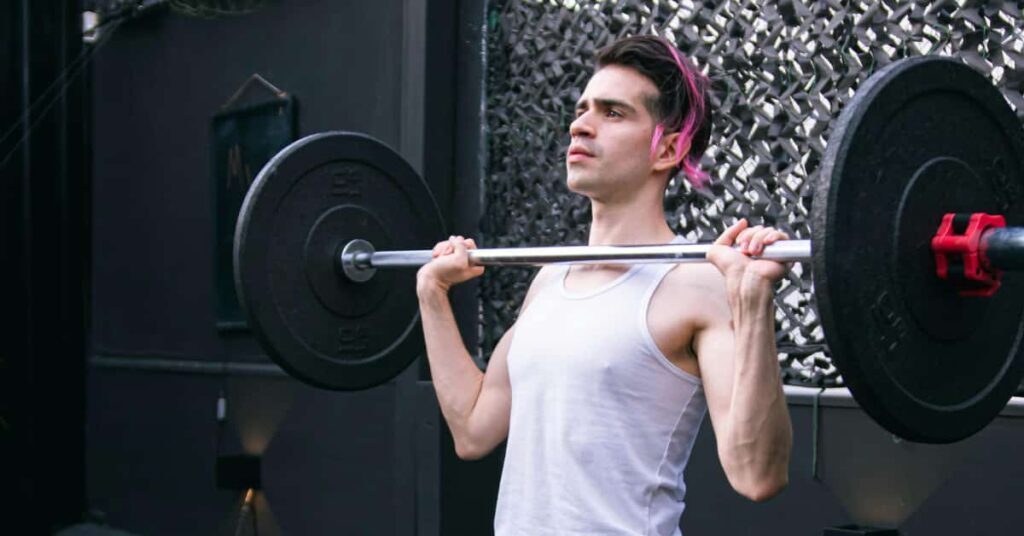
Dumbbell Shoulder Press alternative
If you don’t have dumbbells or want to target the shoulders differently, here are the best alternatives categorized by the goal:
1. For Raw Strength: Barbell Military Press
The “gold standard” for overhead power. Using a barbell allows you to lift significantly more weight than dumbbells, making it the best choice for overall upper-body mass and strength.
- Key Difference: It locks the hands into a fixed path, requiring less stability but allowing greater “overload.”
2. For Joint Health: Landmine Press
It involves placing one end of a barbell in a pivot (landmine) and pressing the other end.
- Why it works: You press at an upward angle rather than directly overhead. This is much easier on the shoulder joints and is the top choice for anyone with impingement or mobility issues.
3. For Core & Posture: The Z Press
Perform a press while sitting flat on the floor, legs spread in front of you (no back support).
- Why it works: Without the ability to use the legs or lean back against a bench, the core must work overtime to keep you upright. It forces perfect pressing mechanics.
4. For Explosive Power: Push Press
It is a shoulder press that uses a “dip and drive” from the legs to help propel the weight upward.
- Why it works: It allows you to move heavier loads and develops total-body coordination. It’s an excellent “functional” alternative.
5. For Bodyweight Training: Pike Push-Ups
Get into a downward-dog position (hips high in the air) and lower the head toward the floor between the hands.
- Why it works: It mimics the overhead press angle using one’s own body weight. As you get stronger, you can progress to Handstand Push-Ups against a wall.
6. For High Tension: Kettlebell Press
Because the weight of a kettlebell hangs behind the wrist, it pulls the shoulder into a more stable, externally rotated position.
- Why it works: It often feels “smoother” than a dumbbell and provides a unique challenge to the grip and forearm.
Dumbbell Shoulder Press Precautions and Common Errors
To ensure you get the most out of the Dumbbell Shoulder Press while keeping your joints safe, pay close attention to these common pitfalls and safety guidelines.
Common Form Errors
- Excessive Back Arching: Many lifters lean back too far, turning the move into an “Incline Chest Press.” It puts dangerous pressure on the lumbar spine. Fix: Squeeze the glutes & brace the core to keep the back neutral.
- Elbow Flaring: Pressing with the elbows flared out to 90 degrees can pinch the rotator cuff (impingement). Fix: Tuck the elbows slightly forward to about a 45-degree angle (the “scapular plane”).
- Half-Reps: Stopping the weight at eye level reduces muscle engagement. Fix: Lower the dumbbells until the handles are roughly level with the ears or chin for a full range of motion.
- Bent Wrists: Letting the weights pull the wrists backward can strain the wrists. Fix: Keep the wrists “stacked” directly over the elbows and forearms throughout the lift.
- Slamming Weights: Clinking the dumbbells together at the top can kill muscle tension and throw off the balance. Fix: Stop the weights just before they touch.
Safety Precautions
- The “Kick Up”: To avoid straining the shoulders at the start, rest the dumbbells on the thighs while seated. Use the knees to “kick” the weights up to shoulder height one at a time.
- Avoid the Ego: Shoulders are intricate, high-mobility joints. If your form breaks down or you have to “bounce” the weight, it is too heavy. Drop the weight to protect the rotator cuffs.
- Don’t Lock Out: Avoid locking your elbows at the top of the movement. Keeping a “soft” bend at the peak maintains tension on the deltoids rather than the joint.
- Breathe Correctly: Exhale on the way up (the exertion) and inhale on the way down. Holding the breath may cause a spike in blood pressure or dizziness.
Conclusion
In conclusion, the Dumbbell Shoulder Press is a powerhouse exercise or movement that deserves a spot in almost any strength training program. By offering a superior range of motion and improving individual arm stability, it serves as both a muscle-builder and a corrective tool for the upper body. Whether the goal is to build broader shoulders, improve athletic power, or maintain functional health for daily tasks, mastering the form of this lift is a high-return investment.