

Table of Contents
Introduction
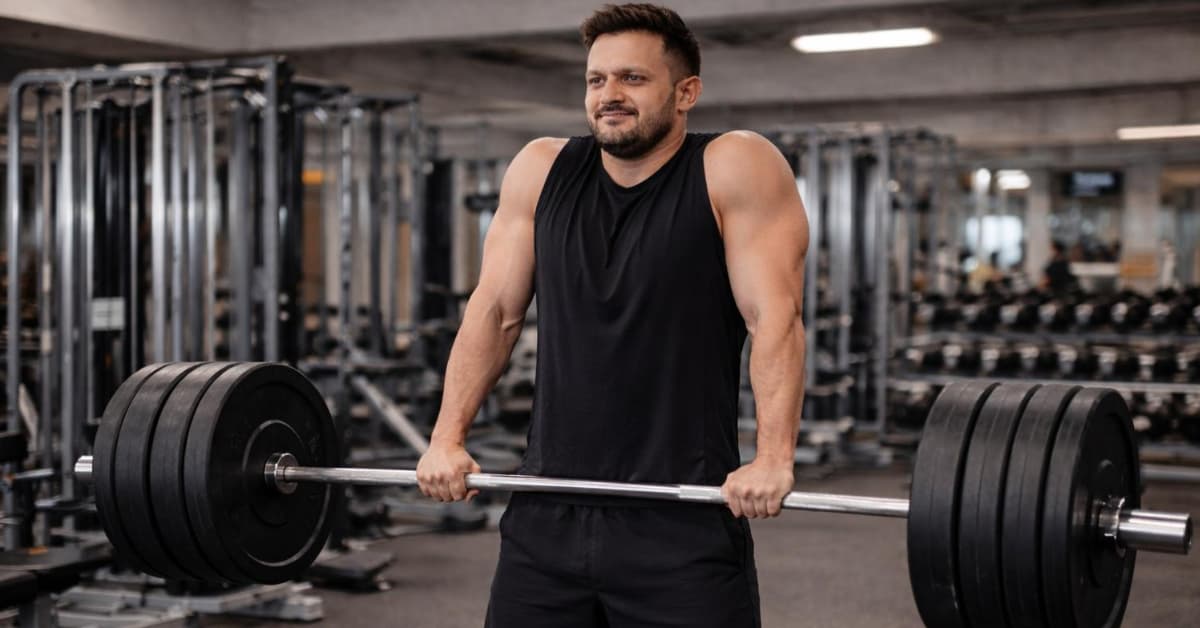
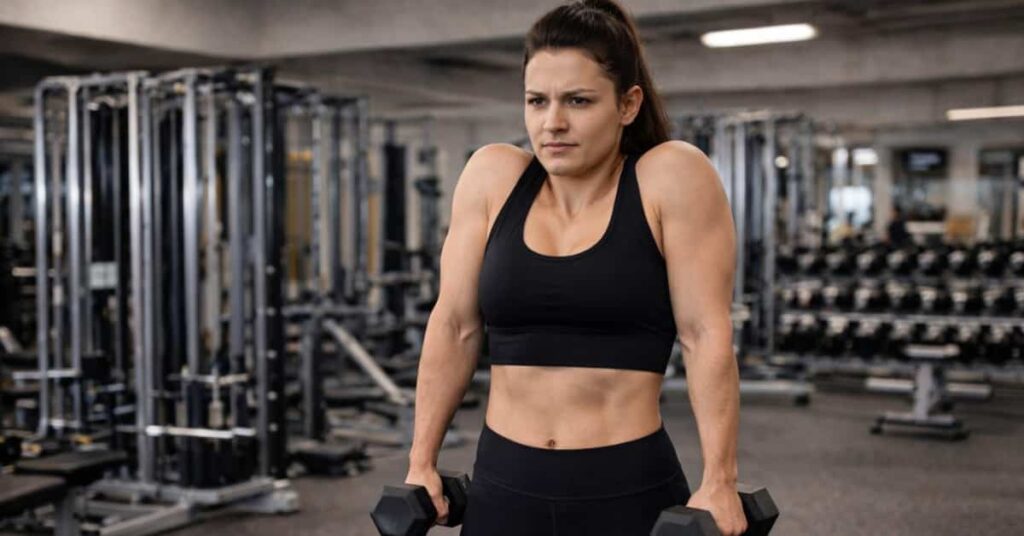
The shoulder shrug is a fundamental isolation exercise mainly designed to strengthen & thicken the upper trapezius muscles, which run along the top of the shoulders & the back of the neck. By utilizing a simple vertical “shrugging” movement to lift a resistance, commonly dumbbells, a barbell, or a trap bar, this exercise allows for improved neck stability, enhances overall shoulder health, & contributes to a powerful, well-defined upper body silhouette. Because it needs a minimal range of movement and involves straightforward mechanics, it is an accessible yet highly effective staple for athletes, bodybuilders, & fitness enthusiasts looking to bolster their pulling strength & support better posture.
Shoulder Shrugs
Beyond its aesthetic appeal for building a strong neckline, the shoulder shrug plays a crucial role in functional performance & injury prevention. By supporting the muscles that support the scapula and cervical spine, shrugs aid in stabilizing the shoulder girdle during heavy compound lifts and lower the chance of strain from long hours spent at a desk. The practice is also uniquely adaptable, permitting lifters to use various equipment, such as cables for constant tension or a trap bar for a more ergonomic grip. When completed with a focus on a deep squeeze at the top & a controlled stretch at the bottom, the shoulder shrug becomes a vital tool for creating a resilient upper body & maintaining a balanced, upright posture.
Shoulder Shrugs target muscles.
While the primary focus of the shoulder shrug is the upper back, it also engages several supporting muscles to stabilize the weight.
Primary Target Muscle
- Upper Trapezius: This is the “meat” of the exercise. The upper fibers on the trapezius are responsible for elevating your shoulder blades (scapula). It is the muscle that creates the thick look between your neck and shoulders.
Secondary (Supporting) Muscles
- Middle Trapezius: Helps stabilize the shoulder blades as you lift, especially if you pull your shoulders slightly back during the movement.
- Levator Scapulae: A long muscle located at the back and side of the neck that assists the traps in lifting the shoulder blades.
- Rhomboids: These sit under the traps and help retract and stabilize the scapula during contraction.
- Forearms (Grip Muscles): Because you have to hold heavy weights for the duration of the set, your wrist flexors and forearms get a significant workout.
- Erector Spinae: These lower back muscles work isometrically to keep your torso upright and prevent you from leaning forward under the load
Shoulder Shrugs: Form and Instructions
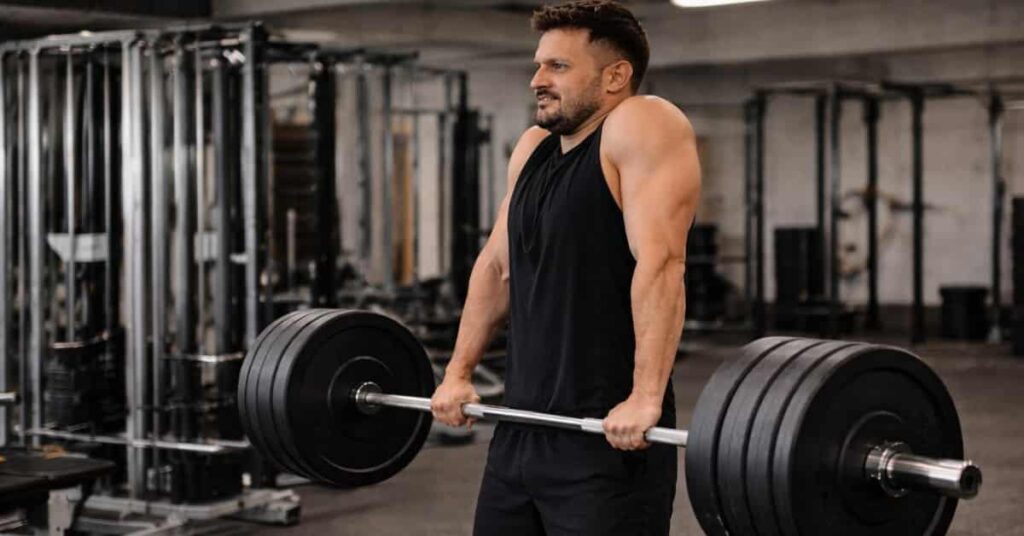
Proper Form & Instructions
- Starting Stance: Stand upright with feet shoulder-width apart. Grab weights (dumbbells or barbell) at the sides or in front with a firm hold.
- Neutral Spine: Keep the back straight, chest up, and look straight ahead. Avoid tucking the chin or looking down.
- The Lift: Breathe out and lift the shoulders toward the ears, keeping them in a straight vertical line. Keep the arms completely straight; do not bend the elbows.
- The Squeeze: Pause at the top of the movement for 1–2 seconds to maximize the contraction in the traps.
- The Descent: Lower the weights slowly & under control until you feel a deep stretch in the upper back.
- Shoulder Path: Move only up and down. Do not roll the shoulders in circles, as this adds unnecessary stress to the rotator cuffs.
shoulder shrugs Benefits
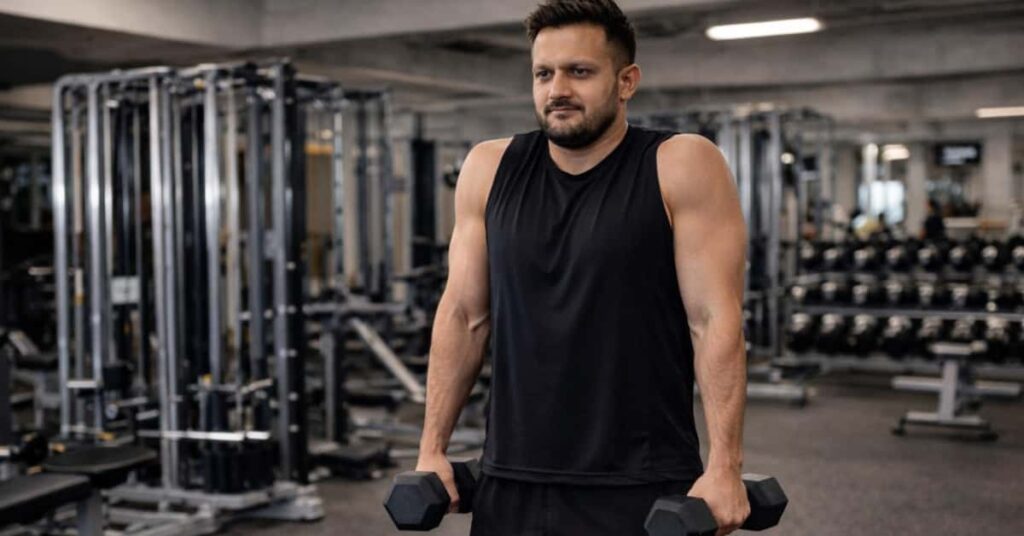
Here is a comprehensive list of 12 benefits of shoulder shrugs, covering everything from aesthetics and sports performance to daily health and injury prevention:
12 Benefits of Shoulder Shrugs
- Direct Trapezius Hypertrophy: It is the primary exercise for isolating the upper fibers of the trapezius, helping you build that “mountainous” look between the neck and shoulders.
- Corrects “Text Neck”: Shrugs strengthen the muscles that pull the shoulders back and down, effectively counteracting the slumped posture caused by heavy phone and computer use.
- Reduces Chronic Neck Pain: Strengthening the traps provides better support for the cervical spine, which research shows can significantly reduce tension-related neck & shoulder pain.
- Boosts Grip Strength: Since you must hold heavy weights for the duration of the set, shrugs are a secret weapon for developing massive forearm endurance and hand strength.
- Stabilizes the Shoulder Joint: By strengthening the muscles that control the shoulder blades (scapula), shrugs provide a stable “platform” for the rotator cuffs to function safely.
- Enhances “The Big 3” Lifts: Stronger traps offer better stability for the Squat (a shelf for the bar), the Deadlift (lockout strength), and the Bench Press (scapular base).
- Protects Against Whiplash: A stronger neck & upper back can better absorb effect, delivering a layer of protection against sudden jolts or sports-related collisions.
- Improves Athletic Power: Athletes in sports like baseball, tennis, & swimming usefulness from the improved force transfer & overhead stability that strong traps provide.
- Relieves Tension Headaches: Many headaches are caused by weak traps being overworked; strengthening them allows the muscles to handle daily stress without tightening up.
- Aesthetic Symmetry: Shrugs help fill out the “frame” of your upper body, ensuring your neck and traps don’t look underdeveloped compared to your chest and arms.
- Increases Shoulder Mobility: By improving scapular control, shrugs help the shoulder blades move more fluidly, which improves the overall range of motion in overhead reaches.
- Functional Life Strength: Daily tasks, from carrying heavy grocery bags to lifting a child, become easier & safer when the traps are conditioned to handle vertical loads.
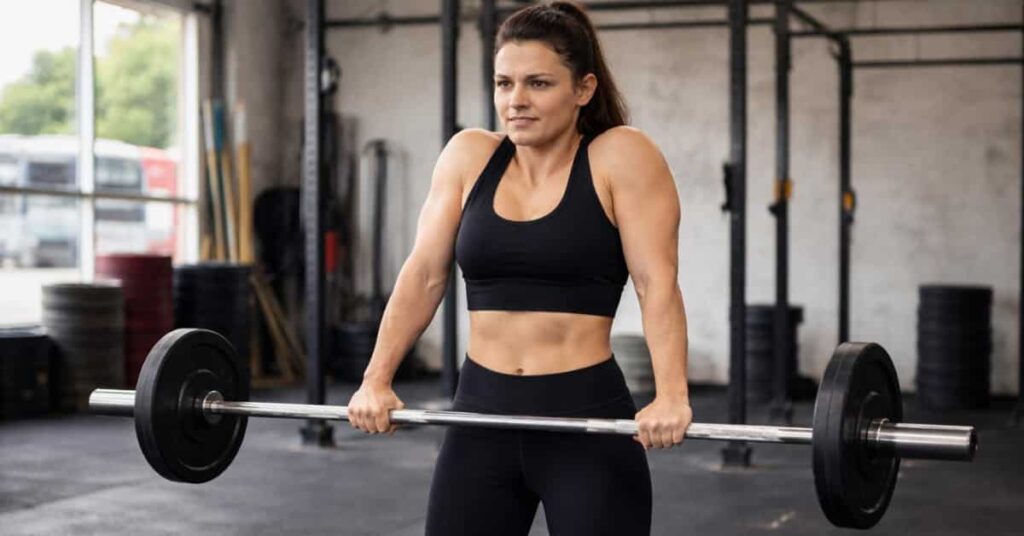
Shoulder Shrugs variations
The most effective variations of the shoulder shrug. Each one changes the angle of resistance or the grip to target the traps differently.
1. Dumbbell Shrugs
The most famous variation. Holding weights at the sides allows for a more natural shoulder position & a greater range of motion compared to a barbell.
- Best for: Beginners & those looking for maximum muscle contraction.
2. Barbell Shrugs (Front)
Using a barbell allows you to lift the heaviest weight possible. The bar is held in front of the thighs with an overhand grip.
- Best for: Pure strength and overall trap thickness.
3. Behind-the-Back Barbell Shrugs
Often called “Haney Shrugs” (after bodybuilder Lee Haney). Holding the bar behind the glutes forces the shoulder blades together.
- Best for: Targeting the middle traps and improving upright posture.
4. Trap Bar (Hex Bar) Shrugs
The gold standard for safety. You stand inside the bar and use a neutral grip (palms facing in).
- Best for: Heavy lifting with the least amount of stress on the lower back and shoulder joints.
5. Cable Shrugs
Using a cable machine provides constant tension. Unlike free weights, the resistance doesn’t drop off at the bottom of the activity or movement.
- Best for: Muscle endurance & a deep, controlled “burn.”
6. Smith Machine Shrugs
The Smith machine’s fixed path allows you to focus entirely on the squeeze without having to balance the weight.
- Best for: High-volume training and “drop sets” where you want to push to failure safely.
7. Overhead Shrugs
Holding a barbell or dumbbells locked out over your head while performing a shrug.
- Best for: Upward rotation of the scapula and elite-level shoulder stability.
Shoulder shrugs are an alternative.
Shrugs as a Safer Alternative To:
- Power Cleans: Shrugs provide the same trap “pop” without the high technical demand and wrist risk of an Olympic clean.
- High Pulls: If a reader has shoulder impingement, a heavy shrug is a safer way to hit the upper back without the high elbow pull.
- Deadlifts: For those with lower back issues, heavy shrugs (especially with a Trap Bar) stimulate the traps without the spinal load of a full deadlift.
Top Alternatives TO Shoulder Shrugs:
If a reader finds shrugs uncomfortable or lacks heavy weights, they can use these:
- Farmer’s Carries: Simply walking while holding heavy weights provides intense “isometric” tension on the traps.
- Rack Pulls: Pulling a barbell from knee height allows for much heavier loading than a standard shrug, forcing the traps to stabilize massive weight.
- Face Pulls: A great cable alternative that hits the traps while also improving rear delt and rotator cuff health.
- Overhead Squats/Presses: Holding the weight overhead forces the traps to act as stabilizers, keeping the bar steady.
Shoulder Shrugs: Precautions and Common Errors
Precautions
- Neutral Head Position: Keep the gaze straight ahead; tilting or poking the neck can cause nerve impingement or strain.
- Controlled Speed: Avoid “dropping” the weight; control the descent to protect the tendons and ligaments.
- Weight Selection: Use a weight that allows for a full 2-second hold at the top without straining the neck.
- Avoid Locking Knees: Keep the knees slightly bent to absorb pressure & protect the lower back.
- Use Straps if Needed: If the grip gives out before the traps, use lifting straps to ensure the target muscle gets a complete workout.
Common Errors
- Rolling Shoulders: Moving in circles instead of straight up and down increases the risk of rotator cuff injury.
- Bending Elbows: Turning the shrug into a “bicep curl” takes the tension off the traps.
- Short Reps: Stopping halfway instead of reaching for your ears; this limits muscle growth.
- Chin Jutting: Pushing your chin forward like a turtle puts dangerous pressure on the cervical spine.
- Using Momentum: Using a “leg bounce” to lift the weight rather than using pure trap strength.
- Looking Down: Looking at your feet rounds your shoulders and disrupts the lift’s alignment.
Conclusion
The shoulder shrug is the ultimate tool for anyone looking to build a strong, high-performance upper body. While it is often praised for its ability to create unique trap thickness and a dominant “power look,” its actual value lies in enhancing posture, supporting neck health, & building the grip strength necessary for heavy lifting.
By mastering the vertical path of the activity & avoiding common pitfalls like shoulder rolling or chin poking, you turn a simple motion into a high-impact growth builder. Whether you choose dumbbells for comfort, a barbell for strength, or a trap bar for safety, consistency with the shoulder shrug will ensure the upper back is as resilient as it is aesthetic.
[…] Shoulders: Exhale and slowly curl the shoulders off the floor (about 3–4 inches). Keep the lower back […]