

Table of Contents
Introduction
Crunches are a classic core-strengthening exercise or movement mainly designed to isolate & tone the rectus abdominis muscles, often referred to or described as the “six-pack.” Unlike a full sit-up, a crunch involves a smaller range of motion, lifting only the upper back off the floor, which helps minimize strain on the hip flexors and lower spine. This activity is highly regarded for its accessibility, requiring no equipment & its versatility, as it can be modified into variations like bicycle or reverse crunches to engage the obliques and lower abdominals. When performed with proper form and controlled breathing, crunches serve as a foundational movement for improving core stability and muscular endurance.
Crunches Exercise
Often considered the gold standard for abdominal isolation, the crunch is a functional bodyweight movement or practice that focuses on spinal flexion to contract the core. By pinning the lower back to the ground & curling the shoulders toward the pelvis, you create a concentrated tension that builds both strength & definition in the midsection. Because it is low-impact and easily scalable, it remains a staple in fitness routines ranging from beginner Pilates to advanced athletic conditioning. Beyond the aesthetic benefits, mastering the crunch contributes to better posture and a more supported spine by reinforcing the muscle groups responsible for trunk stability.
Crunches exercise the target muscles.
While the primary focus of a crunch is the front of the abdomen, the movement actually engages a specific group of muscles to stabilize the torso and flex the spine.
Primary Target: The “Six-Pack”
The rectus abdominis is the star of the show. It is the long muscle running vertically down the front of the abdomen. Its main job during a crunch is to pull the ribcage toward the pelvis, creating that signature “burn.”
Supporting Muscles
To perform the movement smoothly, several other muscles act as stabilizers or secondary movers:
- Obliques: Located or found on the sides of the waist, the internal & external obliques help stabilize the torso during the upward lift.
- Transverse Abdominis: The deepest layer of abdominal tissue or muscles. It acts like a natural corset, compressing the ribs & providing core stability.
- Iliopsoas (Hip Flexors): While crunches aim to minimize their involvement compared to sit-ups, they still provide minor stabilization to keep the lower body anchored.
Crunches Exercise: Form and Instructions
Here is the breakdown for proper form:
Setup
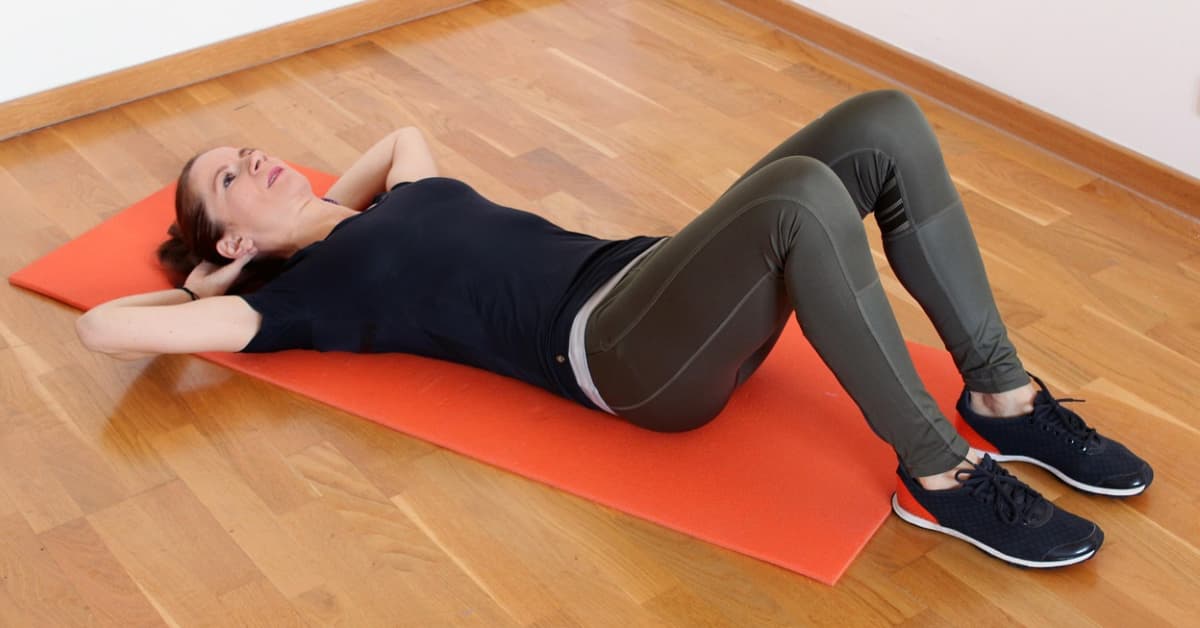
- Lie Flat: begins on a stable, comfortable surface (like a yoga mat).
- Bend Knees: Put the feet flat on the floor, hip-width apart.
- Hand Placement: Gently put the hands behind the head or cross them over the chest. Avoid pulling on the neck.
The Movement
- Engage Core: Draw the belly button toward the spine to “brace” the abdominals.
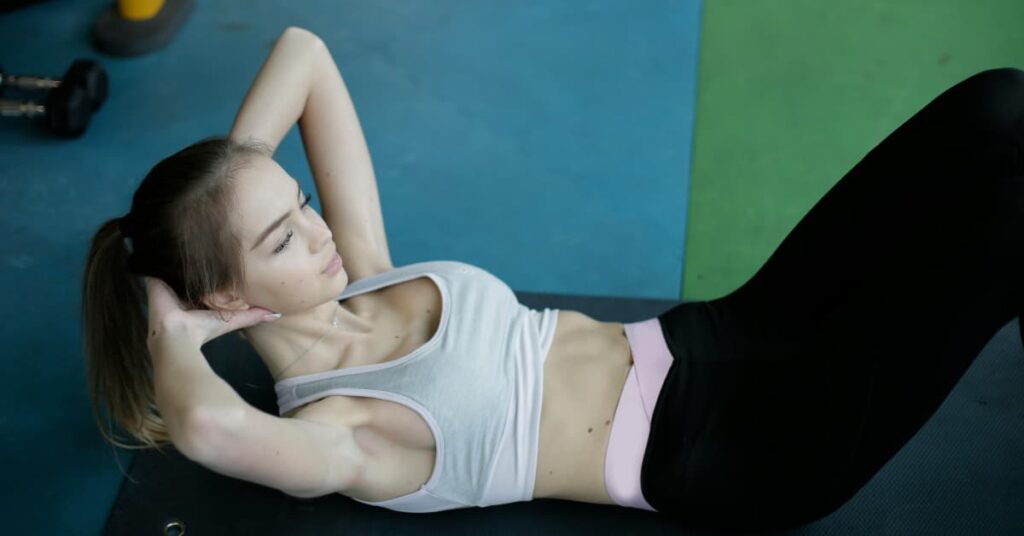
- Lift Shoulders: Exhale and slowly curl the shoulders off the floor (about 3–4 inches). Keep the lower back pressed firmly into the ground.
- The “Tennis Ball” Gap: Keep the chin tucked slightly, leaving enough space between the chin and chest for an imaginary tennis ball.
- Peak Contraction: Hold the top position for a second to feel the abs at maximum tension.
The Return
- Control the Descent: Inhale and slowly lower back down to the starting position.
- Don’t Relax: Try to keep slight tension in the abs between reps rather than fully “flopping” back onto the floor.

Crunches Exercise Benefits
Here are 12 significant benefits of incorporating crunches into your fitness routine:
- Isolation of the Rectus Abdominis: Crunches are among the most effective ways to target the “six-pack” muscles, allowing focused hypertrophy (muscle growth) in the upper abdomen.
- Increased Core Endurance: Performing high-repetition sets improves the endurance of the abdominal wall, helping you maintain physical activity for longer without fatigue.
- Improved Spinal Support: Stronger abs help support the front of the spine, reducing pressure on the vertebrae during daily tasks.
- Better Balance: The core is at the center of gravity. Strengthening it through crunches enhances your ability to stay upright and steady on uneven surfaces.
- Enhanced Athletic Performance: Whether you are swinging a golf club, throwing a ball, or running, power is transferred through the core. A firmer midsection means more efficient movement.
- Lower Back Protection: While crunches don’t directly target the back, they create a balanced muscular “corset” around the midsection, helping prevent the lower back from overcompensating during heavy lifting.
- Postural Alignment: Weak abs often lead to an anterior pelvic tilt (excessive arching of the back). Crunches help pull the pelvis back into a neutral position, improving your silhouette and standing height.
- Flexibility of the Spine: Controlled flexion during a crunch helps maintain a healthy range of motion in the thoracic & lumbar regions of spine.
- Organ Protection: A firm abdominal wall acts as a natural shield for your internal organs, providing a layer of protection against external impact.
- Metabolic Boost: While they aren’t high-calorie burners like running, building lean muscle mass in your core increases the resting metabolic rate, assisting you in burning more energy at rest.
- Cost-Effective Fitness: They require no gym membership, weights, or specialized gear, removing the financial and logistical barriers to getting a workout in.
- Mind-Muscle Connection: Because the movement is small and deliberate, it teaches you how to consciously engage and “fire” your abdominal muscles, a skill that carries over into more complex lifts like squats and deadlifts.
Crunches variations
I’ve broken these down into categories based on which part of your core they emphasize. Each of these adds a different challenge to the standard crunch.
Oblique-Focused Variations
- Bicycle Crunches: While lying on the back, bring the opposite elbow toward the opposite knee in a pedaling motion. It is widely considered one of the best moves for overall abdominal engagement.
- Russian Twists: Sit with the knees bent & feet slightly off the ground. Lean back at a 45 degree angle & rotate the torso from side to side, touching the floor on each side.
- Side Crunches: Lie on your side with your knees stacked and bent. Use your obliques to lift your upper torso toward your hip.
Lower Abdominal Variations
- Reverse Crunches: Instead of moving your upper body, keep your back on the floor and tuck your knees toward your chest, slightly lifting your hips off the ground at the top of the movement.
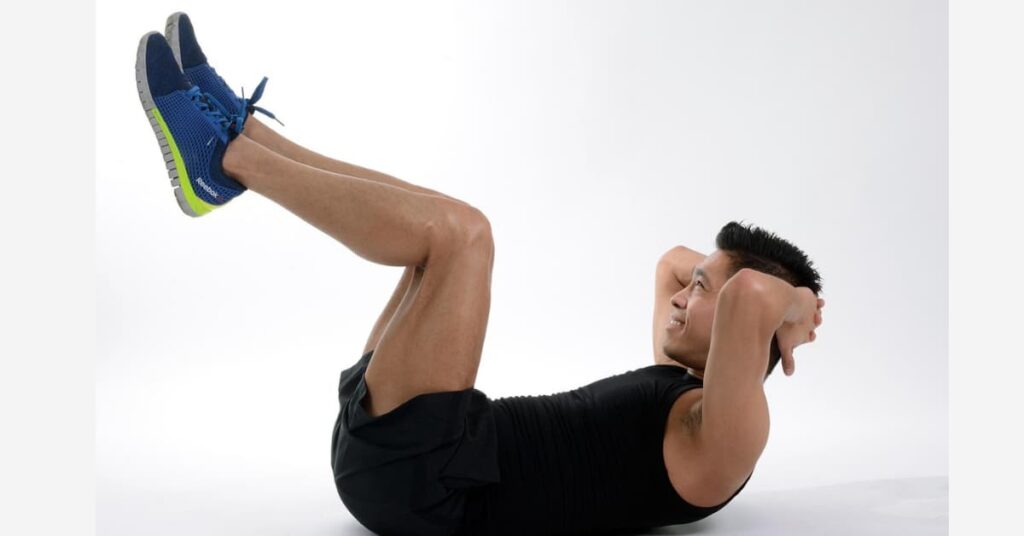
- Vertical Leg Crunches: Extend your legs straight up toward the ceiling (forming an “L” shape with your body). Reach your hands toward your toes as you crunch upward.
- Bird-Dog Crunches: From a tabletop position on the hands & knees, extend one arm & the opposite leg. Bring them together to touch under your torso, rounding your back and squeezing your abs.
Increased Difficulty (Advanced)
- V-Sits: Simultaneously lift your torso and your legs off the ground, reaching for your feet so your body forms a “V” shape at the peak.
- Tuck Crunches: Start lying flat and simultaneously bring your knees to your chest and your chest to your knees, meeting in the middle in a “tucked” ball position.
- Cable Crunches: Done at the gym using a cable machine. You kneel and pull the weight down with your abs, adding heavy resistance that bodyweight crunches can’t provide.
Equipment-Based Variations
- Stability Ball Crunches: Performing a crunch while draped over a large exercise ball allows for a greater range of motion, letting your spine extend farther than it can on a flat floor.
- Medicine Ball Crunches: Hold a medicine ball against your chest or extend it above your head to increase the resistance and workload on the rectus abdominis.
Crunches alternative
If you find traditional crunches uncomfortable for your neck or back—or if you’re looking for more “functional” ways to build core strength—there are several excellent alternatives. These exercises often engage more muscle groups and provide better spinal stability.
Stability & Isometric Alternatives
- The Plank: Instead of flexing the spine, the plank teaches your core to resist gravity and maintain a neutral spine. It engages the entire “corset” of your midsection, including the deep transverse abdominis.
- Dead Bug: Lie on your back with arms up and knees at 90 degrees. Slowly lower the opposite arm & leg toward the floor while keeping the lower back pressed firmly into the ground. It is one of the best moves for core control and back health.
- Hollow Body Hold: A gymnastics staple. Lie flat, lift your legs and shoulders slightly off the ground, and extend your arms overhead so your body forms a shallow “banana” shape. Hold this position to build intense tension.
Movement-Based Alternatives
- Mountain Climbers: From a plank position, drive the knees towards chest in a running motion. It adds a cardiovascular element while forcing your abs to stabilize as you shift your weight.
- Bird-Dog: Start on your hands and knees. Extend the opposite arm and leg simultaneously. It works the core and the posterior chain (lower back and glutes) to improve overall balance.
- Leg Raises: Lie on the back, lift the legs from the floor to a vertical position, then lower them back down. It targets the lower portion of the abdominal wall more than a crunch does.
Standing Alternatives
- Pallof Press: Hold a resistance band or cable at chest height, standing at a 90-degree angle to the anchor point. Push the band straight out in front of you and resist the force pulling you back toward the anchor.
- Standing Side Crunches: Stand on one leg and bring the elbow and knee of the other leg laterally together. It is excellent for balance and hits the obliques without any floor work.
- Woodchoppers: Using a dumbbell or cable, move diagonally from high to low (or low to high) across your body. It mimics real-world movements, such as swinging a bat or lifting a box.
Crunches: Precautions and Common Errors
Common Errors to Avoid
- Pulling on the Neck: This is the most frequent mistake. Interlocking fingers behind the head often leads to “cranking” the chin toward the chest, which puts unnecessary strain on the cervical spine.
- Using Momentum: Jerking the body upward using the shoulders or arms takes the tension off the abdominals. If you have to “swing” to get up, the weight is being moved by momentum rather than muscle contraction.
- Lifting the Lower Back: A crunch is not a sit-up. If your lower back leaves the floor, you have transitioned into a move that relies heavily on your hip flexors, which can lead to lower back pain.
- Holding Your Breath: Many people hold their breath during the contraction (the Valsalva maneuver), which increases internal pressure and can cause lightheadedness.
- “Tucking” the Chin: Jamming your chin into your chest can restrict your airway and strain the muscles in the front of your neck.
Key Precautions
- Spinal Conditions: If you have a history of herniated, bulging, or degenerative discs, the repetitive “flexion” (bending) of the spine during a crunch can aggravate these conditions. Consult a professional before performing them.
- Osteoporosis: Individuals with low bone density should exercise caution with spinal flexion, as it can increase the chance of compression fractures in the vertebrae.
- Diastasis Recti: For those who have recently been pregnant, traditional crunches can worsen a “gap” in the abdominal muscles. Specialized “core rehab” exercises are usually recommended first.
- Hard Surfaces: Always perform crunches on a yoga mat or carpet. Doing them on a hard floor can cause bruising or discomfort on the tailbone and the bony processes of the spine.
Conclusion
The abdominal crunch is a targeted, accessible exercise for developing the rectus abdominis, offering benefits ranging from improved postural alignment to enhanced core stability. While it is highly effective at isolating the “six-pack” muscles, its success depends entirely on proper technique like maintaining a neutral neck & avoiding momentum to prevent strain on the spine. By integrating crunches with other functional movements and variations, you may build a resilient midsection that supports both athletic performance & daily physical health.
[…] Deep Core Activation: Unlike crunches that hit the surface “six-pack” muscles, planks confront the transverse abdominis, the […]
[…] toward the opposite knee, deepening engagement of the lateral abdominal muscles. Unlike standard crunches, the bicycle variation keeps the abdominal wall under constant tension during both leg extension […]