

Table of Contents
Introduction
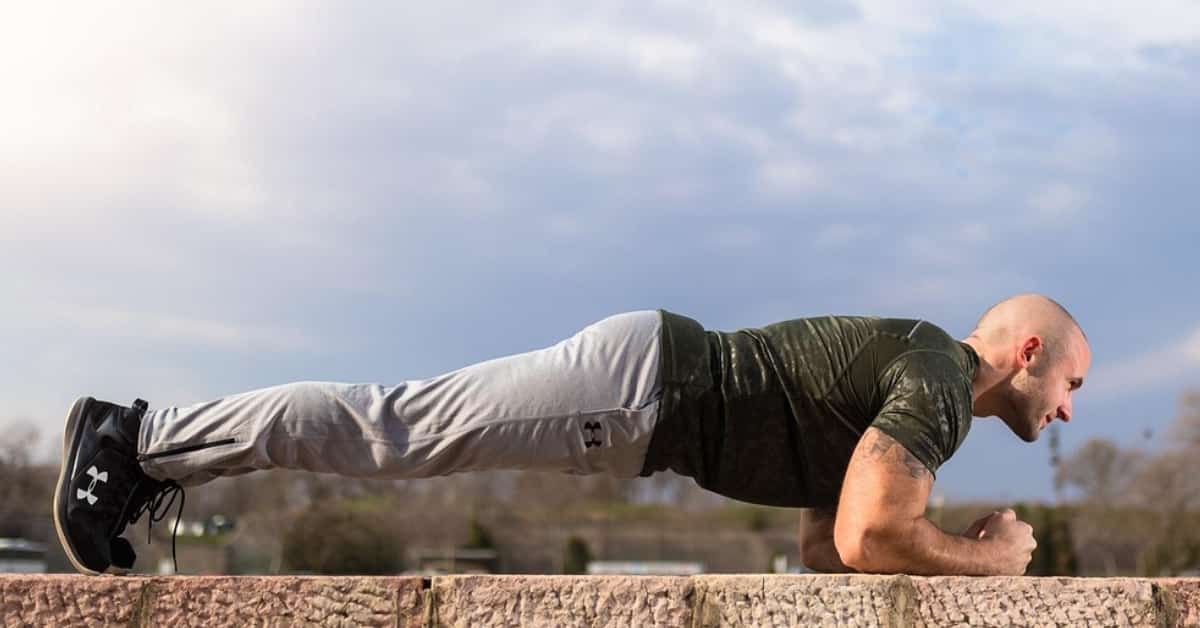
The plank is one of the most fundamental and useful isometric exercises for building foundational core strength & full-body stability. By holding a position similar to a push-up while supporting the weight on the forearms or hands, you force the entire abdominal wall, including the deep transverse abdominis, to work in unison with the glutes, shoulders, & lower back to maintain a straight, neutral spine. This “anti-extension” training is highly regarded in the fitness community because it not only tones the midsection but also corrects posture & lowers the risk of back injuries by teaching the body to resist sagging under gravity.
Plank Exercise
As a cornerstone of practical fitness, the plank is a mainly static hold that challenges the body to maintain a rigid, bridge-like posture against gravity. Unlike traditional crunches, that involve repetitive flexing, the planking emphasizes endurance & “bracing” strength, engaging every muscle from the deltoids to the calves. Trainers widely praise it for its ability to tighten the waistline & enhance spinal alignment without the high-impact stress of other abdominal movements, making it an important tool for anyone looking to build a resilient, injury-resistant core.
Target muscles
While many people think of the plank as just an “ab exercise,” it is really a total-body isometric hold. It forces multiple muscle groups to work jointly to maintain a rigid, straight line.
Primary Target Muscles (The Core)
- Rectus Abdominis: These are the “six-pack” muscles. In planking, they work to prevent the midsection from sagging toward the floor.
- Transverse Abdominis: The deepest core muscle. It acts like a natural corset, pulling the stomach in and stabilizing the spine.
- Obliques: These muscles are on the sides of the waist. They help stabilize the torso and prevent side-to-side rotation or tilting.
- Erector Spinae: These are the muscles running along the spine. They work in tandem with the abs to keep the back flat and prevent arching.
Secondary Support Muscles
A proper planking engages the upper and lower body to take the pressure off the spine:
- Shoulders (Deltoids) & Chest (Pectorals): These muscles support the upper body weight & keep the chest from collapsing between the arms.
- Glutes (Gluteus Maximus): Squeezing the glutes is the “secret” to a perfect plank. It stabilizes the pelvis & protects the lower back.
- Quads (Quadriceps): Keeping the legs straight and active helps maintain a solid bridge and takes some of the load off the core.
- Serratus Anterior: Often called the “boxer’s muscle,” it sits over the ribs and helps keep the shoulder blades flat against the back (preventing “winging”).
How to do a plank: Form and Instructions
The Standard Forearm Plank: Step-by-Step
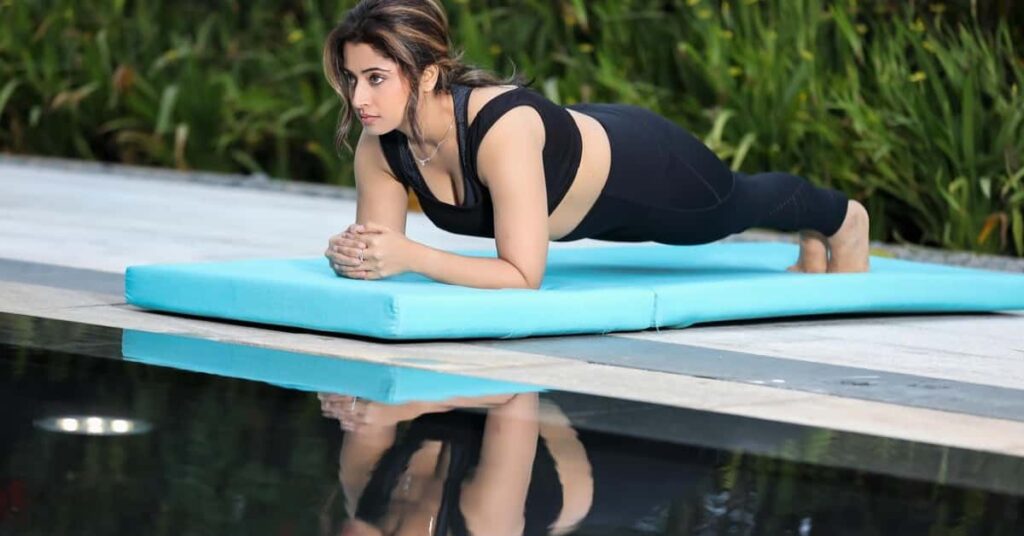
- The Setup: Begin on the floor in a quadruped position (on the hands & knees). Lower yourself onto your forearms, placing the elbows directly under the shoulders. The forearms should be parallel to each other, with palms flat or fists clenched.
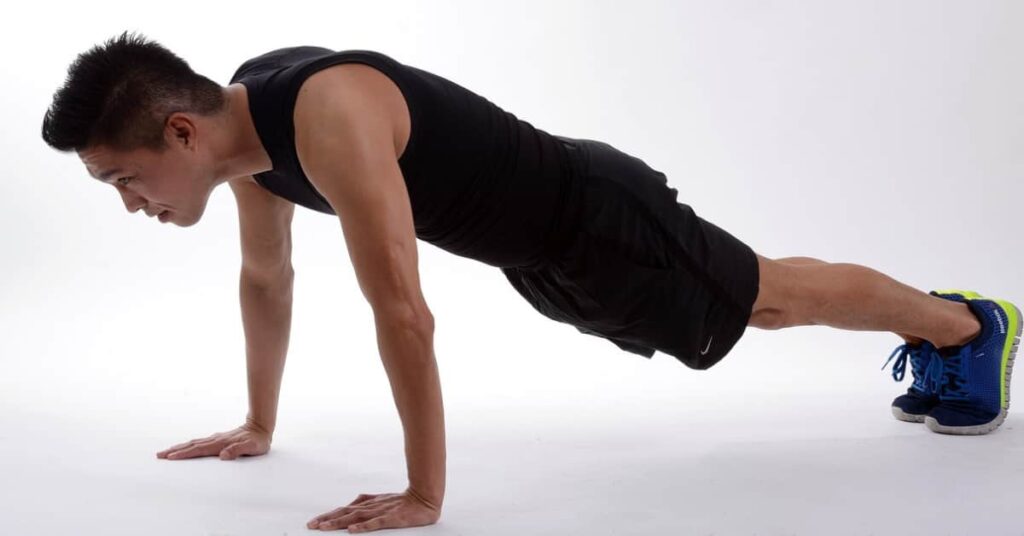
- The Extension: Step the feet back one at a time, coming into a push-up position, supported on the elbows. The feet should be hip-width apart.
- The Alignment: Create a straight line from the top of the head down to the heels. Ensure the hips aren’t sagging toward the floor or “piking” up toward the ceiling.
- The “Big Three” Engagement: Squeeze the glutes: This protects the lower back.
- Tighten the quads to keep the legs from sagging.
- Draw in the navel: Imagine pulling the belly button toward the spine to brace the core.
- The Gaze: Look at the floor about 6–10 inches in front of the hands. It keeps the neck in a neutral, relaxed position.
- The Breathing: Don’t hold your breath! Take slow, controlled breaths through your nose and out through the mouth.
Benefits
10 Powerful Benefits of the Plank Exercise
- 1. Deep Core Activation: Unlike crunches that hit the surface “six-pack” muscles, planks confront the transverse abdominis, the deep internal layer that delivers true core power & a flatter stomach.
- 2. Corrects Posture: By strengthening the stabilizers in the back, neck, & shoulders, planks allow for the reversal of the “slumping” effect caused by sitting at a desk or looking at a phone all day.
- 3. Reduced Risk of Back Injury: Planks build the strength required to support the spine. They are often used in physical therapy because they strengthen the core without the repetitive spinal flexion (bending) that can irritate discs.
- 4. Total Body Engagement: While the focus is on the core, you are simultaneously isometric-training the glutes, hamstrings, quads, deltoids, & chest.
- 5. Boosted Metabolic Rate: Because the plank is a compound exercise or movement that recruits multiple big muscle groups at once, it burns more calories per minute than traditional isolated ab movements.
- 6. Improved Balance and Stability: A strong “center” acts as the anchor for the entire body. Planks improve coordination for everyday activities, from carrying groceries to playing sports.
- 7. Enhanced Flexibility: The static hold actually stretches & expands the muscles around the shoulders, collarbones, & shoulder blades, as well as the arches of the feet and the hamstrings.
- 8. Mental Toughness: The plank is as much a mental challenge as a physical one. Holding a position while the muscles are shaking builds significant mental focus and “grit.”
- 9. Better Bone Health: As a weight-bearing exercise, planks help maintain bone density in the wrists, arms, & shoulders, which is essential for long-term health.
- 10. Versatile and Accessible: No gym membership is required. You can reap these benefits in as little as 60 seconds a day, making it the perfect “no-excuses” exercise for busy schedules.

Variations
Planks are one of the most useful ways to build core stability, but staring at the floor for sixty seconds can get old quickly. To keep things challenging & target different muscle groups like the obliques, glutes, & shoulders, you can mix in these variations.
1. The Standard Forearm Plank
The foundation of all variations. Focus on a straight line from the head to the heels.
- Muscles: Transverse abdominis, rectus abdominis, & deltoids.
- Pro Tip: Squeeze the glutes & keep the neck neutral (look at the hands, not the feet).
2. Side Plank (Static or Dips)
Turning to the side shifts the load to the lateral stabilizers.
- Muscles: Internal & external obliques.
- Execution: Stack the feet or stagger them for more balance. Lift the hips high. To increase difficulty, add hip dips by lowering the hip toward the floor & driving it back up.
3. Plank Jacks
It adds a cardiovascular element and tests the core’s ability to stabilize against movement.
- Muscles: Core, glutes, and hip abductors.
- Execution: Start in a high plank (on your hands). Jump the feet out wide & then back together, similar to a jumping jack, while keeping the hips from bouncing up & down.
4. Spiderman Planks
This variation involves active hip mobility & intense oblique crunching.
- Muscles: Obliques & lower abs.
- Execution: From a forearm or high plank, bring the right knee toward the right elbow. Return to the center and repeat on the left side.
5. Plank-to-Pushup (Commandos)
It is a dynamic move that challenges upper-body strength & coordination.
- Muscles: Core, triceps, and chest.
- Execution: Start in a forearm plank. Place the right hand where the right elbow was, then the left hand where the left elbow was, to rise into a high plank. Lower back down one arm at a time.
6. Reverse Plank
Often overlooked, this variation targets the “posterior chain,” the muscles on the back of the body.
- Muscles: Lower back, glutes, hamstrings, & core.
- Execution: Sit with legs extended, hands behind you. Lift the hips until the whole body forms a straight line from chest to toes.
Alternative
Top Alternatives to this Exercise
1. The Dead Bug (Best for Back Safety)
If the plank causes lower back pain, the Dead Bug is the perfect substitute. It provides the same “anti-extension” benefits while fully supporting your spine.
- Target: Deep transverse abdominis and coordination.
- Why it works: It forces the core to stabilize the spine while the limbs move, which is more functional in daily life.
2. Bird-Dog (Best for Spinal Balance)
Performed on hands and knees, you extend the opposite arm & leg simultaneously.
- Target: Lower back (erector spinae), glutes, and core.
- Why it works: It improves balance and strengthens the “posterior chain” (back side) without the heavy pressure on the shoulders that planking requires.
3. Bear Crawl (The Dynamic Alternative)
Hover the knees just an inch off the ground while on all fours and crawling forward.
- Target: Entire core, quads, and shoulders.
- Why it works: It is essentially a “moving plank.” It keeps the core under constant tension, is much more engaging, and burns more calories.
4. Hollow Body Hold (The “Gold Medal” Move)
Lying on your back, you lift your legs and shoulders off the floor, pressing your lower back into the ground to create a “C” shape.
- Target: Rectus abdominis and deep core.
- Why it works: Gymnasts use this to build incredible core tension. It is often considered more difficult—and more effective for “six-pack” aesthetics—than a standard plank.
5. Pallof Press (The Standing Alternative)
Using a cable machine or a cable machine, you stand sideways and push the handle out in front of you, resisting the force that tries to pull you toward the machine.
- Target: Obliques and deep stabilizers.
- Why it works: This is an anti-rotation exercise. It is excellent for people who cannot get down on the floor or who have wrist/shoulder injuries.
Precautions and Common Errors
Common Errors: Are You Making These Plank Mistakes?
- The “Sagging Bridge”: The most common error is dropping the hips toward the floor. It disengages the abs & puts dangerous “shear” force on the lower back (lumbar spine).
- Piking the Hips: Lifting your glutes too high toward the ceiling makes the exercise easier by shifting the weight to the shoulders, but it takes the tension off the core.
- The “Winging” Shoulders: If you allow the chest to sink between the shoulders, the shoulder blades will stick out (winging). You should actively “push” the floor away to keep the upper back broad and stable.
- Looking at Your Toes: Tucking the chin to look at the feet or lifting the head to look forward strains the neck. Your gaze should be slightly ahead of the hands to keep a neutral spine.
- The “Breath Hold”: Many people hold their breath to create internal tension. It can spike the blood pressure & cause dizziness. Aim for slow, rhythmic “diaphragmatic” breathing.
Precautions:
1. Shoulder & Wrist Injuries
Because the plank requires holding the body weight through your upper joints, individuals with rotator cuff issues, carpal tunnel, or chronic wrist pain should stick to the Forearm Plank or the Dead Bug alternative to avoid aggravation.
2. Diastasis Recti (Postpartum)
For your readers in the postpartum phase, traditional planks can sometimes create too much “intra-abdominal pressure,” causing the stomach to “cone” or “dome.” It is often safer to start with bird-dogs or pelvic tilts until the abdominal wall has sufficiently healed.
3. Blood Pressure Concerns
Since isometric exercises (static holds) can temporarily raise blood pressure, those with hypertension should avoid holding planks for long periods and focus on shorter, 10–15-second “power holds” with consistent breathing.
4. Lower Back Pain
If a reader feels a “pinch” or “pull” in their lower back during a plank, they should immediately drop to their knees. It is a sign that the abdominals have fatigued, & the spine is taking the load.
Conclusion
The plank is more than just a fitness trend; it is a foundational movement that truly tests total-body stability. By shifting the focus from “how long” you can hold to “how well” you can hold, you transform this simple static position into a powerful tool for posture correction, injury prevention, and core definition. Whether you are a beginner starting with thirty seconds on your knees or an athlete mastering dynamic variations, the planking offers a scalable path to a more resilient body.
Commit to the process, prioritize the form, & remember that even sixty seconds a day can lead to significant long-term changes in the strength & confidence. Now that you have the tools & the techniques, it’s time to drop to the mat and start building a core that supports you in everything you do.