

Table of Contents
Introduction
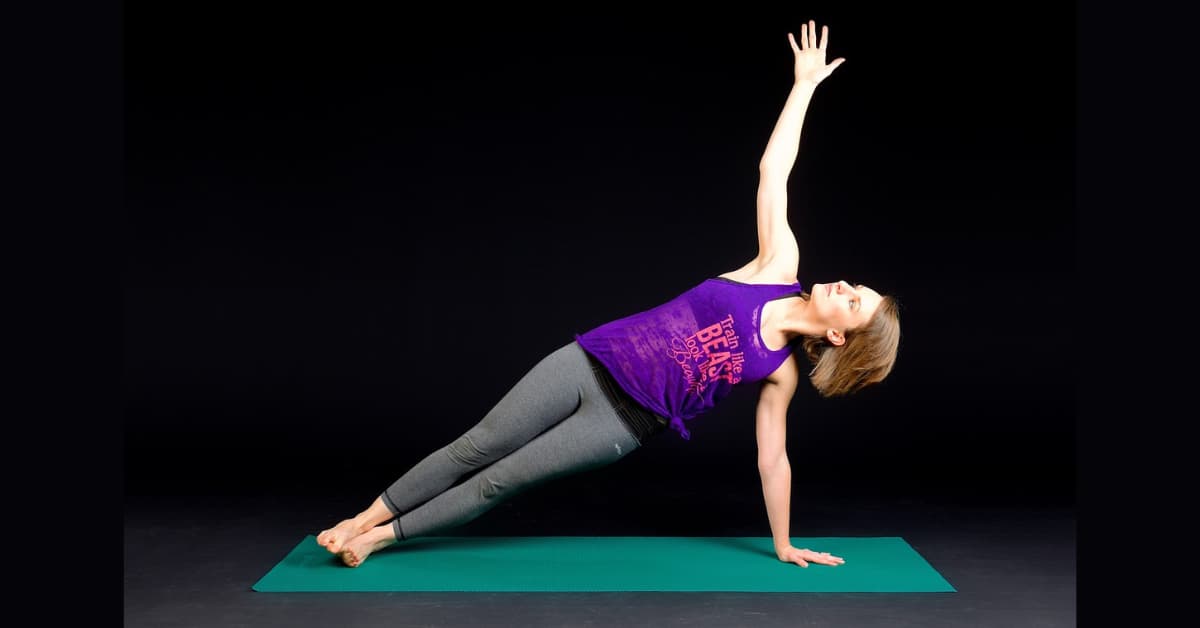
The side plank is a powerful isometric core movement that targets the lateral torso stabilizers, specifically the obliques, transverse abdominis, and quadratus lumborum. By supporting the body’s weight on a single forearm & the side of the foot, this exercise challenges the ability to resist lateral spinal flexion, effectively building endurance & stability throughout the “side body.” Beyond just sculpting the waistline, it plays an essential role in injury prevention by strengthening the muscles that protect the spine & enhancing hip stability, making it foundational training for both functional fitness and athletic performance.
Side Plank Exercise
The Side Plank is a premier bodyweight exercise that strengthens the obliques & improves lateral core stability. Unlike the traditional front plank, this variation needs you to support the entire body weight on a single arm & the outer edge of one foot, creating a significant balance challenge that engages the deep muscles of the spine & hips. By maintaining a rigid, linear posture from head to heels, you not only enhance the overall core endurance but also develop the functional strength necessary to protect your lower back and improve posture during everyday activities.
Side Plank target muscles
The Side Plank is a lateral stabilization powerhouse. While most individuals associate it strictly with the “side abs,” it actually recruits a chain of muscles from the shoulders down to the hips to maintain that rigid line.
Primary Target Muscles
- Obliques (Internal and External): These are the preliminary movers. They work intensely to prevent the hips from sagging toward the floor.
- Transverse Abdominis: The deep layer of the core that acts like a natural corset, providing spinal stability.
- Quadratus Lumborum (QL): A deep lower back muscle that plays a vital role in lateral stability and pelvic alignment.
Secondary (Stabilizing) Muscles
- Gluteus Medius and Minimus: These hip abductors fire to keep the pelvis steady and prevent the “bottom” hip from dropping.
- Gluteus Maximus: Helps keep the hips extended and aligned with the torso.
- Shoulder Stabilizers (Serratus Anterior and Deltoids): The arm supporting the weight relies on these to keep the shoulder joint stable & the chest open.
- Adductors: The muscles of the inner thigh work to keep the legs squeezed together and stable.
How to do a Side plank: Form and Instructions
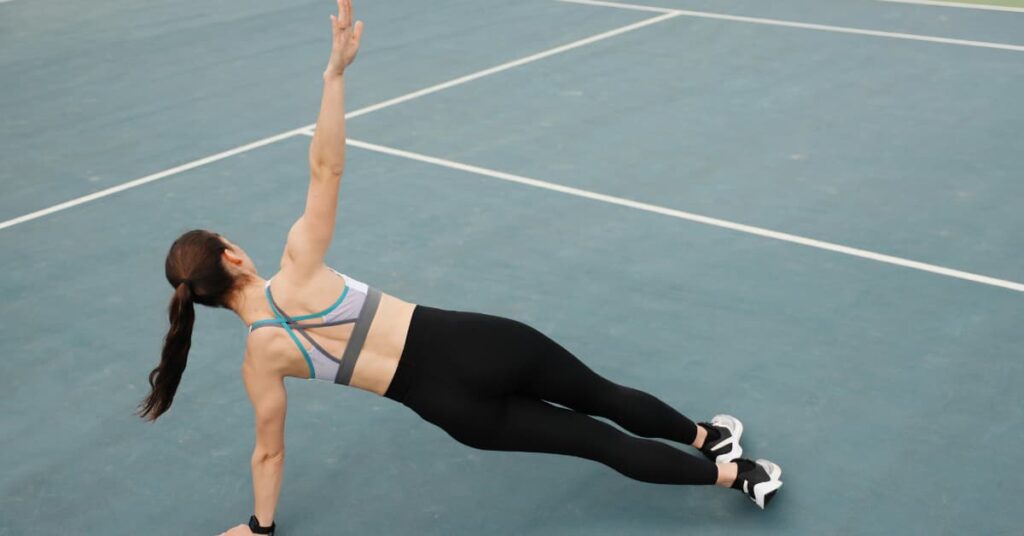
To perform a side plank with perfect technique, maintain a straight line from the head to the heels, resisting the urge to let the hips sag or the chest rotate toward the floor.
Step-by-Step Instructions
- Starting Position: Lie on the right side on a yoga mat, legs straight & stacked directly on top of each other.
- The Foundation: Place the right elbow directly under the right shoulder. The forearm should be flat on the floor, pointing away from you at a 90° angle to the upper arm.
- The Lift: Engage the core and glutes. Exhale as you lift the hips off the mat until the body forms a straight diagonal line.
- The Hold: Keep the head aligned with the spine and the gaze forward. The left arm can rest on the hip or extend toward the ceiling for an added balance challenge.
- The Finish: Grab for the desired duration (start with 15–30 seconds), then lower the hips with control and repeat on the left side.
Side Plank Benefits
The Side Plank is one of the most effective functional movements you can perform because it targets stability in the frontal plane, a plane of motion often neglected in standard gym routines.
Core Strength and Aesthetics
- Targeted Oblique Development: Unlike standard planks or crunches, the side plank forces the internal and external obliques to work at high intensity to keep the torso elevated, helping to define the waistline.
- Deep Core Activation: It recruits the transverse abdominis, the deep “corset” muscle that supports the internal organs and creates a flatter, tighter midsection.
Spinal Health and Posture
- Protects the Lower Back: By strengthening the quadratus lumborum & stabilizing the spine, side planks lower the risk of lower back pain. Spine specialists often suggested it because it builds core endurance without putting high compressive loads on the vertebrae.
- Corrects Muscle Imbalances: Since you perform the exercise on one side at a time, it quickly reveals and corrects lateral imbalances, preventing one side of the body from overcompensating for the other.
Functional and Athletic Performance
- Improved Hip Stability: It heavily engages the gluteus medius, a critical muscle for stabilizing the pelvis during walking, running, and jumping.
- Better Balance: Holding a narrow, lateral base of support forces your brain and muscles to coordinate, significantly improving the overall balance and proprioception.
Side Plank variations
Side plank variations allow beginners to build foundational strength, while advanced athletes can break through plateaus.
1. Beginner Variations
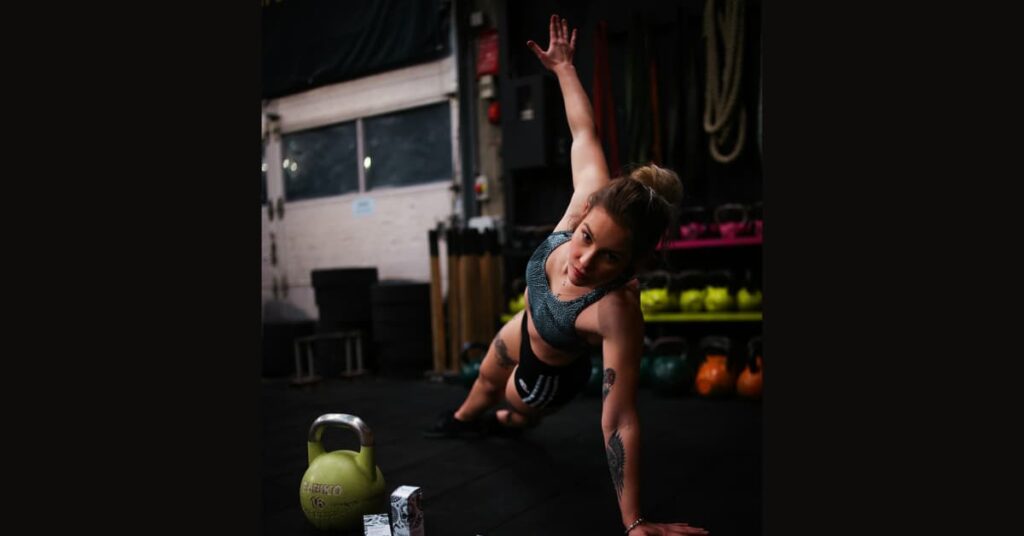
- Knee Side Plank: Instead of balancing on the feet, bend the knees at a 90-degree angle so your knees and forearm support the weight. It shortens the “lever” and makes it easier to keep the hips lifted.
- Staggered Feet Side Plank: Instead of stacking the feet, place the top foot on the floor in front of the bottom foot. It provides a wider base of support and improves balance.
2. Intermediate Variations
- Full Side Plank (Standard): Feet are stacked, & the body forms a straight line from head to heels.
- Side Plank with Reach-Under: From a standard side plank, reach the top arm toward the ceiling, then “thread the needle” by reaching it under the torso. It adds a dynamic rotational challenge for the obliques.
- Forearm vs. High Side Plank: Performing the move on a straight arm (palm on the floor) instead of the forearm. It increases the demand on shoulder stability and wrist strength.
3. Advanced Variations
- Side Plank Star: While in the side plank, lift the top leg as high as possible. It intensely targets the gluteus medius (hip abductor) on both sides.
- Side Plank with Hip Dips: Lower the hips until they graze the floor, then drive them back up. It turns the isometric hold into a weighted oblique movement.
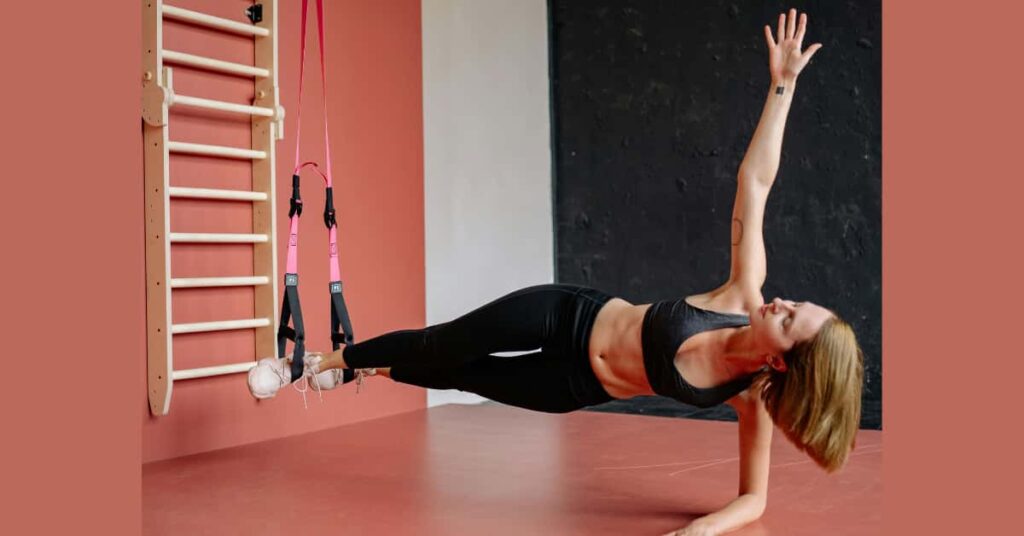
- Elevated Side Plank: Place the feet on a bench or a BOSU ball while keeping the forearm on the floor. It increases the percentage of body weight you have to support.
Side Plank Alternative
Often, due to shoulder pain or wrist issues, it’s great to offer alternatives that target the same lateral muscle groups (obliques and hip stabilizers) without the same stressors.
1. Standing Side Crunches
- Target: Obliques.
- Why it’s a great alternative: It removes all pressure from the shoulders & wrists.
- How: Stand with feet shoulder-width apart. Shift the weight to one leg & crunch the elbow toward the knees on the opposite side.
2. Bird-Dog
- Target: Core stability, glutes, & lower back.
- Why it’s a great alternative: While it’s a “front-facing” move, it forces the core to resist rotation, that is the same functional goal as the side plank.
- How: On all fours, extend the right arm forward & left leg back simultaneously. Hold and switch.
3. Pallof Press
- Target: Deep core and obliques (anti-rotation).
- Why it’s a great alternative: It is arguably the best functional core move. It trains the core to stay rigid against a lateral force without being on the floor.
- How: Using a resistance band or cable machine at chest height, pull the handle to the center of the chest. Press the handle straight out and resist the band’s pull to the side.
4. Dead Bug
- Target: Transverse abdominis and obliques.
- Why it’s a great alternative: It provides maximum spinal support because the back is flat on the floor, making it very safe for those with lower back issues.
- How: Lie on the back with arms up and knees at 90 degrees. Slowly lower the opposite arm & leg toward the floor, keeping the lower back pressed down.
Side Plank: Precautions and Common Errors
Precautions: Who Should Be Careful?
Before starting, people should consult a professional if they have:
- Shoulder Injuries: Since the shoulder acts as the primary weight-bearer, those with rotator cuff issues or impingement should use the “Knee” variation or a standing alternative.
- Wrist Issues: If performing the “High” (straight arm) version, the pressure can be intense. Suggest the forearm version as a safer bet.
- Late-Stage Pregnancy: While core work is great, the lateral pressure can sometimes be too much. It’s best to stick to modified versions or standing core work.
Common Errors (And How to Fix Them)
1. The “Dropping Hip.”
- The Error: Allowing the pelvis to sag toward the floor due to fatigue.
- The Fix: Imagine a string is tied to the bottom of the hip, pulling it toward the ceiling. Keep that line straight.
2. Elbow Misalignment
- The Error: Placing the elbow too far forward or too far back.
- The Fix: The elbow must be stacked directly under the shoulder. It creates a “pillar” of bone support rather than relying solely on muscle.
3. “Rolling” the Torso
- The Error: The top shoulder or hip rolls forward toward the floor, turning the side plank into a partial front plank.
- The Fix: Keep the chest open. Imagine your back is pressed flat against an invisible wall.
4. Neck Strain
- The Error: Looking down at the feet or letting the head “hang.”
- The Fix: Keep the neck neutral. Pick a spot on the wall at eye level & maintain a steady gaze.
Conclusion
The Side Plank is more than just a core activity or movement; it is a fundamental movement for building a resilient, balanced, & injury-proof body. By targeting the often-neglected lateral muscles, such as the obliques and hip stabilizers, it bridges the gap between basic core training & practical athletic performance. Whether you are a beginner starting with the knee variation or an advanced athlete mastering the star plank, consistency is the key to reaping the long-term advantages of improved posture & a stronger spine. Incorporate this powerhouse move into your routine twice a week, and you’ll soon feel the difference in the stability, strength, & overall midsection definition.