

Table of Contents
Introduction
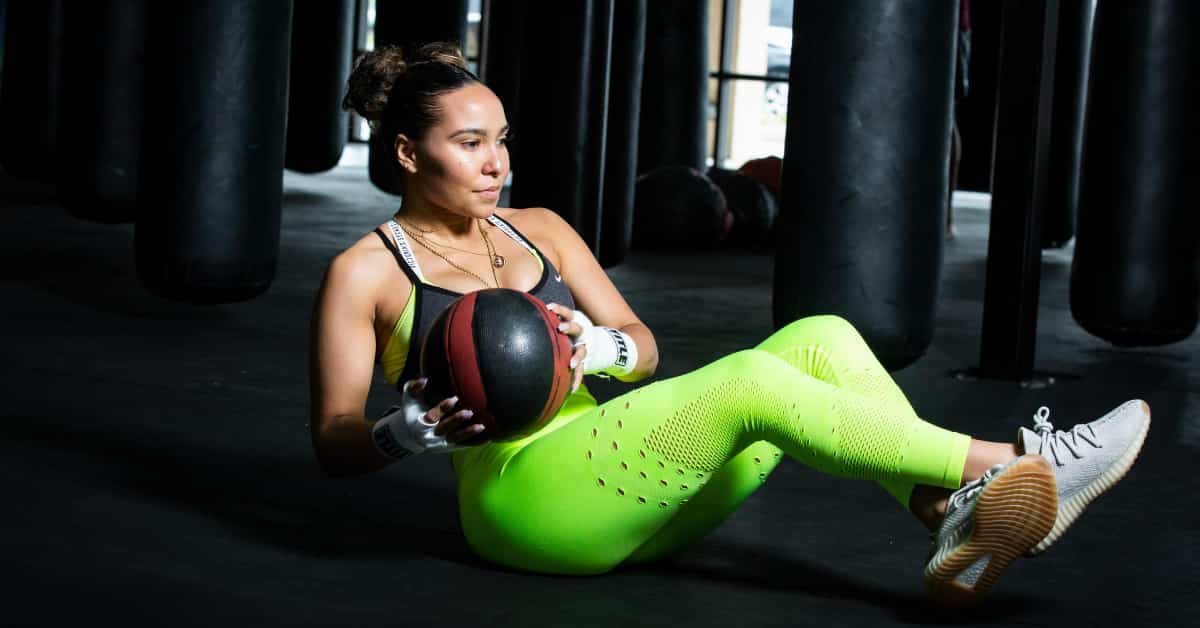
The Russian Twist is a universal core-strengthening movement that targets the obliques, rectus abdominis, & hip flexors through a rotational movement. Typically accomplished while sitting on the floor with knees bent & feet slightly elevated, the athlete leans back to create a V-shape with the torso & rotates the upper body from side to side, often while holding a weight such as a dumbbell or medicine ball. This training is highly valued by athletes for enhancing rotational power & spinal stability, which are important for sports involving twisting motions & for maintaining a toned, functional midsection.
Russian Twist Exercise
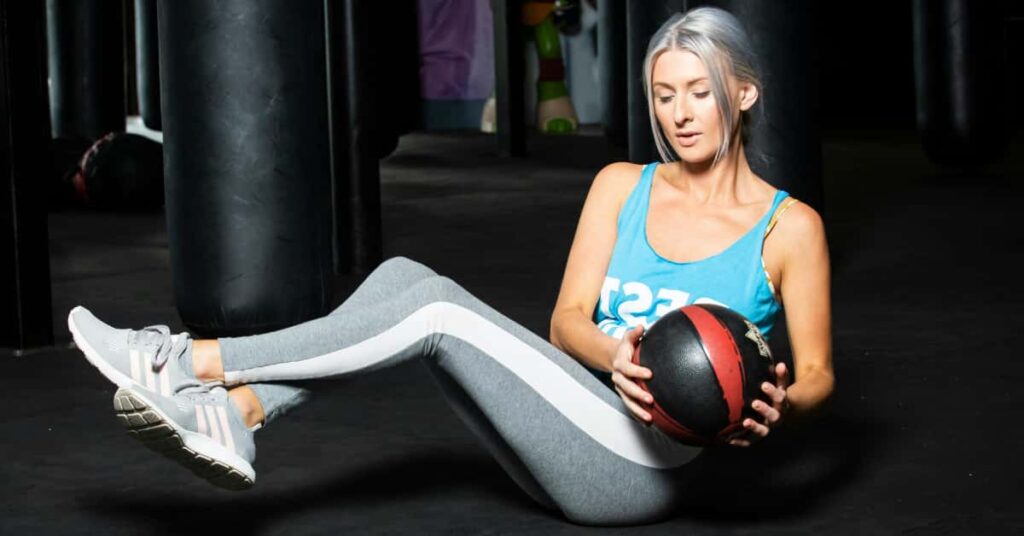
The Russian Twist is a classic abdominal training that builds dynamic core strength & stability by challenging the body’s ability to rotate under control. By maintaining a balanced seated position & pivoting the ribcage from left to right, you encounter the deep internal and external obliques, which are crucial for both lateral power and lower back protection. Whether performed with bodyweight for endurance or heavy resistance for explosive strength, it remains a staple in functional training for anyone looking to enhance their midsection’s definition and rotational range of motion.
Russian Twist target muscles
While the Russian Twist is famous for carving the waistline, it is actually a comprehensive core workout that recruits several muscle groups simultaneously to maintain balance and drive rotation.
Primary Target Muscles
These are the muscles doing the heavy lifting during the twisting motion:
- Obliques (Internal & External): These are the major drivers. They sit on the sides of the abdomen and are responsible for the rotation of the torso.
- Rectus Abdominis: Normally known as the “six-pack” muscle, it works isometrically to keep the torso stable and upright in that V-hold position.
Secondary (Supporting) Muscles
These muscles act as stabilizers to keep you from toppling over:
- Hip Flexors: These engage significantly to keep the legs elevated and the pelvis stable throughout the movement.
- Transverse Abdominis: The deep layer of the core that acts like a “corset” to protect the spine.
- Erector Spinae: The muscles along the lower back that help you maintain a flat back and prevent slouching.
- Latissimus Dorsi (Lats) & Shoulders: If you are using a weight (for example, a dumbbell or medicine ball), these muscles engage to support and move the load across the body.
How to do a Russian Twist: Form and Instructions
To get the most out of the Russian Twist and protect the lower back, maintaining a neutral spine is more important than how fast you move.
Step-by-Step Instructions
- The Setup: Sit on the floor with the knees bent & feet flat. Lean the torso back until it is at about a 45-degree angle to the floor. The back should be straight, not rounded.
- The V-Hold: Engage the core and lift the feet a few inches off the ground, balancing on the sit bones. You can cross the ankles if it helps with stability.
- The Rotation: Hold the hands together (or grip a weight) at chest height. Exhale & rotate the torso to the right, and bring the hands toward the floor beside the hip.
- The Return: Inhale as you return to the center, then exhale and rotate to the left.
- The Finish: Continue alternating sides for your desired reps or time, ensuring your legs remain as still as possible.

Russian Twist Benefits
The Russian Twist is a staple in functional training because it offers benefits that go far beyond simple aesthetics.
1. Increases Rotational Power
Most movements in daily life and sports, such as swinging or moving a golf club, throwing a ball, or even reaching for a seatbelt, occur in the transverse plane (rotation). This exercise builds the specific strength needed for these explosive and functional movements.
2. Sculpts the “V-Line” and Obliques
While many ab activities focus on the “six-pack” (rectus abdominis), the Russian Twist specifically targets the internal and external obliques. It helps create a tapered waistline & enhances the definition of the lateral abdominal muscles.
3. Improves Spinal Stability and Posture
By forcing you to hold a seated “V” position, the workout compels the erector spinae & transverse abdominis. Strengthening these deep stabilizers helps protect the lower back from injury & promotes a more upright, confident posture.
4. Enhances Balance and Coordination
Lifting the feet off the ground creates an unstable base. To keep from wobbling, the core must constantly micro-adjust, which improves the overall neurological coordination and “body awareness” (proprioception).
5. High Caloric Burn (Metabolic Demand)
Because it involves large muscle groups and needs constant tension, it’s more metabolically demanding than a standard crunch. When performed in a high-intensity circuit, it can help contribute to overall fat loss.
Russian Twist variations
1. Beginner Variations
- Heels-Down Russian Twist: Keep the feet on the floor with knees bent. It reduces the strain on the hip flexors and makes it easier to focus on the spinal rotation without losing balance.
- Bodyweight-Only Twist: Focus purely on the range of motion. Reach the hands out to the sides to touch the floor, ensuring a full rotation of the ribcage.
2. Intermediate Variations
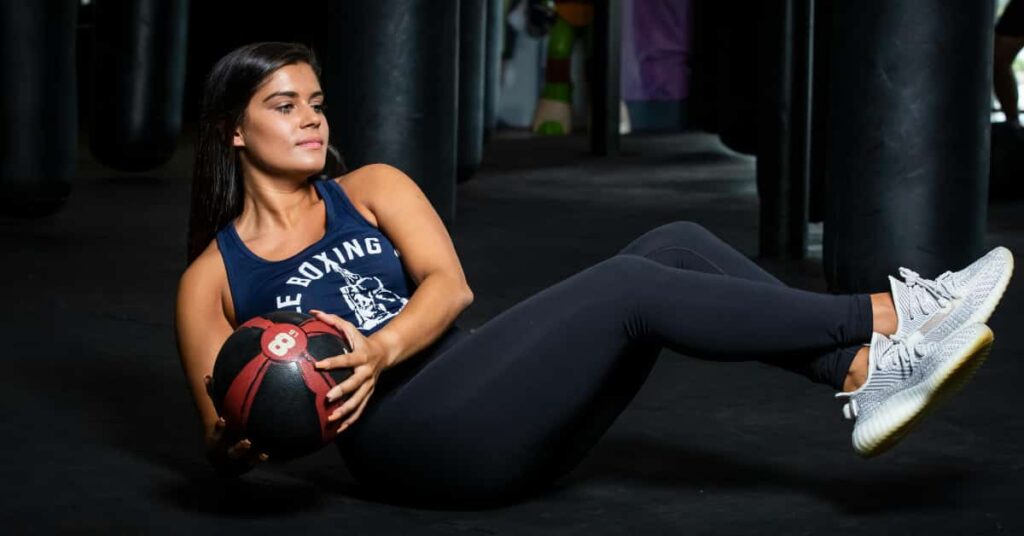
- Weighted Russian Twist: Hold a dumbbell, kettlebell, or medicine ball. Adding resistance forces the obliques to work harder to both accelerate & decelerate the weight.
- Medicine Ball Slams: Perform a twist, but instead of just touching the ball to the floor, slam it down with force before catching it on the rebound. It adds a plyometric (explosive) element.
3. Advanced Variations
- Bicycle Russian Twist: As you rotate to the right, extend the left leg straight out. Switch sides as you rotate left. It makes or creates a “scissor” motion that heavily taxes the lower abs.
- Weighted Overhead Twist: Hold a weight plate or small ball. After twisting to the right, bring the weight up over your head in a circular motion before twisting to the left. It increases the “lever arm,” making the core stabilize against a higher center of gravity.
- Declined Russian Twist: Perform the move on a decline bench. The increased angle against gravity creates intense, constant tension on the entire abdominal wall.
Russian Twist Alternative
Here are the best alternatives categorized by their specific benefit:
1. Standing Woodchoppers (Best for Power)
Instead of sitting, you use a cable machine or a dumbbell to pull diagonally from high to low (or low to high).
- Why it works: It mimics the same rotational movement as the Russian Twist, but is much easier on the lower back because you are standing and can use your legs for support.
2. Dead Bug (Best for Back Safety)
Lying flat on your back, extend the opposite arm & leg while keeping the lower back pressed into the floor.
- Why it works: It targets the deep transverse abdominis without the spinal compression that can sometimes happen in a seated V-sit—perfect for a “Core Exercises for Back Pain” article.
3. Pallof Press (Best for Anti-Rotation)
You stand sideways to a cable machine or a resistance band, hold the handle at chest level, and press it straight out in front of you.
- Why it works: This is “anti-rotation.” The core has to fight to keep the band from pulling you out of the way. It’s a sophisticated, “pro-level” alternative that many fitness enthusiasts look for.
4. Bicycle Crunches (Best for High Intensity)
Lying on your back, you bring the opposite elbow to the opposite knees in a pedaling motion.
- Why it works: It hits the obliques and the “six-pack” muscles simultaneously and is often easier for beginners to perform with a full range of motion than the Russian Twist.
5. Windshield Wipers (Best for Advanced Athletes)
Lying on the back with legs straight up in the air, you lower the legs side-to-side like a clock pendulum.
- Why it works: This is a very intense oblique exercise. It uses the weight of the legs as the resistance, providing a massive challenge for the lateral core.
Russian Twist: Precautions and Common Errors
Common Errors to Avoid
- Rounding the Back: This is the most frequent mistake. Slumping your shoulders or “C-curving” your spine puts excessive pressure on the lumbar discs.
- The Fix: Keep a “proud chest” and a neutral spine throughout the movement.
- Moving Only the Arms: Many people swing their arms back and forth while keeping their shoulders forward. This results in zero oblique engagement.
- The Fix: Your shoulders and chest should turn as one unit. Think of your arms as being “locked” in front of the ribcage.
- Moving Too Fast: Using momentum rather than muscle control makes the exercise less effective and increases the risk of “jerking” the spine.
- The Fix: Use a slow, 2-second count for each side to ensure the core is doing the work.
- Holding Your Breath: Bracing the core often leads to breath-holding, which increases internal pressure and can make you lightheaded.
- The Fix: Exhale as you twist to the side; inhale as you return to the center.
Precautions and Safety Tips
- Lower Back Concerns: If you have a history of herniated discs or chronic lower back pain, the “loaded rotation” of a Russian Twist may be risky. Consider the Dead Bug or Pallof Press as safer alternatives.
- Hip Flexor Dominance: If you feel this more in the thighs than the abs, the hip flexors are taking over.
- The Fix: Keep the feet on the floor and focus on leaning back just enough to feel the abs “click in” before you start twisting.
- Neck Strain: Do not tuck the chin to the chest.
- The Fix: Keep the gaze following the hands or slightly ahead to maintain a neutral neck position.
Conclusion
In conclusion, the Russian Twist remains a powerhouse of core activity, offering a unique blend of aesthetic sculpting and functional strength. By mastering the rotational mechanics of the obliques & maintaining the stability of the deep abdominal wall, you can significantly improve athletic performance & everyday mobility.