Table of Contents
Introduction
The Bench Press is a basic compound exercise widely considered the gold standard for calculating upper-body strength. It mainly targets the pectoralis major (chest muscles), but also heavily recruits the anterior deltoids (front shoulders) and the triceps brachii as secondary movers. Because it engages multiple muscle groups simultaneously, it permits heavy loading, making it highly useful for building both muscle mass and raw pushing power. It is one of the three lifts in powerlifting and a staple in bodybuilding and general fitness training alike.
Beyond the traditional flat barbell bench press, there are numerous kinds or variations designed to target precise chest areas or accommodate different equipment. The Incline Bench Press shifts the focus to the upper chest & shoulders, although the Decline Bench Press emphasizes the lower pecs. Further, using dumbbells rather than a barbell can help correct muscle imbalances & allow for a greater range of motion. Regardless of the variation, incorporating the bench press into a routine enhances overall upper-body pushing strength, improves bone density, and improves athletic performance in sports that need explosive pushing movements.
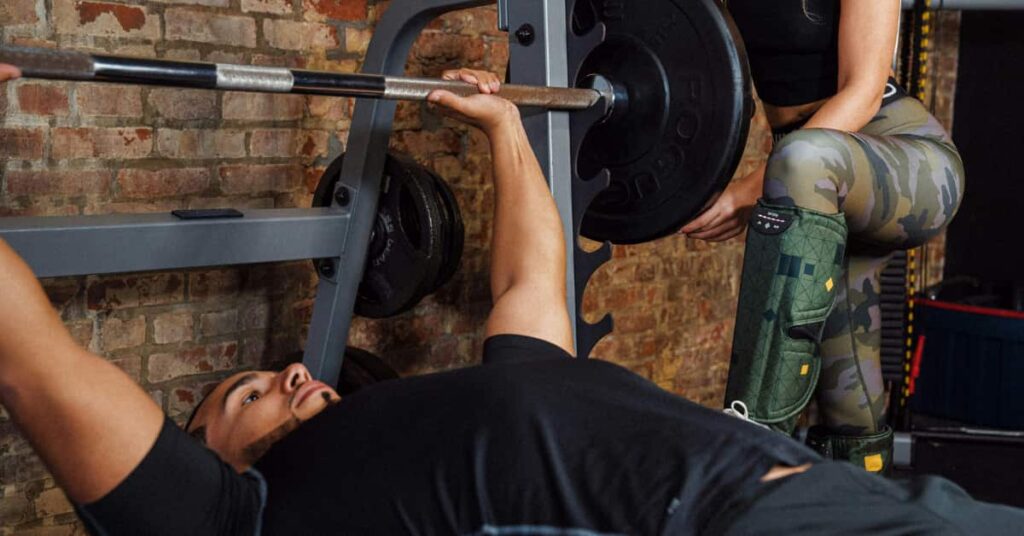
Bench Press
The bench press is a compound movement or activity that targets the upper body.
It also involves lying on a bench and pressing a weight overhead with a barbell or a couple of dumbbells. During a bench press, the lower the weight is to chest level, the more you press it upwards as you extend your arms. This movement is considered one repetition.
There are several variations of the bench press that each target different muscles. These may involve lying flat, lying at an incline or decline, or placing the hands closer together on the barbell.
The Bench Press is one of the most famous exercises for building upper-body strength. It specifically targets your chest muscles, but it also works the shoulders and the backs of your arms (triceps). Because it utilizes so many muscles at once, it is one of the best ways to get stronger and build muscle size.
Bench Press Instructions
Here are five easy steps to do a bench press:
- Lie Flat: Lie on the bench with the looks directly under the bar & keep the feet flat on the floor for balance.
- Grab the Bar: Hold the bar with the hands, a little wider than your shoulders & wrap your thumbs firmly around it.
- Lower Slowly: Lower the bar down slowly and mainly straight until it gently touches the middle of the chest.
- Tuck Your Elbows: As you reduce the weight, keep your elbows slightly tucked in toward your sides (not flared out wide) to protect the shoulders.
- Push Up: Push the bar back up powerfully until your arms are completely straight, then breathe out.
Bench Press Variations
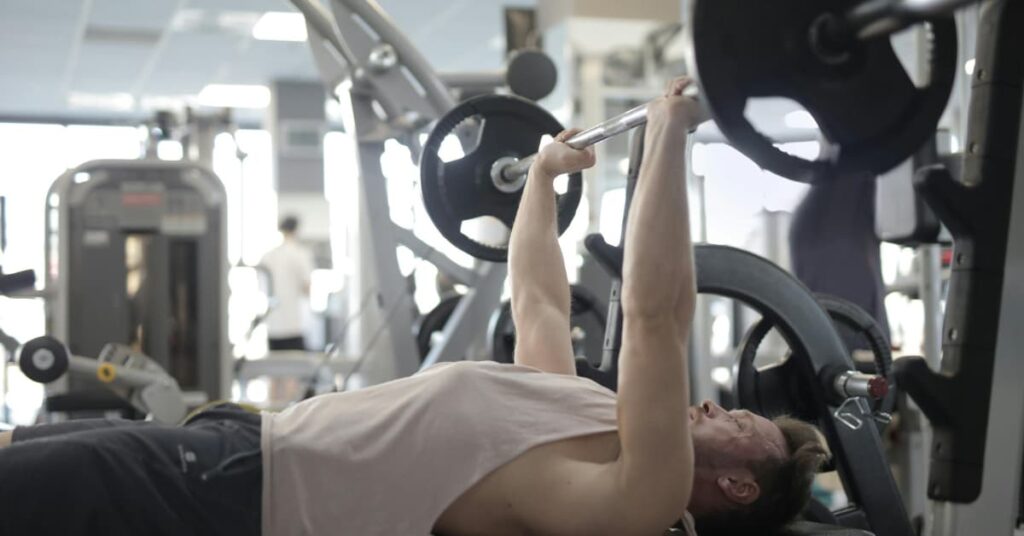
Each bench press variation works a different muscle group. According to a 2017 analysis, variations include:
- Traditional Bench Press. This training is done lying down on a flat bench & pressing a barbell up and down at chest height. It performs the pectoral muscles, shoulders, & arms.
- Narrow grip bench press. During this variation, the hands are narrower together on the barbell. It operates the triceps & forearms.
- Incline bench press. For this variation or kind, the bench should be angled between 45 & 60 degrees upward, so you are leaning back a little. It targets muscles of the upper chest & shoulders.
- Decline bench press. For this variation or kind, the bench should be angled downward so that when you lie down, the feet are higher than the head. It works the lower chest muscles & shoulders.
Bench Press Alternative
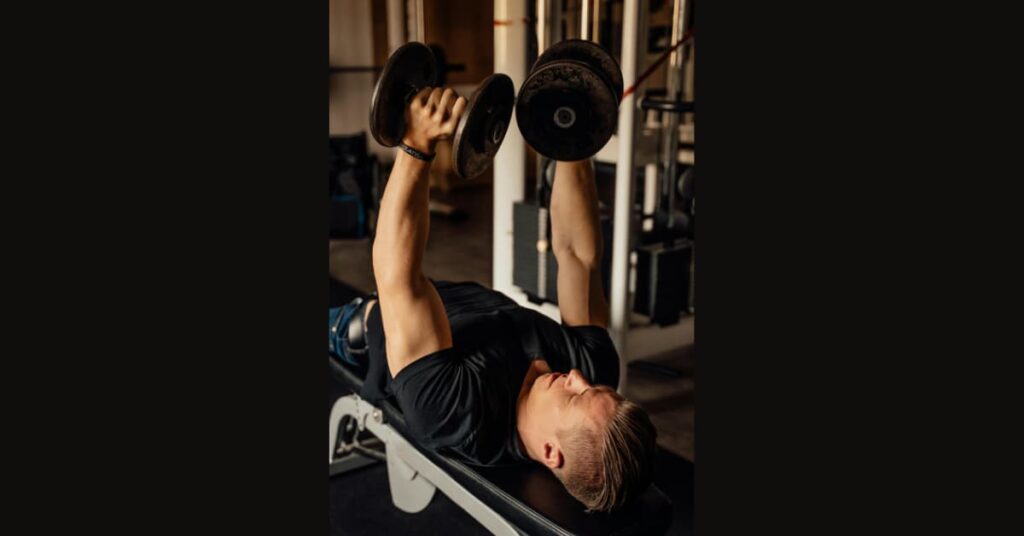
1. Dumbbell Bench Press
The Dumbbell Bench Press is a fantastic alternative to the barbell version because it requires each arm to work independently. It helps fix muscle imbalances, as your stronger side cannot help lift the weight for your weaker side. It also allows for a greater range of motion, letting you lower the weights slightly past your chest for a deeper stretch, and forces your stabilizer muscles to work harder to keep the weights steady.
2. Barbell Bench Press
The Barbell Bench Press is the classic standard for building upper-body size and strength. Because the barbell is a single, stable object, it allows you to lift the heaviest amount of weight possible compared to other variations. It is a compound movement that targets the chest, shoulders, and triceps simultaneously, making it the most efficient exercise for developing raw pushing power.
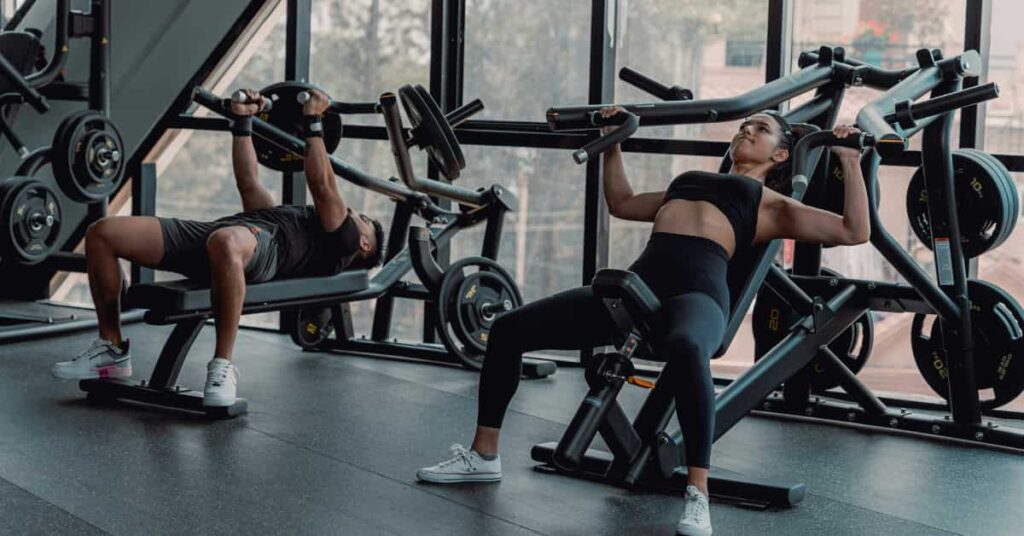
3. Bench Press Machine (Leverage/Plate-Loaded)
The Bench Press Machine, often seen as a plate-loaded station (like Hammer Strength), mimics the bench press exercise but limits the weight to a fixed path. This version is safer than free weights because you cannot drop the weight on yourself, allowing you to push closer to failure without a spotter. It is beneficial to focus purely on the chest muscles without worrying about balancing the bar.
4. Smith Machine
The Smith Machine has a barbell attached to vertical rails that guide the bar in a straight line up and down. It eliminates the need to balance the bar, allowing you to focus entirely on pushing the weight. It also features safety hooks that let you lock the bar in place at any point during the movement, making it a safe option if you are lifting alone or recovering from an injury.
5. Normal Machine (Seated Chest Press)
The “Normal Machine,” typically known as the Standard Seated Chest Press, found in most gyms, uses a weight stack with a pin to select the load. You sit upright rather than lying down, which is often more comfortable for beginners or those with back issues. This machine provides constant tension on the muscles and controls the movement path completely, making it the easiest and most user-friendly way to learn the pushing motion.
Bench Press Benefits
The Bench Press is one of the most effective exercises for overall upper-body development. Here are the key benefits:
1. Builds Significant Muscle Mass
The primary or main benefit of the bench press is muscle growth (hypertrophy) in the upper body. It is a compound exercise, or you can say movement, meaning it works multiple muscle groups at once:
- Pectorals (Chest): The main muscle worked, developing size and definition.
- Anterior Deltoids (Front Shoulders): Heavily engaged to help lift the weight.
- Triceps (Back of Arms): Crucial for the “lockout” phase (straightening the arms at the top).
2. Increases Upper Body Pushing Strength
Bench pressing allows you to move more weight than almost any other upper-body exercise. It develops raw “pushing” power, which translates to:
- Sports Performance: Improved ability to throw, punch, or push opponents (e.g., in football or martial arts).
- Daily Activities: Easier execution of tasks like pushing heavy doors, moving furniture, or lifting objects overhead.
3. Improves Bone Health
Resistance training, such as the bench press, places a load on your skeletal system. In response to this stress, your bones become denser and stronger to support the weight. It is vital for long-term health as it helps prevent osteoporosis (brittle bones) as you age.
4. Versatility and Scalability
It is suitable for almost everyone because it is easily adjustable.
- Beginners can start with just the bar (or even light dumbbells) to learn the movement.
- Advanced lifters can load heavy plates for maximum strength.
- Variations (like incline or close-grip) allow you to shift the focus to different muscles as your goals change.
Grip
The standard grip is the most common way to hold the bar and offers the best balance between strength and safety. For this grip, you place your hands slightly wider than your shoulders so that your forearms are straight up and down (vertical) when the bar touches your chest. This position allows you to use your chest, shoulders, and triceps evenly, making it the strongest grip for most people. It is the best place to start because it protects your joints while allowing you to lift heavy weights effectively.
- Close-grip Bench Press: In the Close-grip Bench Press, you bring your hands closer together, typically at shoulder width or slightly inside it. This change shifts the majority of the work from your chest to your triceps (the back of your arms). It is a favorite exercise for people looking to build bigger arms or a firmer “lockout” at the top of a press. However, gripping the bar too tightly (with your hands touching) can hurt your wrists, so it is best to keep them about shoulder-width apart.
- Reverse grip: The Reverse Grip involves holding the bar with your palms facing toward your face (underhand), similar to how you would hold a bar for a bicep curl. This variation works the upper chest more than the flat bench press does and is surprisingly effective for people with shoulder pain, as it naturally tucks the elbows in. However, it requires a spotter or a safety rack, as if your grip slips, the bar can fall forward onto your face or neck.
- Wide grip: The Wide Grip involves placing your hands significantly wider than your shoulders, often near the outer rings of the barbell. This lowers the distance the bar has to travel and puts almost all the tension on the pectoral (chest) muscles rather than the triceps. While it is excellent for isolating the chest, it puts significant stress on the shoulder joints. If you go too wide, you risk tearing a muscle or injuring your shoulder, so it should be done with caution.
- Suicide grip: The “Suicide Grip” is a nickname for holding the bar without wrapping your thumbs around it, so your thumbs rest on the same side as your fingers. Some lifters use it because it keeps the wrist straight and feels more comfortable on the joints. However, it is hazardous. Without the thumb to lock the bar in place, the barbell can easily slip out of your hands and crush your chest or neck. Most experts advise against using this grip because the risk of severe injury is very high.
Bench Press Precautions and Common Errors
Here are the important precautions and common errors to keep in mind for the Bench Press:
Safety Precautions
Use a Spotter or Safety Pins The most critical safety measure is to never bench press heavy weights alone without protection. Ideally, have a “spotter” stand behind the bench to help you lift the bar if you get stuck. If you are training alone, use a power rack with safety pins set slightly lower than your chest height. These pins will catch the bar if you fail a lift, preventing it from crushing your chest or neck.
Warm Up Your Shoulders The shoulder joint is very mobile and prone to injury, so you must warm it up before lifting heavy. skipping a warm-up can lead to tears or strains. Spend 5-10 minutes doing light cardio and dynamic stretches, like arm circles or band pull-aparts, to get blood flowing. Always start your actual lifting with just the empty bar to groove the movement pattern before adding weight.
Maintain a Secure Grip Always wrap your thumbs fully around the bar. As mentioned earlier, using a “thumbless” grip is a major safety risk because the bar can slip out of your hands. Additionally, ensure your hands are dry or use chalk to prevent slipping. A secure grip ensures that the weight stays stable and controlled throughout the entire set.
Common Errors
Flaring the Elbows Wide A very common mistake is letting the elbows flare out to the sides at a 90-degree angle (creating a ‘T’ shape with your body). While this might make the lift feel easier initially, it puts extreme stress on the shoulder joint and rotator cuff, often leading to “impingement” injuries. Instead, keep your elbows tucked at roughly a 45-degree angle (like an arrow shape) to protect your shoulders.
Bouncing the Bar Off the Chest Many lifters lower the bar quickly and let it bounce off their chest to generate momentum for the upward push. This is a mistake because it uses the elasticity of your ribcage rather than your muscle strength to lift the weight. Not only does this cheat you out of muscle growth, but the sudden impact can also crack ribs or bruise the sternum. The bar should touch the chest gently, like landing a feather, before being pressed up.
Lifting the Hips (Butt) Off the Bench When struggling to lift a heavy weight, people often arch their backs excessively and lift their butt off the bench. While a small arch in the upper back is good for stability, lifting your hips changes the angle of the press and puts dangerous pressure on your lower spine (lumbar vertebrae). Your glutes (butt muscles) should remain glued to the bench for the entire duration of the lift to ensure your back stays safe.
Conclusion
The Bench Press is one of the most famous exercises for building upper-body strength. It specifically targets your chest muscles, but it also works the shoulders and the backs of your arms (triceps). Because it utilizes so many muscles at once, it is one of the best ways to get stronger and build muscle size.