Table of Contents
Introduction
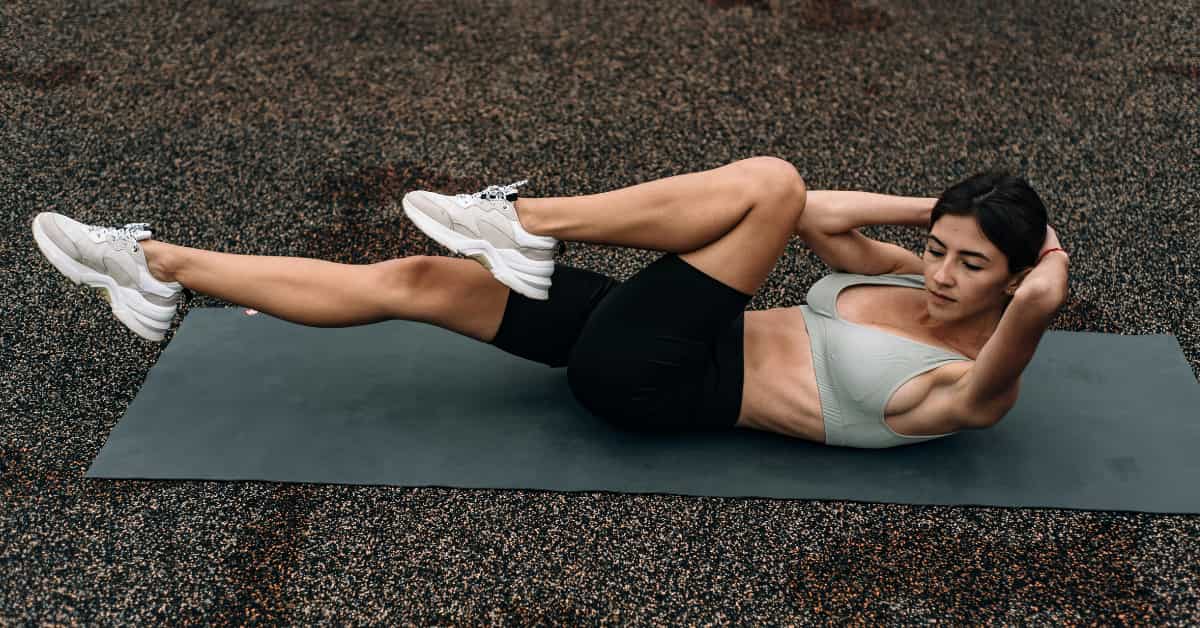
Bicycle crunches are a highly effective body weight core exercise or movement that targets the rectus abdominis & obliques simultaneously. By mimicking a cycling motion while lying on the back, this dynamic activity needs rhythmic rotation of the torso to bring the opposite elbow toward the opposite knee, deepening engagement of the lateral abdominal muscles. Unlike standard crunches, the bicycle variation keeps the abdominal wall under constant tension during both leg extension and upper-body rotation, making it a staple for improving rotational strength and defining the “six-pack” muscles.
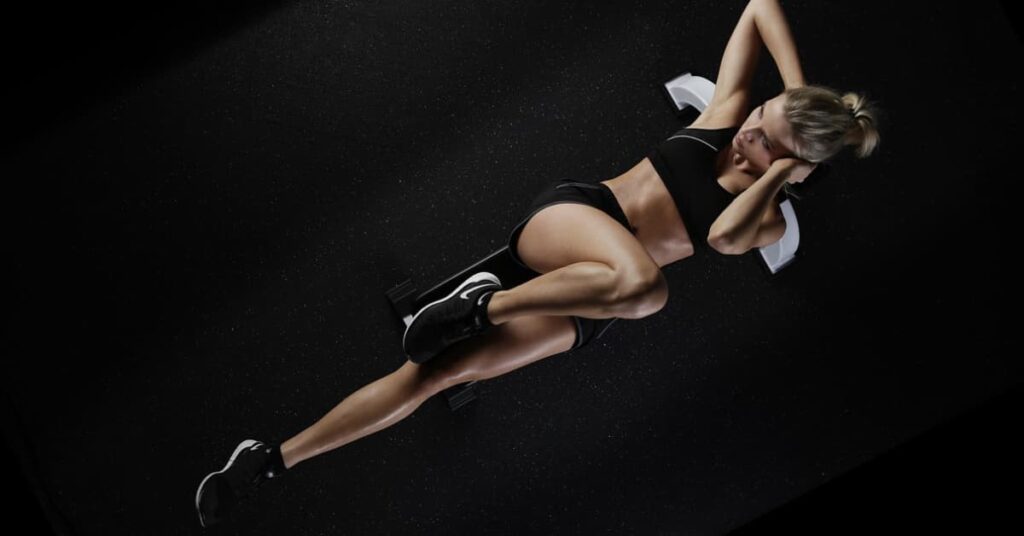
Bicycle Crunches Exercise
Bicycle crunches are often cited as one of the most efficient abdominal exercises because they challenge the entire midsection through a combination of hip flexion & spinal rotation. By maintaining a “hollow body” position & pedaling with controlled, fluid motion, you force the deep stabilizers of the core to work alongside the superficial muscles to maintain balance. This dual-action approach, lifting the shoulder blades while extending the legs, builds endurance in the abdominal floor and improves overall coordination and functional stability for daily activities.
Bicycle Crunches target muscles
Bicycle crunches are widely considered a “gold standard” for core training because they engage a broad range of muscles simultaneously.
Primary Target Muscles
- Rectus Abdominis: This is the “six-pack” muscle. The crunching motion and the need to keep your shoulder blades off the floor place this muscle under constant tension.
- External and Internal Obliques: The twisting motion (bringing the elbow to the opposite knee) is what makes this exercise famous. It forces the obliques to contract to rotate the torso.
- Transverse Abdominis: The deepest abdominal layer that acts like a corset. It works hard to stabilize your spine as your legs move back and forth.
Secondary (Supporting) Muscles
- Hip Flexors (Iliopsoas): These muscles are heavily involved in the “pedaling” motion as you extend and retract your legs.
- Intercostals: These small muscles between your ribs help facilitate the deep rotational movement.
- Quadriceps: The quads engage slightly to keep the legs straight & controlled during the extension phase.
Bicycle Crunches: Form and Instructions
To get the most out of bicycle crunches while protecting the spine, focus on slow, controlled movements rather than speed. Proper form ensures you are actually using the core rather than relying on momentum or straining the neck.
Step-by-Step Instructions
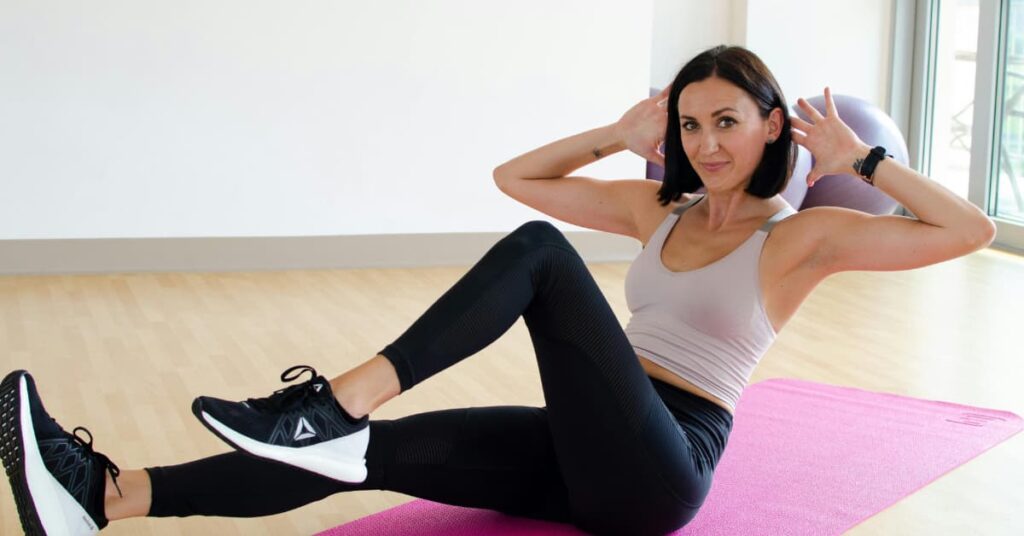
- The Starting Position: Lie flat on your back on a yoga mat. Press the lower back in to the floor (engaging the posterior pelvic tilt). Place the hands lightly behind the head, elbows wide. Do not lace the fingers too tightly, as this can lead to neck strain.
- The Lift: Lift the legs into a “tabletop” position (knees bent at 90 degrees) and raise the shoulder blades off the floor.
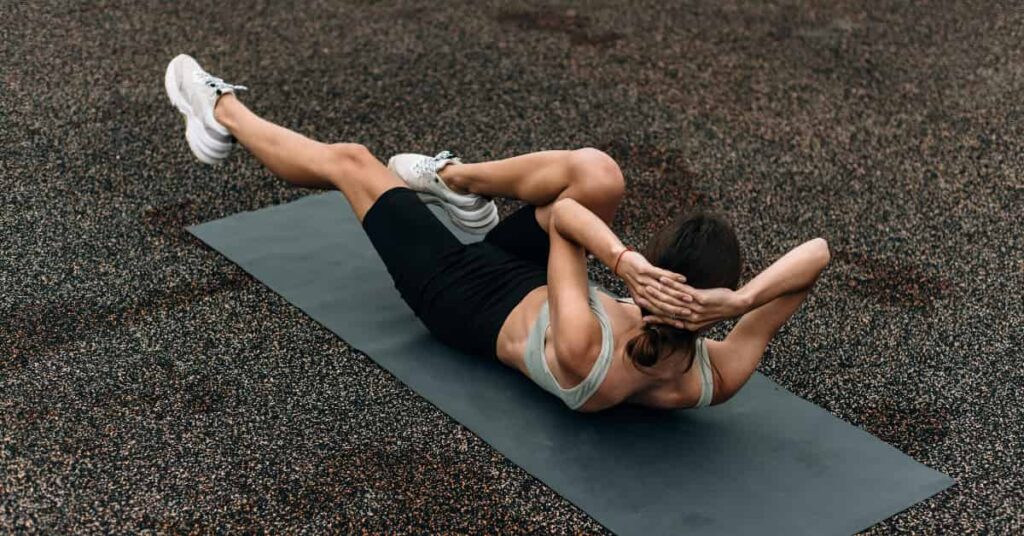
- The Rotation: Simultaneously bring the right knee toward the chest while straightening your left leg out at about a 45-degree angle. As you do this, rotate your torso so your left elbow reaches toward your right knee.
- The Switch: In a smooth, rhythmic motion, switch sides. Bring the left knee in and reach the right elbow toward it while extending the right leg.
Bicycle Crunches Benefits
Bicycle crunches are a powerhouse move for any fitness routine. Here are nine specific benefits that highlight why this exercise is a must-have for core development.
9 Key Benefits of Bicycle Crunches
- Comprehensive Core Activation: Research (including studies by the American Council on Exercise) often ranks bicycle crunches as the exercise for strengthening both the rectus abdominis and the obliques.
- Visible Muscle Definition: By targeting the “six-pack” and the “V-cut” (obliques) simultaneously, this move is highly effective for those aiming for a toned, athletic midsection.
- Deep Stabilizer Engagement: It recruits the transverse abdominis, the deep “corset” muscle of the trunk, that aids in pulling the belly in & supports internal organs.
- Improved Functional Rotation: The twisting motion mimics daily movements like reaching for a seatbelt or swinging a golf club, enhancing the body’s ability to rotate safely under load.
- Enhanced Coordination: Coordinating opposite limbs (left elbow to right knee) while maintaining a steady breathing pattern improves neuromuscular pathways and overall body control.
- No Equipment Necessary: As a pure bodyweight exercise, it can be performed anywhere at home, in a hotel, or at the park, making it a zero-cost addition to a workout.
- Hip Flexor Strengthening: The pedaling motion strengthens the iliopsoas, an essential muscle for running, jumping, and climbing stairs.
- Protects the Lower Back: When performed with proper form (back flat on the mat), it builds the core strength necessary to support the spine and reduce or lower the chance of chronic back pain.
- Increased Metabolic Burn: Because it involves constant movement of both the upper and lower body, it raises the heart rate more than static exercises like planks, helping to burn more calories during the set.
Bicycle Crunches variations
It allows both beginners and advanced athletes to find a challenge that suits their level.
1. Standing Bicycle Crunches (Beginner / Low Impact)
Perfect for those people with back issues or limited mobility who find lying on the floor uncomfortable.
- How to: Stand with feet hip-width apart and hands behind the head. Lift your right knee toward the chest while rotating the left elbow to meet it.
- Benefit: Improves balance and removes the strain on the lower back.
2. Elevated Bicycle Crunches (Intermediate)
Using a bench or a chair to elevate the lower body increases the range of motion.
- How to: Sit on the edge of a sturdy bench, leaning back slightly while holding the sides for support. Bring the knees toward the chest and perform the cycling motion in the air.
- Benefit: Places a greater emphasis on the lower abdominals.
3. Slow-Motion Bicycle Crunches (Intermediate / High Tension)
Speed is the enemy of abdominal growth. Slowing down the movement removes momentum.
- How to: Perform the standard movement but hold the “contraction” (elbow to knee) for a full 2–3 seconds on each side.
- Benefit: Maximizes time under tension, which is the key to muscle hypertrophy.
4. Weighted Bicycle Crunches (Advanced)
Adding external resistance forces the core to work much harder to stabilize.
- How to: Wear ankle weights or hold a light medicine ball/dumbbell between the hands as you rotate.
- Benefit: Specifically targets muscle thickness for a more defined “six-pack” look.
5. Bicycle Crunches with Resistance Band (Advanced)
It adds “progressive resistance” to the leg extension.
- How to: Loop a small mini-band around the arches of both feet. As you cycle, you have to fight the band’s tension to extend the leg.
- Benefit: Massive engagement for the hip flexors and lower abs.
6. Bosu Ball Bicycle Crunches (Advanced / Stability)
Performing or doing the move on an unstable surface, like a Bosu ball.
- How to: Position the lower back/tailbone at the center of the Bosu ball and perform the crunch.
- Benefit: Forces every tiny stabilizer muscle in the trunk to fire to keep you from falling off.
Bicycle crunches alternative
Bicycle crunches are too taxing on the lower back or neck; providing alternatives is essential. These exercises offer similar core and oblique benefits using different movement patterns.
1. Dead Bug (The Spine-Safe Alternative)
Often called the “reversed” bicycle, this is the best option for beginners or those with lower back pain.
- Why it works: It focuses on core stability without spinal flexion (crunching), which can irritate the back.
- The Move: Lie on the back, with the arms reaching toward the ceiling and the knees in tabletop position. Slowly lower the right arm & left leg toward the floor simultaneously, then return and switch.
2. Russian Twists (The Oblique Specialist)
If the goal is to target the “side abs” specifically, this is the go-to seated alternative.
- Why it works: It emphasizes rotational strength through a larger range of motion.
- The Move: Sit with knees bent and feet slightly off the floor. Lean back at a 45-degree angle and rotate your torso from side to side, keeping your hands on the floor.
3. Mountain Climbers (The High-Intensity Alternative)
This move swaps the bicycle’s “pulling” motion for a “pushing” motion in a plank position.
- Why it works: It provides a significant cardiovascular boost while hammering the lower abs and shoulders.
- The Move: From a high plank position, drive the knees toward the chest one at a time in a running motion.
4. Bird-Dog (The Posterior Chain Alternative)
It is a “flip” of the bicycle crunch, performed on all fours.
- Why it works: It builds core stability while also engaging the glutes & lower back muscles.
- The Move: On hands and knees, extend the opposite arm & leg simultaneously until they are parallel to the floor. Crunch them together under the torso to meet at the center, then extend again.
5. Heel Taps / Penguin Crunches (The Neck-Friendly Alternative)
It moves the obliques while keeping the head & neck more supported.
- Why it works: It isolates the lateral abdominals with a side-bending motion rather than a twist.
- The Move: Lie on the back with your feet flat on the floor. Lift the head slightly and reach your right hand to touch your right heel, then your left hand to your left heel.
Bicycle Crunches: Precautions and Common Errors
This exercise involves high-speed rotation and leg leverage; minor errors can lead to significant strain.
Common Errors (The Progress Killers)
- The “Neck Crank”: This is the most frequent mistake. Users often lace their fingers behind their head and pull their chin toward their chest to force the “crunch.” It places immense pressure on the cervical spine and takes the work away from the abs.
- Arching the Lower Back: When the legs extend too low, the pelvis often tips forward, causing the lower back to lift off the mat. It shifts the load from the core to the lumbar spine, which can lead to sharp pain or long-term injury.
- The “Bicycle Sprint”: Many individuals pedal as fast as possible, relying on momentum. If the torso isn’t actually rotating, you’re just doing a high-speed hip flexor workout and missing the oblique benefits entirely.
- Elbow-to-Knee Obsession: Users often try to touch their elbow to their knee by simply pulling their arm forward. Proper form requires the shoulder to rotate toward the knee, allowing the entire ribcage to turn.
Essential Precautions & Safety Tips
- Protect the Spine: If you have a history of herniated discs or chronic lower back pain, avoid the “crunching” element. Stick to the Dead Bug (mentioned in the alternatives) until the core is strong enough to stabilize the spine.
- The “Tennis Ball” Rule: Always keep a space the size of a tennis ball between the chin and the chest. It ensures the neck stays aligned with the spine.
- Adjust the Altitude: If you feel the back lifting, aim the legs higher toward the ceiling (60 degrees instead of 45). As the strength increases, you can gradually lower them.
- Breathe Through the Twist: Never hold your breath. Exhale sharply as you twist (on the exertion) and inhale as you switch sides. It helps engage the deep transverse abdominis.
- Listen to the “Snap”: If you hear a clicking or snapping sound in the hips, it’s often a tight hip flexor or psoas. Try turning the toes slightly outward or reducing the range of motion of the extending leg.
Conclusion
The bicycle crunch remains a cornerstone of core training for a reason: it is a scientifically proven, multi-functional movement that delivers results without the need for expensive gym equipment. Simultaneously challenging the upper abs, lower abs, & obliques offers a level of efficiency that few other exercises can match. Moreover, the secret to those coveted results lies in quality over quantity.
By slowing down the tempo, focusing on a deep torso rotation, & keeping the lower back firmly anchored, you transform a simple activity into a powerful tool for building a more potent, more stable, & more defined midsection. Whether you are a beginner or an advanced athlete, incorporating this dynamic move into your routine is one of the fastest ways to level up your core strength and functional fitness.