Table of Contents
Introduction
The Dead Bug is a foundational core-stability training that strengthens the deep abdominal muscles, especially the transverse abdominis, while promoting spinal stability. It involves lying on the back & performing opposite-arm, opposite-leg extensions while maintaining a “hollow body” position, holding the lower back pressed firmly against the floor. By challenging the core to resist trunk rotation & spine arching during limb motion, the movement enhances coordination, protects the lower back from strain, & serves as an effective corrective movement for athletes & newbies alike.
Dead Bug Exercise
The Dead Bug is a positively useful, low-impact core training that highlights lumbar stability & pelvic control by teaching you how to move the limbs away from the spine. Unlike traditional crunches that involve spinal flexion, the Dead Bug requires you to keep the torso absolutely still while slowly lowering opposite arms & legs toward the ground. This “anti-extension” movement forces the deep core stabilizers to engage deeply to prevent the lower back from arching, making it an essential tool for improving posture, decreasing back pain, and building functional strength that translates to everyday activities & heavy lifting.
Dead Bug targets muscles.
While it might look like a simple exercise, the Dead Bug is a comprehensive core exercise that recruits several muscle groups simultaneously to maintain stability.
Primary Muscles Targeted
The main focus of the Dead Bug is the deep core, especially the muscles responsible for stabilizing the spine and pelvis:
- Transverse Abdominis (TVA): It is the deep layer of the abdominals. It acts like a natural corset, wrapping around the midsection to supply internal stability.
- Rectus Abdominis: Also called the “six-pack” muscle, it helps keep the rib cage down & prevents the back from arching.
- Obliques (Internal and External): These muscles on the sides of the torso engage to prevent the trunk from rotating or shifting as the arms & legs move.
Secondary (Supporting) Muscles
Because the exercise involves coordinated limb training, several other muscles are recruited to assist:
- Pelvic Floor Muscles: These work in tandem with the TVA to support the lower abdomen.
- Erector Spinae: These muscles along the spine help maintain a neutral back position.
- Hip Flexors (Psoas): These are activated as you lower and lift the legs.
- Shoulder Stabilizers (Deltoids & Lats): These engage to control the slow, steady motion of the arms.
Dead Bug: Form and Instructions
Step-by-Step Instructions
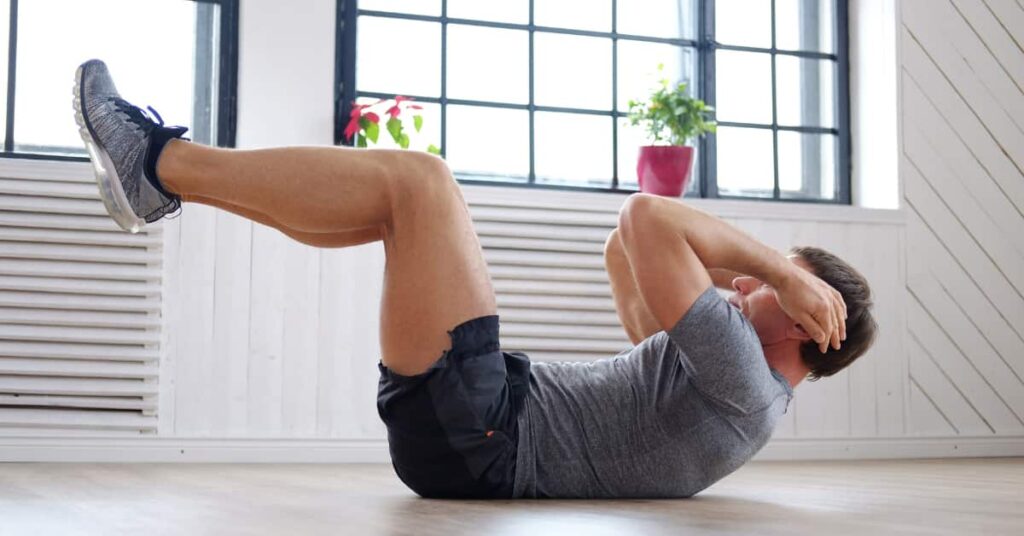
- The Starting Position: Lie flat on the back on a mat. Extend the arm straight up toward the roof, directly over the shoulders. Lift the legs into a tabletop position (knees bent at 90 degrees, stacked directly over the hips).
- The Set-Up: Before moving, take a deep breath and exhale to “knit” the ribs down toward the hips. Press the lower back firmly into the floor; there should be no gap between the spine and the mat.
- The Movement: Slowly lower the right arm behind the head while simultaneously raising the left leg straight out toward the floor. Only go as low as you can without arching your back.
- The Return: Inhale as you slowly bring the arm and leg back to the starting “dead bug” position.
- The Switch: Repeat the activity with the left arm and right leg. It completes one repetition.
Dead Bug Benefits
The Dead Bug is one of the most highly suggested exercises by physical therapists and trainers because it builds “functional” strength, the kind of strength that helps you in real-life movements.
1. Improved Core Stability and Strength
Unlike crunches, which focus on movement, the Dead Bug focuses on stability. It teaches the core to stay rigid and protect your spine while the limbs are moving. It builds a “corset” of strength around the midsection.
2. Decreased Lower Back Pain
By strengthening the transverse abdominis (the deepest ab layer), the Dead Bug helps stabilize the lower spine. It takes the pressure off the lumbar discs & can significantly lower chronic back pain caused by a weak core or poor posture.
3. Enhanced Coordination
Because the exercise requires you to move opposite limbs (right arm/left leg) simultaneously, it challenges the brain-to-muscle connection. It improves contralateral coordination, which is essential for walking, running, and athletic performance.
4. Correction of Anterior Pelvic Tilt
Many people develop an arched lower back (anterior pelvic tilt) from prolonged sitting. The Dead Bug teaches you to keep the pelvis neutral, which helps “reset” the posture and align the hips and spine correctly.
5. Safe for All Fitness Levels
It is a low-impact exercise that puts zero strain on the neck or joints. It makes it an ideal movement for:
- Beginners are building a foundation.
- Athletes recovering from injury.
- Individuals looking for safe, effective core work.
Dead Bug Variations
1. Beginner: Single-Limb Extension
If coordinating opposite limbs is too difficult, begin by moving only one at a time.
- The Move: Keep both legs in tabletop & arms up. Lower only one arm behind the head, then return it; lower only one leg.
- Why it works: It lowers the “mental load” & makes it easier to focus exclusively on keeping the lower back flat.
2. Intermediate: Heel Taps
It is a great step for those who feel their backs arch when fully extending their legs.
- The Move: Rather than straightening the leg, keep the knee bent at 90 degrees and tap the heel to the floor before returning to the tabletop.
- Why it works: The shorter lever (bent leg) puts significantly less strain on the lower back while still engaging the lower abs.
3. Advanced: Weighted Dead Bug
Once the bodyweight version feels easy, add external resistance to further challenge the core.
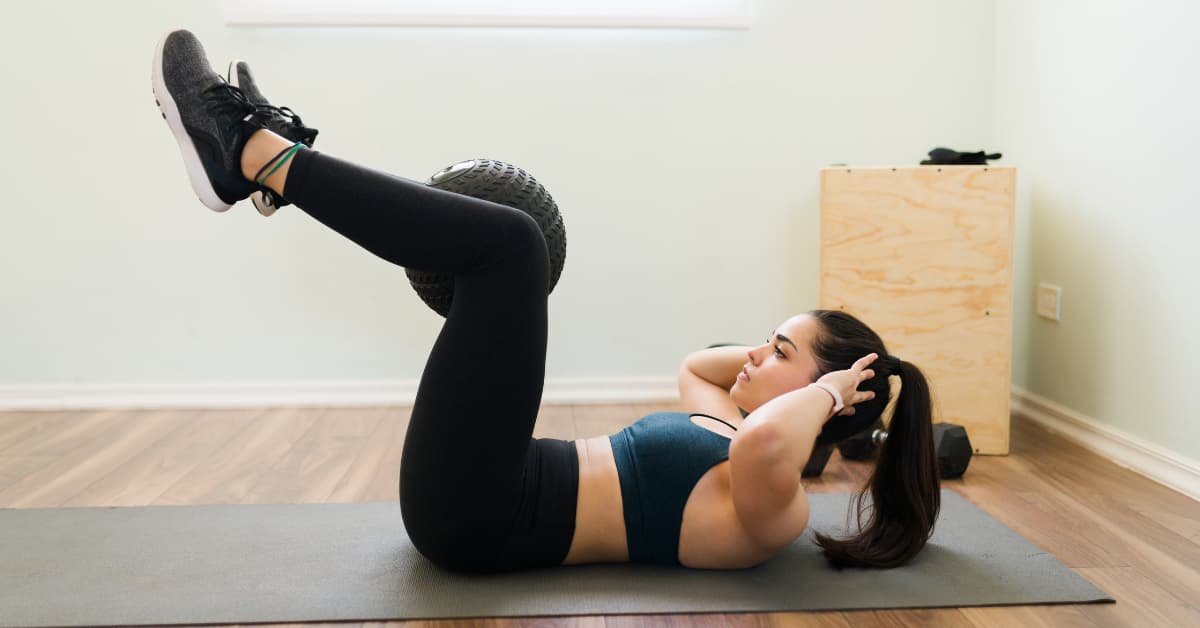
- The Move: Grab a light dumbbell or a medicine ball in each hand (or one heavy one with both hands). Perform the standard opposite-limb extension.
- Why it works: The added weight increases the “anti-extension” demand, forcing the core to work harder to prevent the ribs from flaring.
4. Pro: Resistance Band Dead Bug
It is excellent for athletes looking to increase tension throughout the entire movement.
- The Move: Anchor a resistance band behind you and hold it with both hands so there is tension when your arms reach toward the ceiling. Perform leg extensions while keeping the arms steady against the band’s pull.
- Why it works: The band creates constant tension, keeping the upper abs “on” throughout.
Dead Bug Alternative
Here are the best alternatives that target the same “anti-extension” and deep core stability.
1. Bird Dog
Often called the “flipped” Dead Bug, this exercise is executed on all fours.
- How it’s similar: It utilizes the same opposite-arm, opposite-leg movement to challenge stability and coordination.
- Why choose it: It places less pressure on the spine & allows strengthening the erector spinae (lower back) and glutes alongside the core.
2. Hollow Body Hold
A staple in gymnastics, this is a static hold rather than a dynamic movement.
- How it’s similar: The primary goal is the same, pressing the lower back into the floor and maintaining a “hollow” midsection.
- Why choose it: It is a more intense isometric hold that builds incredible core endurance without the coordination required for moving limbs.
3. Pallof Press
It is a standing exercise typically done with a resistance band or cable machine.
- How it’s similar: It is an “anti-rotation” movement. Your core must remain perfectly still while your arms move.
- Why choose it: It is excellent for those who find lying on the floor uncomfortable or for athletes who want to train core stability in a standing, more “functional” position.
4. Plank
The most famous core exercise of all.
- How it’s similar: Like the Dead Bug, a proper plank requires you to keep your spine neutral and prevent your lower back from sagging (arching).
- Why choose it: It engages the entire “posterior chain” (glutes, back, and hamstrings) and requires no equipment or coordination.
Dead Bug: Precautions and Common Errors
Common Errors to Avoid
- The “Arching” Back: This is the most frequent mistake. If the lower back lifts off the mat as the leg drops, your core has “disengaged,” and your hip flexors and lower back are taking over.
- Speeding Through Reps: The Dead Bug is not a cardio move. Rushing relies on momentum rather than muscle fiber. The slower you go, the more the deep transverse abdominis has to work.
- Holding Your Breath: Many people hold their breath when their core is under tension. It increases internal pressure and can spike blood pressure. You should exhale forcefully as you extend your limbs.
- Flaring the Ribs: As the arm goes overhead, the rib cage often wants to pop up. It indicates a loss of core control. Keep the ribs “tucked” toward your belly button.
- Losing the 90-Degree Bend: In the tabletop position, the “resting” leg often drifts toward the chest or drops toward the floor. Keep it perfectly still at a 90-degree angle.
Precautions & Safety Tips
1. Listen to Your Back
If you feel a “twinge” or sharp pain in the lower back, stop immediately. Reset the position, ensure the back is flat, & try a smaller range of motion (don’t lower the leg as far).
2. Neck Tension
If you find the neck straining or the chin tilting back, place a small folded towel or a thin pillow under the head to keep the cervical spine neutral.
3. Postpartum Considerations
For those in the postpartum period (especially if dealing with Diastasis Recti or abdominal separation), it is vital to check for “doming” or “coning” along the midline of the stomach. If the stomach protrudes into a ridge, stick to beginner variations like Heel Taps until core strength improves.
4. Quality Over Quantity
Five perfect, slow repetitions are much more beneficial than twenty sloppy ones. If you can no longer keep your back flat, the set is over.
Conclusion
In conclusion, the Dead Bug is much more than a simple abdominal exercise; it is a vital tool for building a resilient, stable, & functional core. By teaching the body to maintain spinal alignment as you move the limbs, you develop the deep-seated strength necessary to improve posture, enhance athletic performance, &, most importantly, protect the lower back from injury.