Table of Contents
Introduction
The deadlift is a hip-dominant exercise that works the glutes, back, hamstrings, core, and trapezius muscles. Because they work numerous additional muscle groups, dead lifts are an effective practice to incorporate into a workout routine. Individuals may use them to target distinct muscle groups or enhance overall strength and athleticism.
A person can perform deadlifts with different bar-bells, weights, and repetition ranges. When performed with proper form, dead lifts are a safe and effective way of building muscle and strength.
Deadlift Exercise
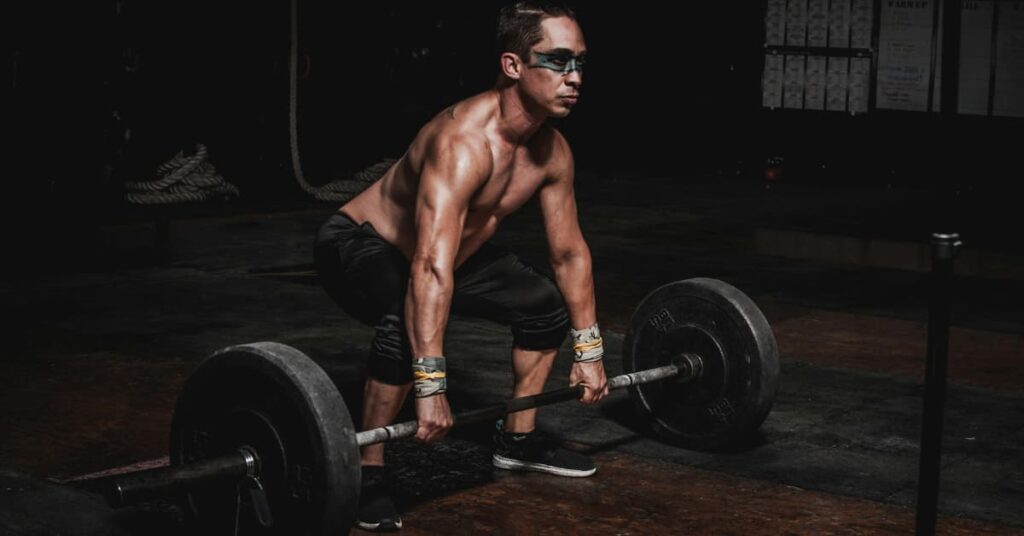
The deadlift is a widely used weightlifting exercise that involves picking up a weight or bar from the ground by bending at the waist and hips, then standing back up.
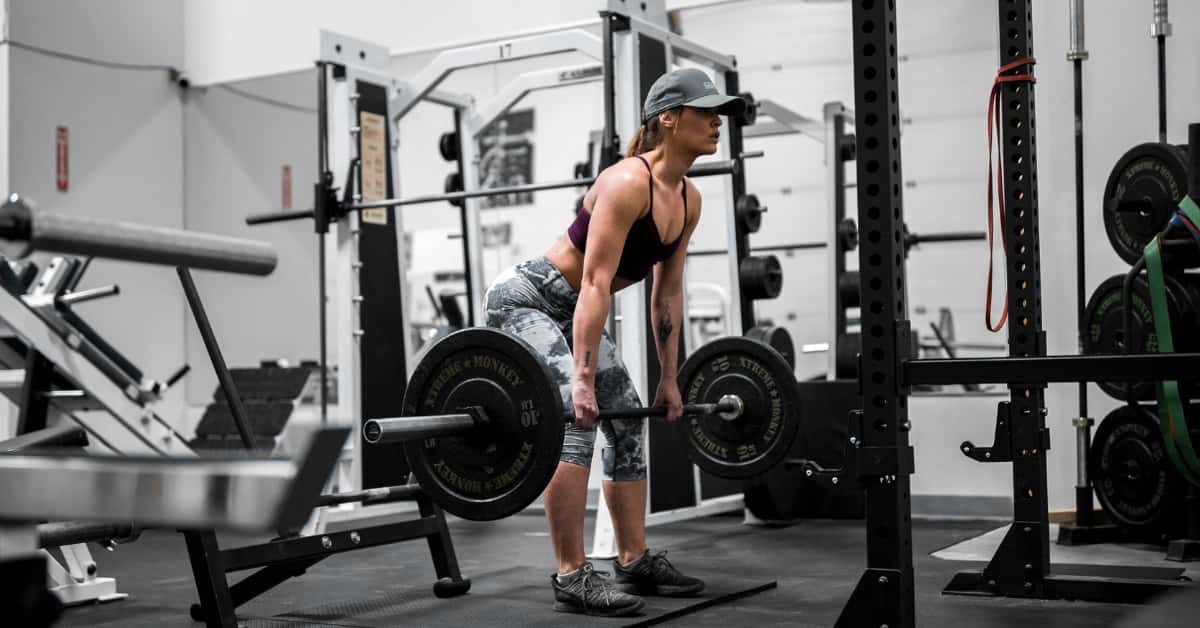
The dead lift training and its variations need you to bend over while maintaining or sustaining a braced, neutral spine, grab the weight, and go through the floor with your feet. The motion utilizes your glutes, hamstrings, and quadriceps to lift the bar-bell off the floor.
In the standard dead lift, the initial level shift to grasp the bar arrives through a combination of hinging at the hips & bending the knees. In a standard dead lift, the torso angle at the beginning of the pull or up will be roughly 30–45 degrees above horizontal.
Throughout the motion, keep the core contracted to stabilize the spine and avoid twisting, rounding, or arching of the torso.
All dead lift activities begin with the weight roughly in line with the middle of the foot, then bend forward and pick up the object.
They are highly effective at increasing functional strength by activating the largest lower-body muscles.
They also train you in the functional activity of safely lifting things off the floor, a key skill for day-to-day activities.
How to do deadlifts
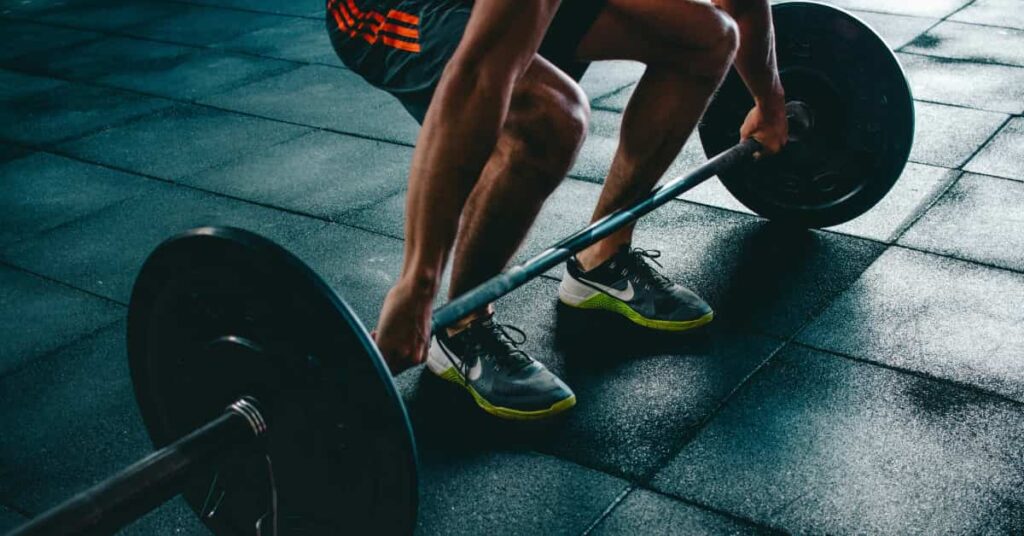
A dead lift has three stages: the setup, pull, & lockout.
Here’s how to do each one:
- The setup: An individual should stand with their feet hip-width apart. They should concentrate on engaging the core muscles and pressing the shoulder blades together & down to engage the lats. If using a bar-bell rod, the bar should be on the floor and resting on the shins. The individual should then hinge at the hips, with the spine extended and the chest lifted. Grip the bar-bell with an over-under grip, with the first hand facing palm-up and the second palm-down. Squeeze or hold the bar & sink back into the hips.
- The pull: Push the feet in the floor, straighten your legs, and lift the chest & weight. Push the hips forward & pull the knees backward.
- The lockout: Top of the movement or exercise, hold the shoulders back & straighten the spine. Then pause, then lower the barbell by pushing the hips back and utilizing the thigh and core muscles to slow the movement.
It is important to note that the correct form can vary among individuals, depending on their body type, capabilities, and abilities. Such as, if an individual has very inflexible hamstrings, they can not be able to lower as much as some other person with very flexible hamstrings.
The weight and number of repetitions an individual performs depend on their fitness level & goals. It is critical not to utilize too much weight too soon before developing the proper lifting technique.
New lifters should focus on form first. They may want to practice the dead lift motion with no weight before adding resistance.
Key muscle groups worked.
The dead lift is unique because it works two opposing “chains” of muscle simultaneously: the Posterior Chain (back of the body) to pull the weight, and the Anterior Chain (front of the body) to push the floor away.
Here is the breakdown of the key muscle groups.
1. The Prime Movers (The Engine)
These are the muscles that generate the force to move the weight.
- Gluteus Maximus (Buttocks): The primary driver of the movement. Your glutes are responsible for “hip extension”—the action of thrusting your hips forward to lock out the weight at the top.
- Hamstrings (Back of Thighs): These work in tandem with the glutes to extend the hips. They are heavily activated during the initial pull and the lockout.
- Quadriceps (Front of Thighs): Often overlooked, the quads are critical for the first portion of the lift. They extend your knees to break the bar off the floor (acting like a leg press).
2. The Stabilizers (The Support System)
These muscles work isometrically (they contract without moving) to keep your spine safe and the bar in the correct path.
- Erector Spinae (Lower Back): These rope-like muscles running up your spine fight to keep your back flat. They prevent your spine from rounding under the heavy load.
- Latissimus Dorsi (“Lats“): The big muscles on the sides of the back. In a dead lift, they act to keep the bar close to your body (preventing it from swinging away), which protects your lower back.
- Trapezius (Upper Back/Neck): The “Traps” hold your shoulder girdle in place, preventing your arms from being ripped out of their sockets by the heavy weight.
3. The Grip & Core
- Forearms (Flexors): Your hands and forearms are the single point of contact with the bar. Dead lifts are one of the best exercises for building crushing grip strength.
- Core (Abs & Obliques): Your core acts as a belt. By increasing intra-abdominal pressure, it supports the spine from the front, balancing the work of the lower back muscles.
Benefits of deadlift
Dead lifts are often called the “King of Exercises” because they offer a higher return on investment than almost any other movement. They don’t just build muscle; they improve your entire body’s structural integrity.
Here is a breakdown of the primary advantages, ranging from visible muscle growth to invisible physiological changes.
1. Full-Body Muscle Activation
While most people think of it as a “back” or “leg” exercise, the dead lift is actually a full-body compound movement.
- Posterior Chain: It is the single best exercise for strengthening the backside of your body—specifically the hamstrings, glutes, and erector spinae (lower back).
- Upper Body: Your traps and rhomboids work isometrically to keep your shoulders pinned back, while your lats work to keep the bar close to your body.
- Core: Your abdominals and obliques must fire intensely to stabilize your spine, often working harder than they do during dedicated “ab” exercises.
2. Functional “Real World” Strength
The dead lift mimics one of the most common human movement patterns: picking something heavy up from the floor.
- Injury Prevention: By teaching you to lift with your hips and legs rather than your lower back, it trains your body to safely handle heavy loads in daily life (like moving furniture or picking up groceries).
- Grip Strength: Dead lifts are one of the few exercises that tax your grip strength to the limit, which correlates strongly with overall longevity and quality of life as you age.
3. Physiological & Hormonal Advantages
Because dead lifts recruit so much muscle mass at once, they trigger a significant systemic response.
- Hormonal Boost: Heavy compound lifts stimulate the release of Testosterone and Growth Hormone (HGH), which are essential for muscle repair, fat loss, and overall vitality.
- Bone Density: The heavy axial loading (downward force on the spine and hips) stimulates your bones to become denser and stronger, which is a critical defense against osteoporosis and fractures later in life.
- Metabolic Rate: The intensity of the lift creates a high caloric burn during the workout and increases “Excess Post-exercise Oxygen Consumption” (EPOC), meaning you continue burning calories at a higher or faster rate for hours after you leave the gym.
- Postural Correction: Modern life involves a lot of sitting, which weakens the glutes and tightens the chest. Dead lifts reverse this by strengthening the entire back side of the body, naturally pulling your shoulders back and fixing the “slumped” computer posture.
- The “V-Taper”: By building the upper back and traps, dead lifts contribute significantly to a broader, more powerful-looking silhouette.
Variations
The deadlift can be modified in several ways depending on the desired goals, the sport, or the limitations of the person performing it. Each variation will allow the person to focus on specific muscle groups or mimic a desired activity.
Here are a few deadlift variations you can try.
Sumo deadlift
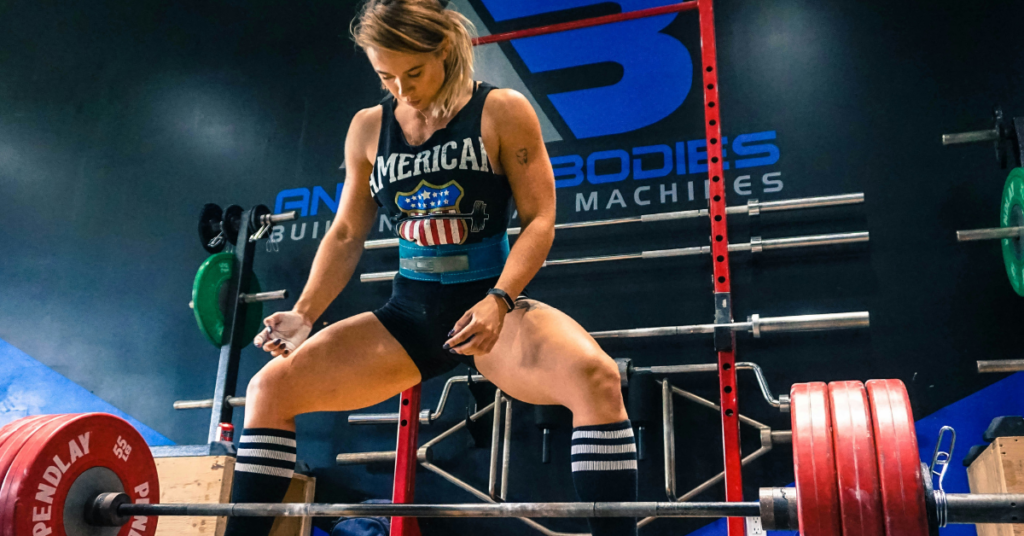
The Sumo deadlift variation has you adopting a much wider stance, with your feet turned out 45 degrees or more. This results in increased activation of your inner thigh muscles, that can provide many athletes with greater leverage.
In particular, studies suggest that Sumo deadlifts offer advantages for athletes with longer torsos, enabling them to lift more total weight.
Single-leg deadlift
The single-leg deadlift involves a similar motion to the standard dead lift. The distinction is that as you lean forward, one of your legs stays straight at the hip as the foot leaves the floor & extends behind you.
In the single-leg deadlift, maintaining a straight torso requires increased core activation to prevent outward or inward rotation.
Single-leg dead lifts don’t allow as much weight to be lifted, & they’re generally utilized as rehabilitation protocols or warm-ups. Some investigations suggest that warming up with single-leg deadlifts may lower markers of muscle damage after a training session.
Romanian deadlift
These maintain a slight bend in your knees as you hinge at your waist, compared with the more aggressive bend in a traditional deadlift. This results in more emphasis on the glutes & hamstrings and less emphasis on the quadriceps.
Studies using electrical measurements of muscle activation found similar gluteus maximum activation during the Romanian deadlift and the bar-bell hip thrust, a glute-specific exercise.
Both the Romanian deadlift & bar-bell hip thrust led to much greater gluteus maximum activation than a back squat, whose pattern is more exact to that of the traditional deadlift.
With this in mind, the Romanian deadlift is a great way to add gluteus maximus training.
Stiff-legged deadlift
The stiff-legged dead lift is performed with the knees virtually locked straight. The entire raising & lowering motions come from hinging at the waist.
Investigations have shown that the stiff-legged deadlift places greater emphasis on your hamstrings than other deadlift variations.
Deficit deadlift
In the deficit deadlift, you should stand on a modestly raised platform- typically 4–6 inches (10-20 cm) high- in relation to the resting place or position of the bar-bell-.
This type or varition trains the same muscles as like the deadlift but allows for a greater or higher range of motion because the bar-bell is lower relative to your shins.
Deficit deadlifts can improve the strength balance between your hamstrings and quadriceps, potentially reducing your risk of hamstring injury.
Hex bar deadlift
The hex bar deadlift uses a hexagonal bar and has you stand inside the hexagon bar, with the handles parallel to your line of sight, resulting in a suitcase style grip. Plates of weight are added to standard-style sleeves that protrude from the hexagon’s sides.
The hex bar deadlift offers a more natural hand position and keeps the weight’s direction perfectly aligned with the rest of the body.
Investigations suggest that hex bar deadlifts allow you to lift much more total weight, potentially resulting in greater gains in strength & power due to the increased resistance.
Deadlift precautions and contraindications
1. The “Neutral Spine” Rule (Precaution)
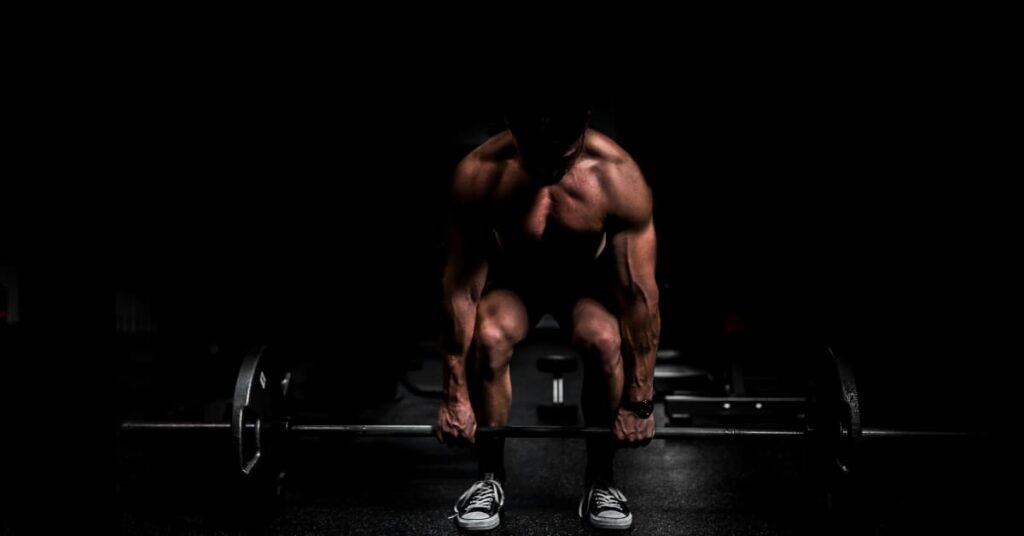
Never round your lower back. It is the most common cause of deadlift injuries. Your spine must remain flat from your head to your tailbone throughout the lift. If your back rounds like a scared cat, you place uneven pressure on your spinal discs, significantly increasing the risk of herniation.
- Tip: Engage your lats (armpit muscles) and keep your chest up to lock your spine in place before you pull.
2. Bar Path Proximity (Precaution)
Keep the bar touching your legs. The bar should travel or move in a straight vertical line, dragging up your shins and thighs. For every inch the bar drifts away from your body, the pressure on your lower back increases exponentially due to poor leverage.
- Tip: Wear long socks or pants to protect your shins so you aren’t afraid to keep the bar close.
3. Acute Spinal Conditions (Contraindication)
Stop if you have active disc issues. Individuals with acute lumbar disc herniation, spondylolisthesis (vertebral slippage), or active sciatica (shooting nerve pain) should not perform heavy conventional deadlifts. High axial compression can severely aggravate these conditions.
- Alternative: Once the acute phase passes, rehab exercises like glute bridges or very light rack pulls may be introduced under professional supervision.
4. Intra-Abdominal Bracing (Precaution)
Don’t breathe while lifting. You must master the “Valsalva Maneuver.” Please take a deep breath into your belly before the lift, hold it tight to create internal pressure (like an inflated tire), and only exhale after you have locked out the weight or returned it to the floor.
- Why: This internal pressure acts as a natural weightlifting belt, supporting your spine from the front.
5. Mobility Limitations (Relative Contraindication)
Don’t pull from the floor if you lack flexibility. If you cannot reach the bar without rounding your back (due to tight hamstrings or hip structure), pulling from the floor is contraindicated for your body mechanics.
- Correction: Elevate the bar on blocks or rack pins (“Rack Pulls”) to a height where you can maintain a flat back, or switch to a Trap Bar deadlift, which requires less mobility.
Next Step: Would you like a simple “Warm-up Routine” specific to deadlifting to ensure your hips and back are ready before you touch the bar?
Conclusion
The deadlift is a staple of most strength-exercise programs and one of the three lifts in powerlifting.
They can be performed with a variety of training tools, with the bar-bell being the most common.
A large body of investigation supports the utilization of the deadlift for a variety of fitness & performance goals — both among athletes & the general population.