Table of Contents
Introduction
The endocrine system is a complex networks of glands & organs that acts as the body’s long-distance communication team, using chemical messengers named hormones to regulate almost every major function. Unlike the nervous system, that transmits rapid electrical signals, the endocrine system releases hormones directly into the bloodstream, allowing them to reach distant tissues & control processes such as metabolism, growth, mood, & reproductive health. By continuously monitoring internal needs & adjusting hormone levels, this system maintains a delicate state of balance, understood as homeostasis, ensuring which the body responds appropriately to everything from a heavy meal to a sudden stressor.
Unlike the nervous system, that sends lightning-fast electrical signals, the endocrine system uses a slower, more deliberate method of communication. It uses chemical messengers named hormones. These hormones travel through the bloodstream, acting like “biological mail,” delivering specific instructions to organs & tissues throughout the body.
In this guide, we’ll break down how this complex system works, the parts that make it up, and most importantly, how you can keep it running smoothly through daily habits.
1. What Exactly Does the Endocrine System Do?
If the brain is the CEO of a company, the endocrine system is the communications department. Its primary function is to maintain homeostasis, a fancy word for keeping the internal environment stable and balanced.
The endocrine system is responsible for:
- Metabolism: How the whole body turns food into energy.
- Growth and Development: Managing how you grow during childhood and puberty.
- Sexual Function and Reproduction: Regulating fertility and the reproductive cycle.
- Sleep-Wake Cycles: Telling the body when it’s time to rest and when to wake up.
- Mood Regulation: Influencing feelings of happiness, stress, or anxiety.
2. Meet the Players: Parts of the Endocrine System
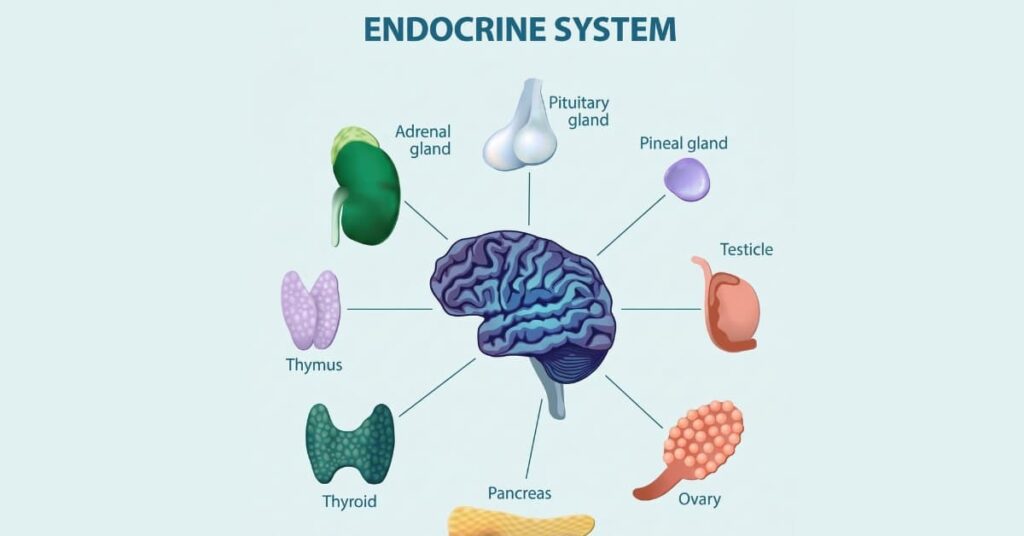
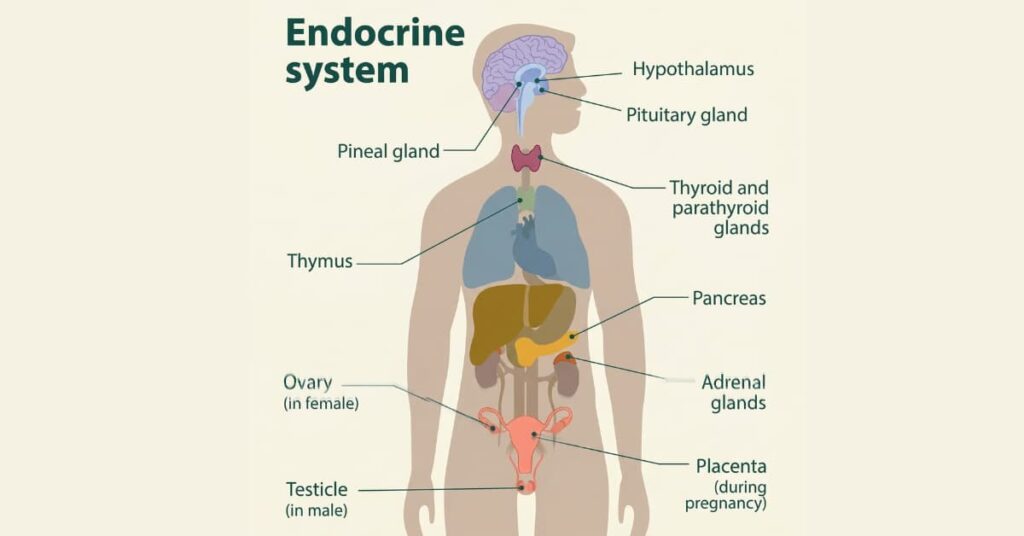
The endocrine system isn’t a single organ; it’s a network of glands scattered throughout the body. Each gland has a specific “specialty.”
The Hypothalamus and Pituitary Gland (The Control Center)
Located in the brain, the hypothalamus is the bridge between the nervous and endocrine systems. It tells the pituitary gland, often called the “Master Gland,” what to do. The pituitary gland then releases hormones that trigger other glands to start or stop their work.
The Thyroid Gland (The Energy Regulator)
Found in the neck and shaped like a butterfly, the thyroid gland produces hormones such as thyroxine (T₄). These hormones control the basal metabolic rate. If the thyroid is overactive, you might feel jittery and lose weight; if it’s underactive, you might feel sluggish and gain weight easily.
The Pancreas (The Sugar Manager)
The pancreas serves two purposes, but its endocrine role is vital: it produces insulin and glucagon. Together, these two hormones help keep blood sugar within a healthy range.
- Example: After you eat a bowl of pasta, the blood sugar rises. The pancreas releases insulin to move that sugar into the cells for energy.
The Adrenal Glands (The Stress Responders)
Sitting atop the kidneys, the adrenals produce adrenaline and cortisol. These are the “fight or flight” hormones. They increase the heart rate and blood pressure when you’re under stress, preparing you to handle a challenge.
The Pineal Gland (The Sleep Specialist)
This tiny gland in the brain produces melatonin. It reacts to light and darkness, helping you fall asleep at night & stay alert during the day.
The Gonads (The Reproductive Glands)
In males, the testes produce testosterone. In females, the ovaries produce estrogen & progesterone. These hormones are responsible for puberty, bone health, and reproductive capabilities.
3. Common Endocrine Disorders and Diseases
When a gland produces too much or too little of a hormone, it creates an imbalance. Because hormones are so powerful, even a tiny shift can cause significant symptoms.
Diabetes (Type 1 and Type 2)
It is the most well-known endocrine disorder. In Type 1, the body doesn’t produce insulin. In Type 2, the body’s cells stop responding to insulin properly. Both result in high blood sugar levels, which can damage the heart, kidneys, & eyes over time.
Hypothyroidism and Hyperthyroidism
- Hypothyroidism: The thyroid is “lazy.” Symptoms include fatigue, weight gain, & feeling cold.
- Hyperthyroidism: The thyroid is “hyper.” Symptoms include rapid heartbeat, anxiety, and unexplained weight loss.
Polycystic Ovary Syndrome (PCOS)
PCOS is a common hormonal disorder or issue among females of reproductive age. It involves an imbalance of reproductive hormones, which can lead to irregular periods, acne, and problems getting pregnant.
Cushing’s Syndrome
It occurs when the body is chronically exposed to high levels of cortisol (the stresses hormone). It may cause a fatty hump between the shoulders, a rounded face, & high blood pressure.

4. How to Support Endocrine Health Through Diet
You are what you eat, and the glands are particularly sensitive to the fuel you provide. To keep the hormones in harmony, focus on these dietary pillars:
Prioritize Healthy Fats
Hormones are often made from cholesterol and fats. If you cut out fat entirely, the body doesn’t have the “bricks” it needs to build hormones.
- What to eat: Avocados, olive oil, walnuts, and fatty fish like salmon (rich in Omega-3s).
Focus on Fiber
Fiber assists in regulating blood sugar by slowing down the absorption of glucose. It also allows the body to flush out “used” hormones that are no longer needed.
- What to eat: Beans, lentils, oats, and leafy greens.
Manage Iodine Intake
The thyroid gland especially needs iodine to function. However, balance is key; too much or too little can cause issues.
- What to eat: Iodized salt, seaweed, and dairy products.
Limit Processed Sugars
Constant sugar spikes force the pancreas to work overtime. Over years of high sugar intake, the cells may become “insulin resistant,” that is a precursor to Type 2 Diabetes.
5. Working Out for Your Hormones
Exercise isn’t just about burning calories or building muscle; it’s a powerful “reset button” for your endocrine system.
Strength Training for Insulin Sensitivity
Lifting weights or completing bodyweight exercises makes the muscles more “hungry” for glucose. It improves insulin sensitivity, meaning the pancreas doesn’t have to work as hard to manage or control blood sugar levels.
Cardiovascular Exercise for Mood
Walking, running, or cycling triggers the release of endorphins (the feel-good hormones) and helps lower cortisol levels. It reduces the physical impact of stress on your body.
Don’t Over-Train
While exercise is great, “too much of a good thing” is a real risk. Extreme, high-intensity exercise without enough rest can spike cortisol levels and even shut down reproductive hormones (a common issue in elite athletes). Balance intense days with active recovery like yoga or walking.
6. Lifestyle Factors: The “Invisible” Support
Beyond diet and exercise, two other factors play a massive role in hormonal health: Sleep and Stress Management.
The Power of Sleep
While you sleep, the endocrine system is busy at work. Growth hormone is released to repair tissues, and the appetite hormones (leptin and ghrelin) are rebalanced. It is why you feel hungrier and crave sugar after a bad night’s sleep; the hormones are literally out of whack.
Stress Management
Chronic stress keeps the body in a state of high cortisol. High cortisol may lead to weight gain (especially around the belly), sleep issues, and a weakened immune system. Practices like meditation, deep breathing, or simply spending time in nature can “tell” the adrenal glands that the danger has passed.
7. The Role of Endocrine Disruptors
In the modern world, we are surrounded by chemicals known as endocrine disruptors. These substances, found in some plastics, pesticides, and household cleaners, can “mimic” hormones and confuse the glands.
How to reduce exposure:
- Use a mug or stainless steel container or box instead of plastic for hot food.
- Choose “fragrance-free” personal care products when possible.
- Wash your produce thoroughly to remove pesticide residue.
Conclusion
The endocrine system is a masterwork of biological engineering. It works tirelessly to ensure the temperature is right, the energy is steady, and the body is growing and repairing itself. Because it is so interconnected, a small change in one area, like getting 30 minutes more sleep or swapping a sugary soda for water, can have a massive “ripple effect” on your overall well-being.
If you find yourself feeling chronically tired, struggling with unexplained weight changes, or feeling “off” emotionally, don’t ignore it. The endocrine system might be trying to tell you something. By nourishing the body with the right fats, staying active, and respecting the need for rest, you aren’t just “staying healthy”; you’re conducting your internal orchestra to play a perfect, harmonious tune.