Table of Contents
Introduction
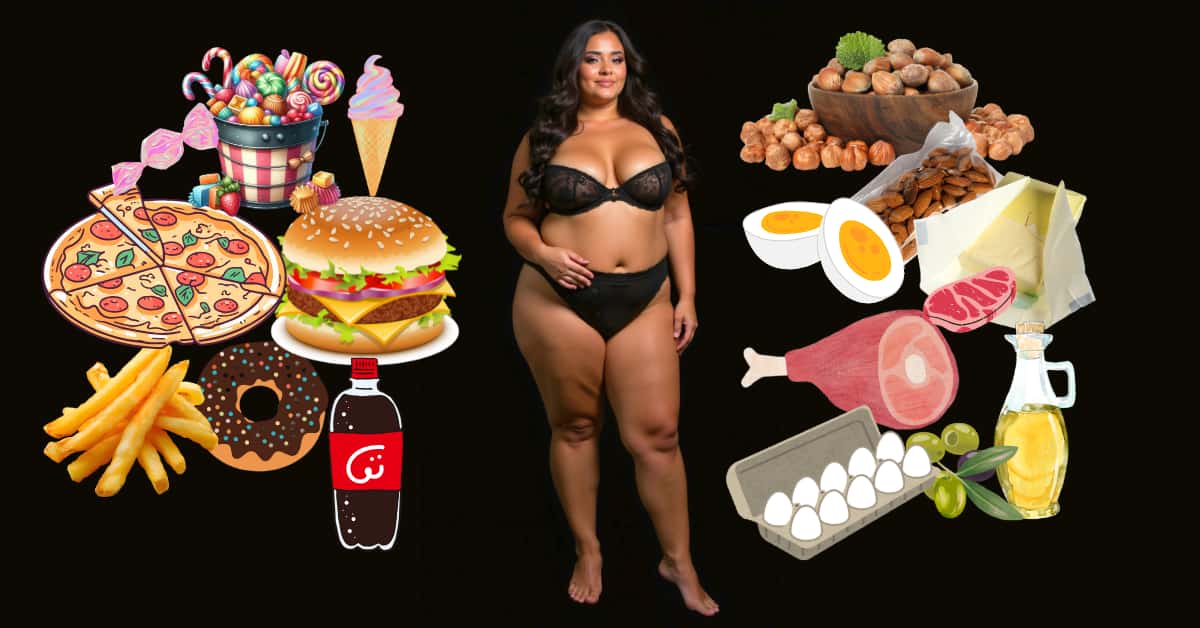
For too long, the word “fat” has been treated like a four-letter curse word in the world of health and nutrition, often misunderstood as a simple layer of unwanted weight or a dietary villain to be avoided at all costs. In reality, fat is one of the most complex and essential components of human biology, serving as a powerful energy reserve, a protective shield for our vital organs, and a master regulator of our hormones and brain function.
Far from being a single, uniform substance, fat exists in a diverse spectrum from the heart-healthy oils found in a sun-ripened avocado to the invisible, metabolically active “visceral” F that tucks itself deep inside our abdomens. Understanding the true nature of F isn’t just about weight loss; it’s about learning how to fuel your body with the right “good” F while managing the “bad” ones to unlock better mental clarity, steady energy, and long-term physical resilience.
What is Fat (F), Anyway? (And Why Your Body Craves It)
Before we get into the “good vs. bad” debate, we need to understand that fat isn’t just an extra layer around our waistlines. It’s a macronutrient—one of the three big pillars of nutrition alongside protein and carbohydrates.
Your body doesn’t just want F; it needs it to survive. Here are a few things F does behind the scenes:
- Brain Power: Your brain is about 60% fat. Without healthy fats, your cognitive function, memory, and mood start to tank.
- Vitamin Absorption: Ever hear of Vitamins A, D, E, and K? These are “fat-soluble.” If you eat a salad with F-free dressing, your body can’t actually absorb the nutrients from the veggies. You need the F to unlock them.
- Hormone Production: F is the raw material for your hormones. If your F intake is too low, your body can’t properly produce things like testosterone or estrogen, which affects everything from your energy to your skin.
- Cell Structure: Every single cell in your body is surrounded by a membrane made of—you guessed it—fat.
To give you a complete picture of how F works in your body and your diet, we can break them down into Dietary F (what you eat) and Body F (how you store it).
Think of it this way: the dietary F are the “fuel” you put in the tank, and the body F are how your “engine” stores that fuel for later.
1. Dietary Fats (The Fats on Your Plate)
The structure of these F determines whether they help or harm your heart.
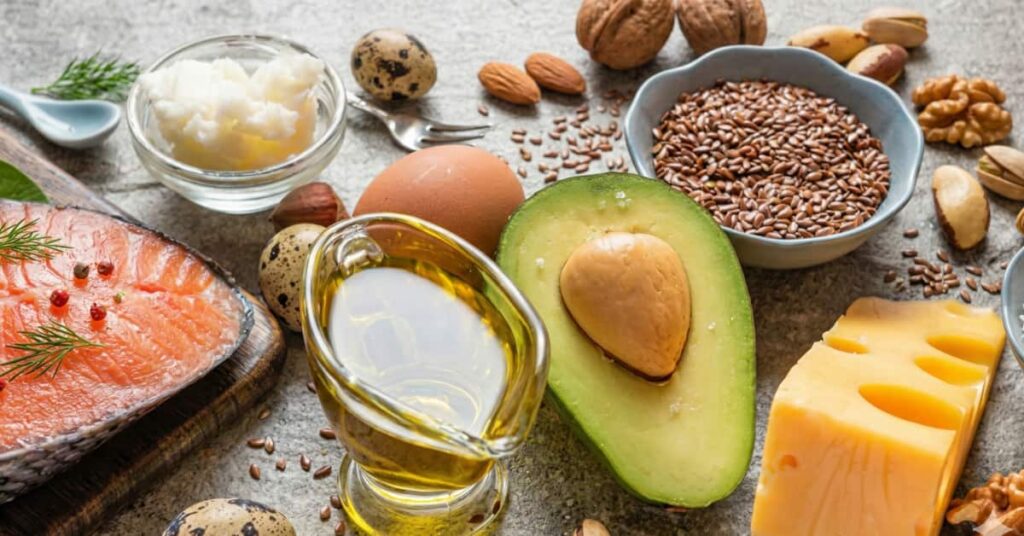
- Unsaturated F (The “Good” Umbrella): This category includes both monounsaturated and polyunsaturated. They are generally liquid at room temperature and come mostly from plants and fish.
- Monounsaturated F: Structure: Has one double bond in its chemical chain.
- Sources: Olive oil, avocados, almonds, and peanuts.
- Benefit: Excellent for lowering “bad” LDL cholesterol and providing vitamin E.
- Polyunsaturated F: Structure: Has two or more double bonds.
- Sources: Walnuts, flaxseeds, and fatty fish (salmon/mackerel).
- Subtypes: Includes Omega-3s (anti-inflammatory) and Omega-6s. These are “essential,” meaning your body can’t make them—you must eat them.
- Saturated F :Structure: No double bonds; the chain is “saturated” with hydrogen. It makes them solid at room temperature.
- Sources: Red meat, butter, cheese, and coconut oil.
- The Nuance: While once labeled “evil,” they are fine in moderation. However, eating too much can raise cholesterol in some people.
- Trans F (The “Toxic” one):Origin: Mostly artificial through a process called “hydrogenation” to make vegetable oils shelf-stable.
- Sources: Fried fast foods, commercial donuts, and some margarines.
- Danger: They lower “good” cholesterol and raise “bad” cholesterol simultaneously. Most health experts say to avoid these entirely.
2. Body Fats (How You Store It)
Your body doesn’t just store F in one place. Where it goes tells a lot about your metabolic health.
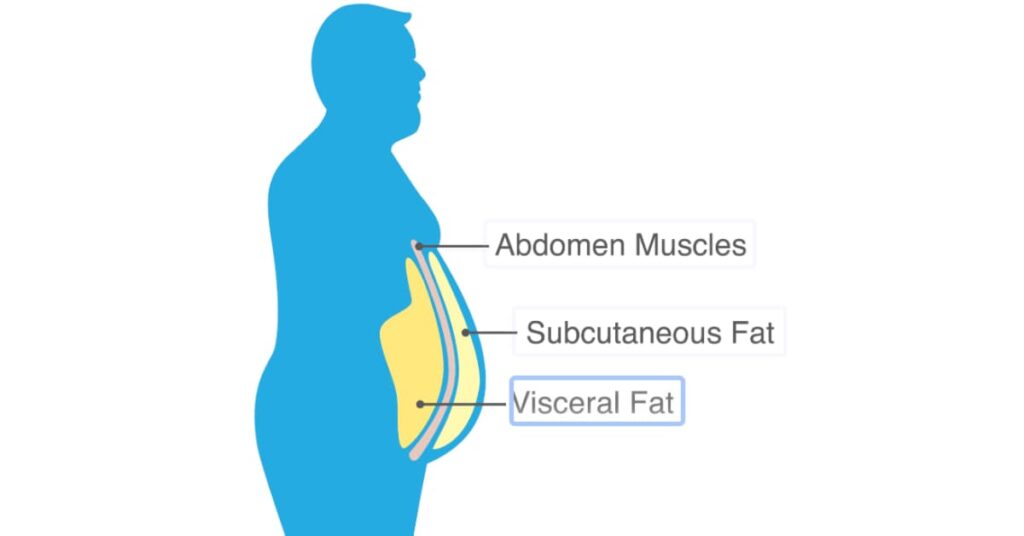
- Subcutaneous F :Location: Directly under the skin.
- Look: This is the F you can “pinch” or “jiggle.”
- Role: It acts as a shock absorber and keeps you warm. While we often don’t like how it looks, it isn’t nearly as dangerous to your health as other types.
- Visceral Fat (The “Danger” F):Location: Deep inside the belly, wrapping around your organs (liver, kidneys, intestines).
- Danger: It is “metabolically active,” meaning it releases hormones and inflammatory chemicals. High levels are linked to heart disease and Type 2 diabetes.
3. The Ones You Might Not Know
Beyond the basic list, there are two other fascinating types of F cells in the human body:
- White Fat: This is the most common type of F in adults. Its main job is to store energy. If you eat more calories than you burn, your body creates more white F cells.
- Brown Fat (The “Metabolic” Fat):How it works: Unlike white F, brown fat actually burns calories to generate heat.
- Who has it: Babies have a lot of it to stay warm, but adults have small amounts (usually around the neck and shoulders).
- Fun Fact: Exposure to cold temperatures (like a cold shower) can “activate” your brown fat to burn more energy!
- Beige Fat: These are white fat cells that “act” like brown F when you exercise or get cold. They are like a hybrid that helps boost your metabolism.
Summary Table
Does Eating Fat Make You Fat?
It is the billion-dollar question. Logic suggests that if you want to lose body F, you should stop eating F. It sounds right, but biology doesn’t work that way.
The Calorie Density Factor
Fat is calorie-dense. While protein & carbs have 4 calories per gram, F has 9 calories per gram. It is why people get scared of it. However, calories aren’t the whole story—hormones are.
The Insulin Connection
When you eat carbohydrates (especially refined ones like white bread or sugar), your body releases insulin. Insulin is your “storage hormone.” It informs the body to stop burning F and start storing energy.
Fat, on the other hand, has almost zero impact on insulin. When you eat F, you feel full and satisfied for longer. It is why you can eat a massive bowl of pasta and feel hungry two hours later, but if you eat an avocado and some eggs, you’re good until dinner.
The “Oil” Crisis: Choosing the Right Cooking Fats
One of the biggest mistakes people make is using the wrong F for the wrong job. Some F are stable at high heat, while others turn toxic when you get them too hot.
For High-Heat Cooking (Searing, Frying)
You want F that won’t oxidize (break down) easily.
- Ghee (Clarified Butter): It has a very high smoke point and tastes amazing.
- Avocado Oil: Very stable and neutral in flavor.
- Tallow or Lard: Old-school but very effective for high-heat cooking.
For Medium Heat (Sauteing)
- Coconut Oil: Great for stir-fries and adds a nice flavor.
- Extra Virgin Olive Oil: Contrary to famous belief, you can cook with olive oil, but keep it to medium heat to preserve the antioxidants.
For No Heat (Salads, Finishing)
- Flaxseed Oil: Very high in Omega-3s but very delicate.
- Walnut Oil: Great for dressings.
- High-Quality Olive Oil: Use the expensive, “peppery” stuff here.
How to Incorporate Healthy Fats Without Overdoing It
If you’ve been on a low-fat diet for years, jumping into a high-F lifestyle can be a shock to the system. Here is a simple, human-centered approach to getting it right.
1. Focus on Whole Foods First
Instead of looking for “added” F like oils and butters, start with foods that naturally contain fat.
- Example: Choose salmon instead of lean tilapia. Choose a handful of raw walnuts instead of a F-free granola bar.
2. The “Thumb” Rule
Since F is calorie-dense, you don’t need a mountain of it. A good rule of thumb (literally) is to include a portion of F about the size of your thumb with every meal. That could be a slice of cheese, a tablespoon of oil, or a small scoop of peanut butter.
3. Read the Labels
“Low-F” is usually a code word for “High-sugar.” If you see a product labeled low-fat, check the ingredient list. If sugar or corn syrup is near the top, put it back.
4. Don’t Mix High Fat with High Sugar
It is the “Donut Effect.” The worst thing you can do for your health is to eat high amounts of F and high amounts of refined sugar at the same time. This combination confuses your metabolism, leading to the most weight gain and inflammation. Eat your F with fiber (veggies) and protein.
A Day of Healthy Fats: What It Looks Like
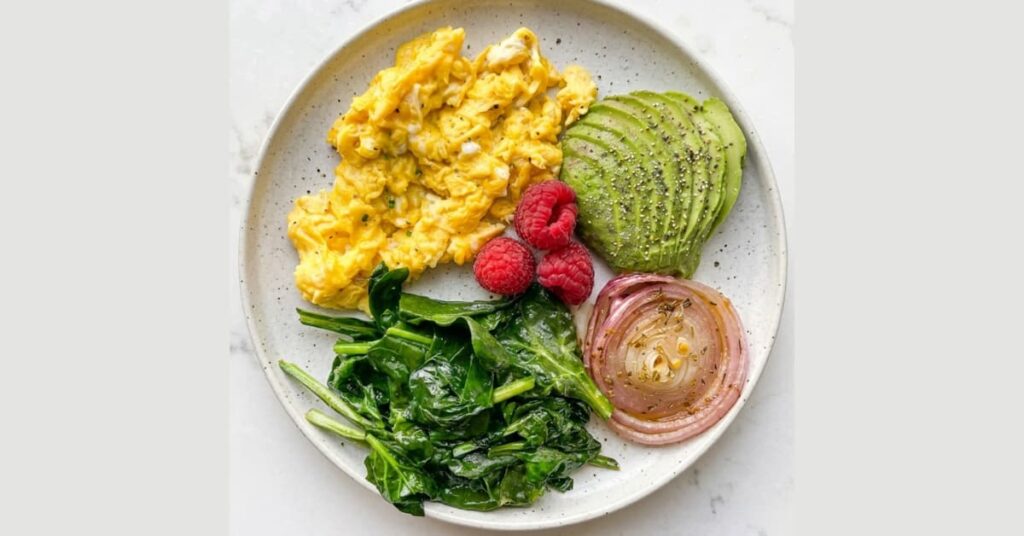
Let’s put this into practice. What does a “healthy F” day actually look like in real life?
- Breakfast: Two or three scrambled eggs with a little butter, served with half an avocado and sautéed spinach. (This gives you saturated F, monounsaturated fat, and plenty of fiber).
- Lunch: A large green salad topped with canned sardines or grilled chicken, sprinkled with sunflower seeds and a generous spray of extra virgin olive oil and lemon juice.
- Snack: A little handful of almonds or a piece of full-F string cheese.
- Dinner: Baked salmon (Omega-3s!) with roasted broccoli & sweet potatoes drizzled with avocado oil.
- Dessert: A square of dark chocolate (at least 70% cocoa) or some full-F Greek yogurt with a few berries.
Conclusion
Fat is not the enemy. It is a vital, life-sustaining nutrient that makes food taste better and helps your body run like a well-oiled machine. The real “villains” in the modern diet are refined sugars, processed grains, and artificial trans F.
If you want to feel better, lose weight, and have more energy, stop counting every gram of F and start focusing on the quality of the F you eat. Move away from the factory-made oils and toward the F that come from nature—the olives, the nuts, the fish, and the fields.