Table of Contents
Introduction
The Incline Bench Press is an exclusive compound exercise specifically planned to target the upper chest, also understood as the clavicular head of the pectoralis major, and the anterior deltoids (front of the shoulders). Unlike the traditional flat bench press, that targets the whole chest with a focus on the middle and lower fibers, the incline press is performed on a bench set to an angle generally between 30 and 45 degrees.
This upward angle shifts the line of force, placing greater demand on the upper chest and shoulders, creating a “fuller” look and helping fill the gap often seen between the chest and the collarbone. Further, aesthetics, this movement is vital for building functional pushing strength and upper-body stability.
Engaging the triceps and shoulders heavily serves as an excellent bridge between the flat bench press and the overhead press. Many lifters also find that the incline bench press is more shoulder-friendly than the flat bench press, as the angle can sometimes lower strain on the rotator cuff while still allowing heavy loading. Whether executed with a barbell for maximum power or with dumbbells for a superb range of motion, the incline bench press is a staple exercise for anyone seeking a well-rounded, powerful physique.
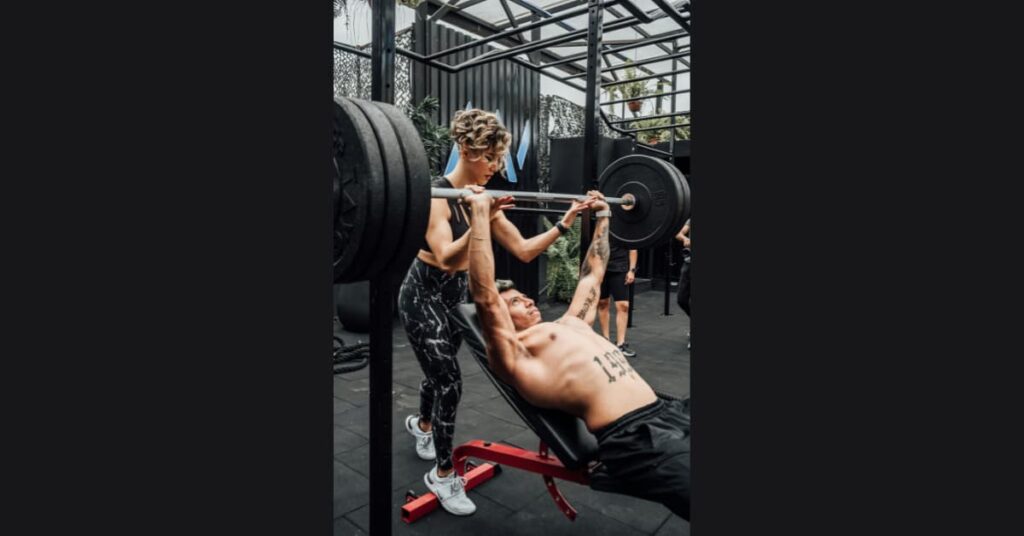
Incline bench Press
To maximize the effectiveness of the Incline bench press, technique & exercise order are critical factors. Because lifting on an incline is generally more mechanically complex than flat pressing, many fitness experts recommend performing this movement at the start of a chest workout when energy levels are highest.
It is also essential to pay close attention to the bench angle; setting the incline too steep (above 60 degrees) shifts the focus almost entirely to the shoulders, turning the movement into an overhead press, while an angle that is too low may not sufficiently distinguish it from a flat bench press. Keeping a planted back without excessive arching keeps the tension isolated to the upper chest fibers, directing it toward safer, more efficient muscle growth.
Incline bench press Instructions
Here are the step-by-step instructions for executing the Incline Barbell Bench Press.
Phase 1: The Setup
- Adjust the Bench: Get ready or set the bench to an incline of 30-45 degrees.
- Note: If the angle is too vertical (closer to 60°), you will target the shoulders more than the chest.
- Body Positioning: Lie back on the bench. Confirm you have the “5 Points of Contact” for stability:
- Head on the bench.
- Upper back/Shoulders on the bench.
- Butt on the bench.
- Left foot flat on the floor.
- Right foot flat on the floor.
- The Grip: Reach up and grab the barbell. Your hands should be a little wider than shoulder-width. Wrap the thumbs around the bar (avoid the “suicide grip” where thumbs are tucked with fingers).
- Engage Scapula: Squeeze the shoulder blades together and drive them into the bench. It makes a stable base and protects your shoulders.
Phase 2: The Movement
- Unrack: Straighten the arms to lift the bar off the rack. Move the bar horizontally until it is directly over your upper chest or collarbone.
- The Descent (Inhale):
- Take a deep breath & brace your core.
- Lower the bar slowly and carefully.
- Aim for the upper chest (just below the collarbone).
- Tip: Keep your elbows at roughly a 45-degree angle to your body. Do not flare them straight out (90 degrees), as this puts stress on the shoulder joints.
- The Press (Exhale):
- Once the bar gently touches your chest (do not bounce it), drive it upward forcefully.
- Press the bar back to the starting position, exhaling as you push.
- Your arms should be fully extended or straight, but do not lock out your elbows harshly at the top; keep tension on the chest.
Phase 3: Completion
- Repetition: Repeat the lowering and lifting phase for your desired number of repetitions.
- Re-rack: On your final repetition, press the weight all the way up to the top, then carefully guide the bar backward into the rack hooks until it is secure.
Incline bench benefits
Here are the key benefits of incorporating the Incline bench press into your workout routine.
1. Targets the “Stubborn” Upper Chest
The primary benefit of the incline press is its ability to isolate the upper pectorals (clavicular head). This area is notoriously difficult to develop with flat benching alone. Building the upper chest creates a fuller, more aesthetic look, giving the chest a “shelf” appearance that connects visibly to the collarbone.
2. Increases Shoulder Strength
Because of the inclined angle, your anterior deltoids (front shoulders) take on a significant portion of the load. It makes the incline press a “hybrid” movement that builds both chest and shoulder mass simultaneously. It serves as a great accessory exercise to improve your overhead press strength.
3. Reduced Stress on the Rotator Cuff
For many lifters, the flat bench press can cause shoulder impingement or pain due to the angle of the arm. The incline press places the shoulders in a slightly more natural pressing position, which can reduce strain on the rotator cuff tendons while still allowing you to lift heavy weights.
4. Breaks Through Strength Plateaus
If your flat bench press numbers are stuck, switching to the incline press for a few weeks can help. By strengthening the upper chest and front delts—often the weak links in a flat press—you will likely see your flat bench numbers increase when you return to it.
5. Improves Muscle Definition & Symmetry
A well-developed chest requires balance between the upper and lower sections. Many lifters have overdeveloped lower chests (from flat benching) and underdeveloped upper chests. The incline press addresses this imbalance, leading to a more symmetrical, proportionate physique.
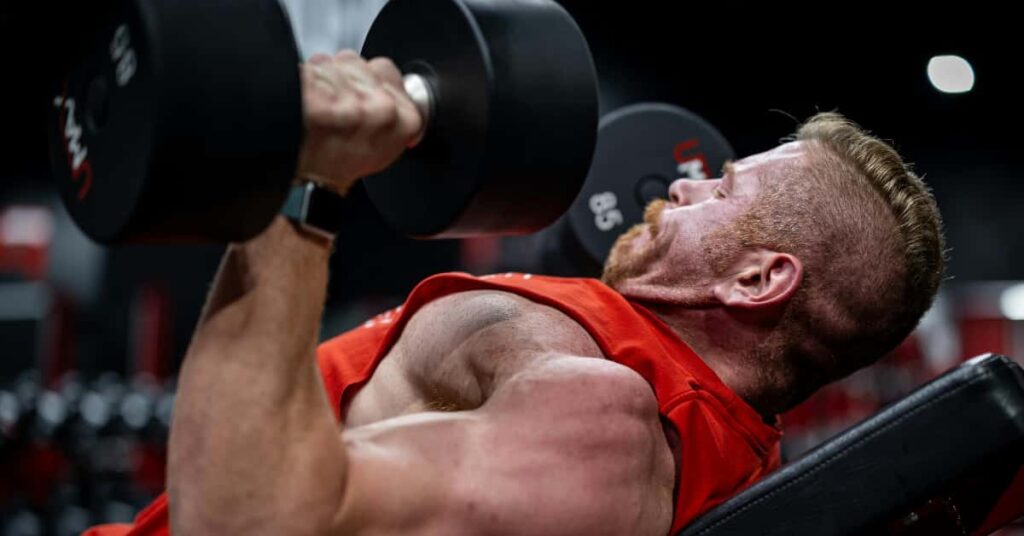
Incline dumbbell bench press
The Incline Dumbbell Bench Press is a positively valuable variation of the classic pressing movement, especially designed to isolate the upper pectorals (clavicular head) and the front deltoids while demanding significant core and arm stability. Unlike the barbell version, where the hands are fixed on a rigid bar, using dumbbells requires each arm to move independently.
This unilateral action forces the stabilizer muscles to engage more forcefully. It prevents the dominant side from compensating for the weaker side, ensuring that both sides of the chest develop evenly and symmetrically.
A significant advantage of choosing dumbbells for this exercise is the increased range of motion and joint comfort they offer.
Without a bar hitting the chest to stop the movement, lifters can lower the weights slightly further to achieve a deeper stretch in the muscle fibers, which is crucial for hypertrophy (muscle growth). Additionally, dumbbells allow a more natural path of motion; you can freely rotate your wrists or tuck your elbows to find the most comfortable angle for your anatomy, significantly reducing the risk of shoulder strain and wrist pain often associated with fixed-barbell pressing.
Incline bench press angle
The Optimal Angle: The “Sweet Spot” (30 Degrees)
For most lifters, the scientifically optimal angle for targeting the upper chest is around 30 degrees. Analysis indicates that at this lower incline, the clavicular head (upper chest) receives maximum stimulation while keeping the involvement of the front deltoids (shoulders) relatively low. It makes the perfect balance, permitting you to isolate the upper pectorals without your shoulders taking over the movement and fatiguing before your chest does. If your adjustable bench has a setting that looks like a slight slope rather than a steep hill, this is likely your best option for pure chest growth.
The Classic Angle (45 Degrees)
The most common angle found in commercial gyms—especially on fixed, non-adjustable incline benches—is 45 degrees. While this angle is still effective for building the upper chest, it also significantly increases anterior deltoid activation. Many bodybuilders consider this a “hybrid” angle that hits the chest and shoulders equally. If you have strong shoulders and want to build overall upper-body thickness, this angle is excellent; however, if your shoulders tend to take over or get sore easily, this angle might be too steep for you.
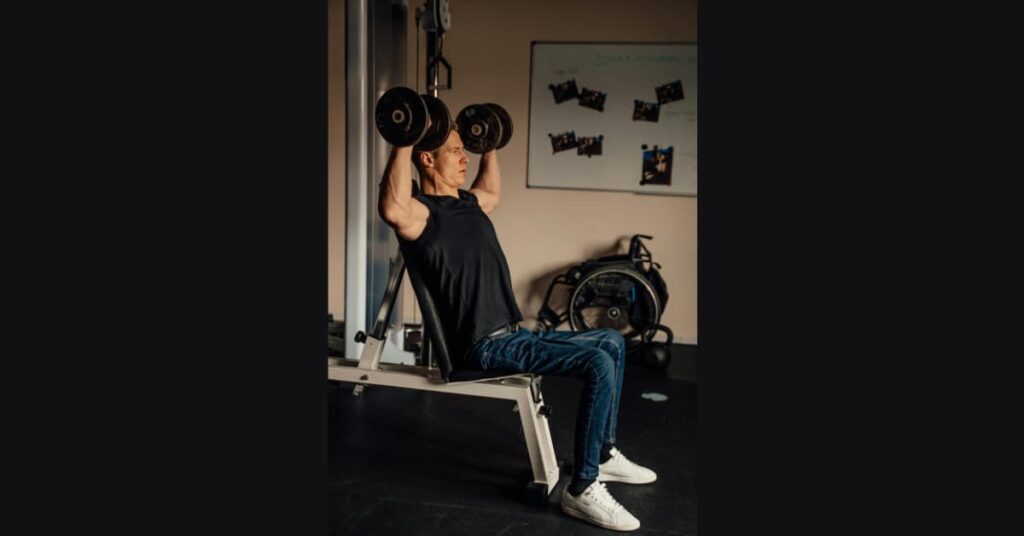
Avoiding the “Shoulder Trap” (60 Degrees and Above)
Once the bench angle exceeds 45 degrees, approaching 60 degrees or higher, the exercise shifts its focus almost entirely away from the chest. At this steepness, the mechanics of the lift change, turning the movement into an overhead shoulder press. While this is great for building deltoids, it is ineffective for chest development. If you feel the strain primarily in your neck or the tops of your shoulders rather than your upper chest, your bench is likely set too high and should be lowered.
Incline bench press machine
The Incline Bench Press Machine is a fixed-path resistance exercise designed to target the upper pectorals and anterior deltoids while removing the need for balance and stabilization. Unlike free weights (barbells or dumbbells), where the lifter must control the weight’s path through the air, the machine guides your movement on a predetermined track. This stability helps you to focus entirely on pushing the weight & contracting the muscle, rather than worrying about the weight wobbling or your form breaking down.
It creates an excellent choice for beginners learning the movement pattern or for advanced lifters looking to safely push their muscles to absolute failure at the end of a workout.
A significant benefit of the machine variation is the element of safety and convenience. Since there is no risk of dropping a heavy bar on your chest or losing control of a dumbbell, you do not need a spotter. This independence allows you to train with high intensity and utilize advanced techniques like “drop sets” (lowering the weight immediately after fatigue) or partial reps.
Additionally, machines often maintain constant tension throughout the entire range of motion, ensuring the upper chest remains engaged from the bottom of the press to the lockout.
However, proper setup is critical to getting the most out of this machine. The most important adjustment is the seat height. If the seat is set too low, the handles will be positioned too high relative to your body, forcing your shoulders to do all the work and increasing the risk of injury. Conversely, if the seat is too high, the movement becomes more like a flat bench press, missing the upper chest entirely. The correct position aligns the handles with your upper chest (just below the collarbone), allowing your elbows to travel at a safe, natural angle.
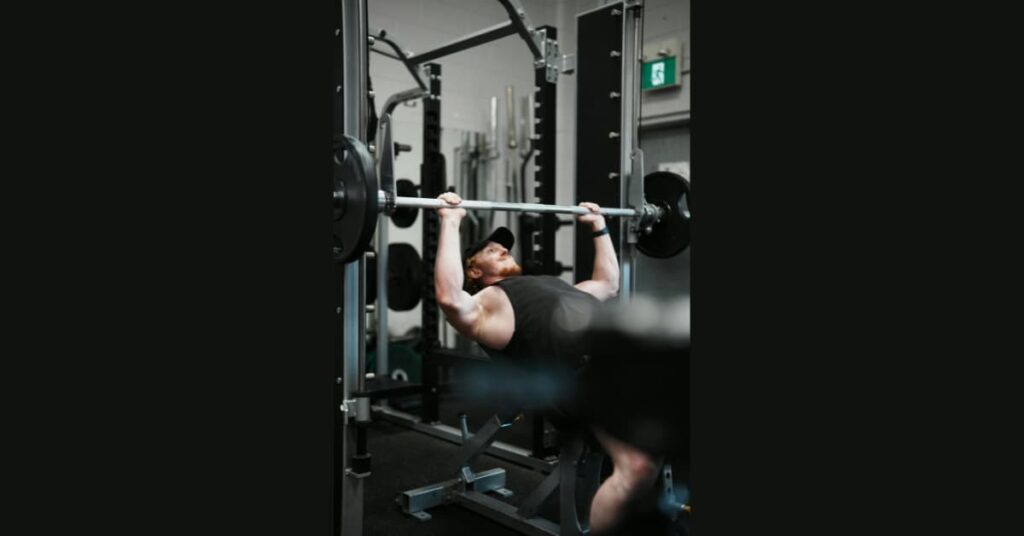
Smith machine Incline bench press
It is a popular variation of the classic upper-body exercise that utilizes a fixed vertical (or slightly angled) track to guide the barbell. Unlike the free-weight version, where you must constantly balance the bar to prevent it from drifting forward or backward, the Smith machine locks the weight into a single path.
This unique feature removes the need for significant stabilization from the smaller muscle groups, allowing you to direct almost 100% of your effort into pushing the weight with your upper chest (clavicular pectoralis) and front deltoids. For many bodybuilders, this isolation makes it a superior choice for hypertrophy (muscle growth) when the goal is to fully fatigue the chest fibers without worrying about form breakdown.
Incline bench Press: Precautions and Common Errors
Precautions
Safety should always be the primary concern when performing the Incline bench press, as the angled position places unique stress on the shoulder joints. Before lifting heavy weights, it is crucial to perform a thorough warm-up that targets the rotator cuffs and front deltoids to ensure synovial fluid lubricates the joints. Because the risk of the bar traveling backward over the face is slightly higher on an incline than on a flat bench, utilizing a spotter is highly recommended, especially when pushing near failure.
If a spotter is unavailable, use a rack with safety pins set to the appropriate height, or dumbbells, which can be safely dropped to the side if necessary. Furthermore, always prioritize a “pain-free” range of motion; if you feel a sharp pinch in your shoulder at the bottom of the lift, stop immediately and adjust your grip or reduce the range rather than forcing through it.
Common Errors
One of the most common mistakes lifters make is flaring the elbows to 90 degrees, which can put dangerous torque on the shoulder capsule; instead, the elbows should be tucked closer to the body at roughly 45 degrees. Another standard error is excessive arching of the lower back.
While a slight arch is natural for stability, lifting the hips off the bench effectively changes the angle of your torso to a flat position, thereby negating the incline’s purpose and shifting the load back to the lower chest. Additionally, many people “bounce” the bar off their chest to gain momentum for the upward drive. It not only relieves muscle tension but can also cause bruising or rib injuries. Finally, avoid lifting your head off the bench to watch the bar, as this strains the neck and destabilizes your upper spine.
Conclusion
The primary benefit of the incline press is its ability to isolate the upper pectorals (clavicular head). This area is notoriously difficult to develop with flat benching alone. Building the upper chest creates a fuller, more aesthetic look, giving the chest a “shelf” appearance that connects visibly to the collarbone.