Table of Contents

Introduction
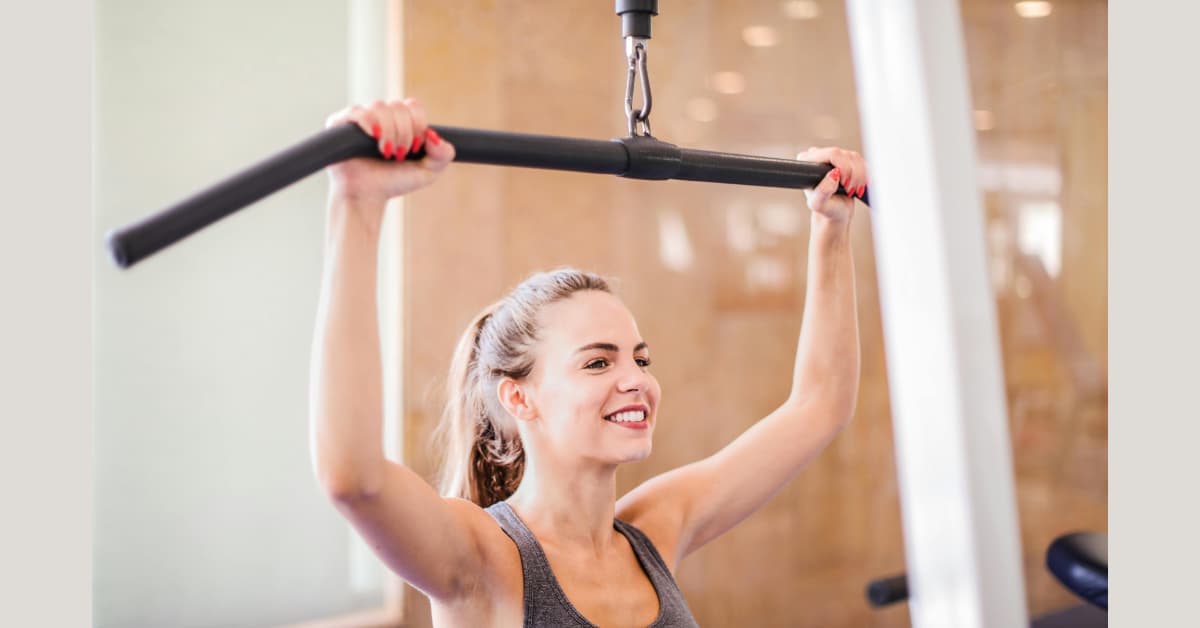
Lat pulldown training targets the back muscles and is achieved at a workstation with flexible resistance, generally plates.
While seated, pull the hanging bar to chin level, then release it back up with control to finish one repetition. The lat pulldown may be done as part of an upper-body strength exercise.
Lat PullDown
The pulldown movement is a strength training exercise scheduled to develop the latissimus dorsi muscle. It performs the operations of downward rotation and depression of the scapulae associated with adduction and extension of the shoulder joint.
When attempting a lat pulldown, try to maintain control and avoid leaning back too far. It’s best to keep the back straight and lower or bottom the weight if you cannot maintain proper form.
It’s a staple for those looking to improve the mass of their back muscles and achieve the V-shaped back desired by weightlifters, bodybuilders, and fitness enthusiasts alike.
The activity offers multiple variations that you can achieve with minimal adjustment, aside from adjusting the handle you’re using.
In expansion, you can alter the training to target the back in different ways and adjust it to your comfort level.
Nevertheless, given its popularity and adaptability, it’s often performed incorrectly, potentially generating more injury than benefit. Recall: Good form is critical, particularly when increasing the weight you’re lifting.
Benefits of the lat pull down
This exercise is a superb substitute for pull-ups or chin-up pull-ups if you have difficulty achieving them or are training to get there.
This exercise activates some of the same muscles as doing a pull-up, even though to a lesser extent.
Furthermore, because you’re seated during the lat pulldown, you can use the hip flexors and abdominals to stabilize the body as you perform it. In fact, one older investigation found that the pulldown recruited the abdominals more than the pull-up did.
The lat pulldown also helps athletes in multiple sports that need a similar pulling motion, such as gymnastics, swimming, wrestling, & cross-country skiing.
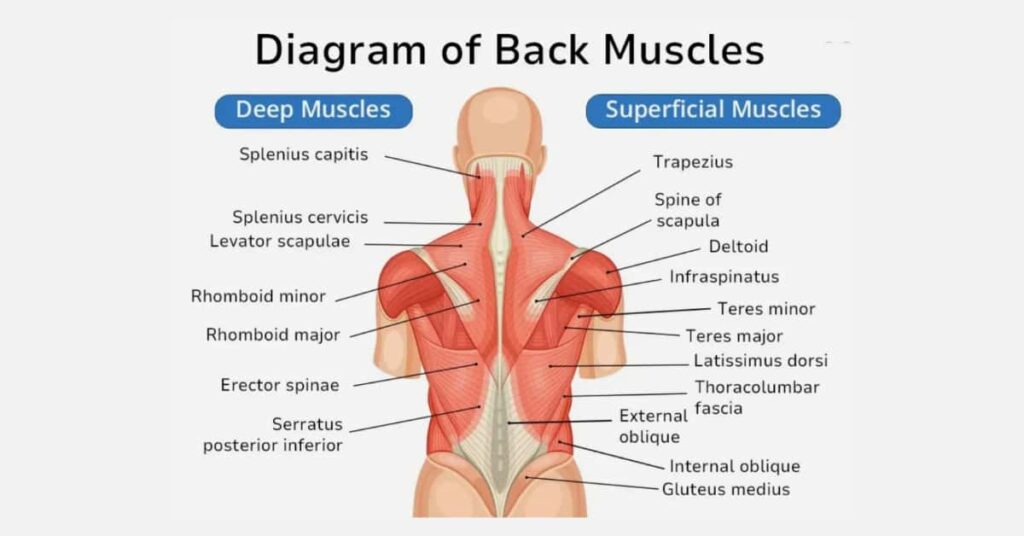
Muscles worked in the lat pulldown.
One cause the lat pulldown is such a significant and essential training is that the overhead pulling motion recruits several vital muscles of the back, shoulders, & arms.
The latissimus dorsi muscles, or you can say lats, are the wing muscles you notice on someone with a described back. They’re the excellent movers of this multi-joint movement, and they’re the largest muscles in the back.
The lat is expansive — it derives from the mid and lower spine, the upper part of the pelvis, and the lower ribs, and the lower scapula and inserts on the front of the humerus (upper arm bone).
The lat muscles are responsible for extension, adduction, horizontal abduction, & internal rotation of the arm. When the arm is fixed or stable overhead, the lats pull the whole body toward the arm in a climbing motion.
The lats allow for respiration & may even contribute to lateral flexion & extension of the lumbar spine.
Many other muscles work simultaneously with the lats in this training, including the:
- pectoralis major
- brachialis
- lower and middle trapezius
- brachioradialis
- rhomboids
- teres major
- biceps brachii
- flexors of the wrist and hand
- infraspinatus
- abdominals
Changing how you grip the bar during this complex training will emphasize different muscle groups.
Grip Positions for the Lat Pulldown
There are variations in grip positions an individual can use when performing the lat pull down movement. Grip positions contain a pronated narrow-grip (hands nearer than shoulder-width), a pronated wide-grip (hands greater than shoulder-width), a narrow neutral-grip, a wide neutral-grip, & a supinated-grip.
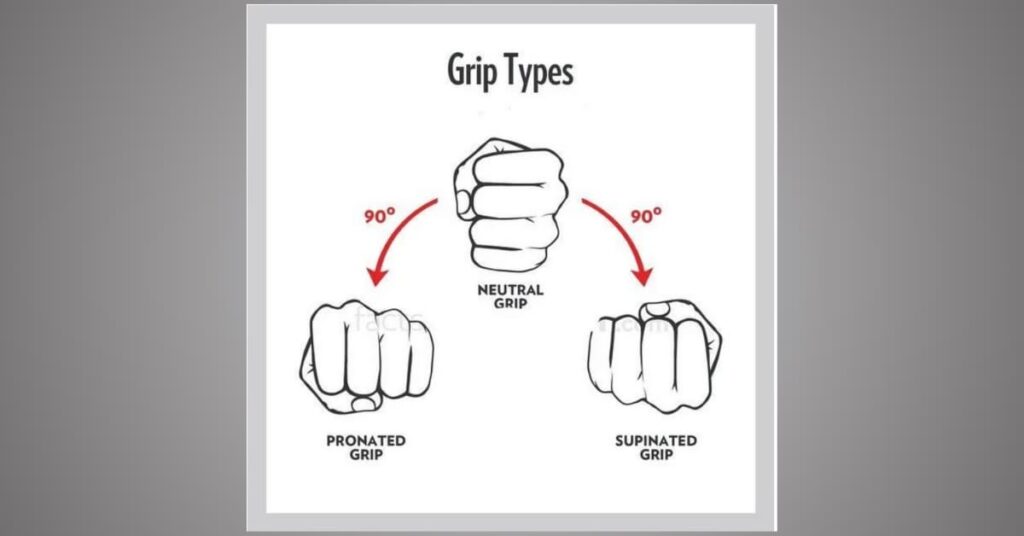
Grip Positions
Pronated narrow-grip
Pronated wide-grip
Narrow neutral grip
Wide neutral grip
Supinated grip
Variations on the lat pulldown
1. Close-grip hand position
Close grip is defined as any hand position narrower than shoulder width. You can do this with a traditional lat pull down bar or with the handles you utilize for a row. The version illustrated below involves greater use of the biceps brachii muscle.
This version is very good if you feel fore-arm pain when pulling down or if you’re pressed for time & want a compound movement to work those biceps.
- Begins by sitting as you would for the standard lat pull down.
- Place the hands close to the center, where the cable attaches. Hold the bar or rod with a supinated grip (palms facing you).
- Pull the bar down toward the collarbone, focusing on pulling the elbows and shoulder blades down. You should see that the biceps are more active during this version.
If you utilize a rowing bar, perform the movement as above. The advantage of using this bar is that it permits you to pull the weight through a superb range of motion.
2. Wide-grip hand position
A wide grip is any position with the hands as far apart on a standard bar as possible (wider than shoulder-width).
This version targets the lats & triceps more than the biceps because the primary or main movement is adduction rather than adduction plus extension.
- Perform this kind or type as you would the standard-grip lat pull down. You can prefer pulling to mid chest.
- In addition, you’ll want to lower the weight to allow for a greater or higher range of motion or movement. Because this variation introduces a slight mechanical disadvantage, it’s essential to maintain proper posture.
3. Straight-arm lat pulldown
This version, or kinds, isolates the lats much more than the other versions. It also changes the movement or action from a multi-joint exercise or training to a single-joint shoulder movement.
- Stand facing the cable pulley, with the feet shoulder-width apart. Grasp the bar with hands little wider than shoulder width & knees slightly bent.
- Keep the elbows straight and focus on pulling the bar or rod to your hips. Your trunk should stay tall, & your head should stay up.
- Hold for 2–3 seconds, keeping the shoulder blades back and down. Slowly, slowly return to the starting position overhead.
4. Resistance band lat pulldown
This version is amazing when working out at home because it needs nothing more than a resistance band & a way to anchor it overhead. You can stand or kneel, depending on where the anchor point may be.
You may also perform this variation while lying on the back, with the band anchored to a solid & stationary point above and behind the crown of the head.
You may perform this exercise or movement as you would the straight-arm version above, or by bending the elbows and pulling them to the sides of your body.
5. Lat Pull Down behind the neck
Performing behind-the-neck lat pull downs is a controversial activity and one that should be avoided. While behind-the-neck pulldowns may effectively target the latissimus dorsi, the pros do-not outweigh the cons. The greater or same levels of muscle activation occur with front-of-the-neck lat pull downs, and the body maintains better posture and joint alignment.

Lat Pulldowns: Common Mistakes
Avoid these errors to get the most from lat pulldowns and prevent strain or injury.
Arching Your Back
Sit upright and keep the chest lifted as you pull the bar down. Maintaining a neutral spine can help protect the lower back from injury.
Using Your Forearms
Be sure that your forearms are not doing the movement of pulling the bar down—you want it to come from the back. Activate the lats by pulling down from your armpits.
Holding the Bar Too Wide
Hold the lat pulldown bar just outside the shoulders, but not too wide, specifically if you’re a beginner. Keep the elbows pointed down as you lower the bar & not out to the sides.
Pulling Down Too Far
Stop immediately at the point where the elbows require to go back-ward to continue pulling the cable down. If your elbows go backward, it will put excessive stress on your shoulder joint. You should only drop the bar to your chin or just below.
Using Momentum
As with most weighted exercises, complete the lat pulldown slowly and with control. Doing it fast uses momentum and decreases the workload on the targeted muscles.
Safety and Precautions
The lat pulldown behind the neck is not suggested for safety reasons, as the rotation of the shoulder joint and potential spine contact with the bar could direct to injuries.
If we have any wrist, elbow, or shoulder issues, talk to the doctor or physical therapist to see if the lat pulldown is appropriate. Stop the pulldown if you sense pain or too much pressure on the shoulder joints.
The number of lat pulldown reps you do in a workout relies on the weight used, your experience level, and your strength.
Conclusion
The lat pull-down is a movement utilized to build the back muscles. While the training will mainly target the lats, you will also see a fair portion of bicep and middle back activation.
The back is a muscle group that needs a fair amount of variation. Experiment with several angles and hand positions to maximize back muscle growth.