Table of Contents
Introduction
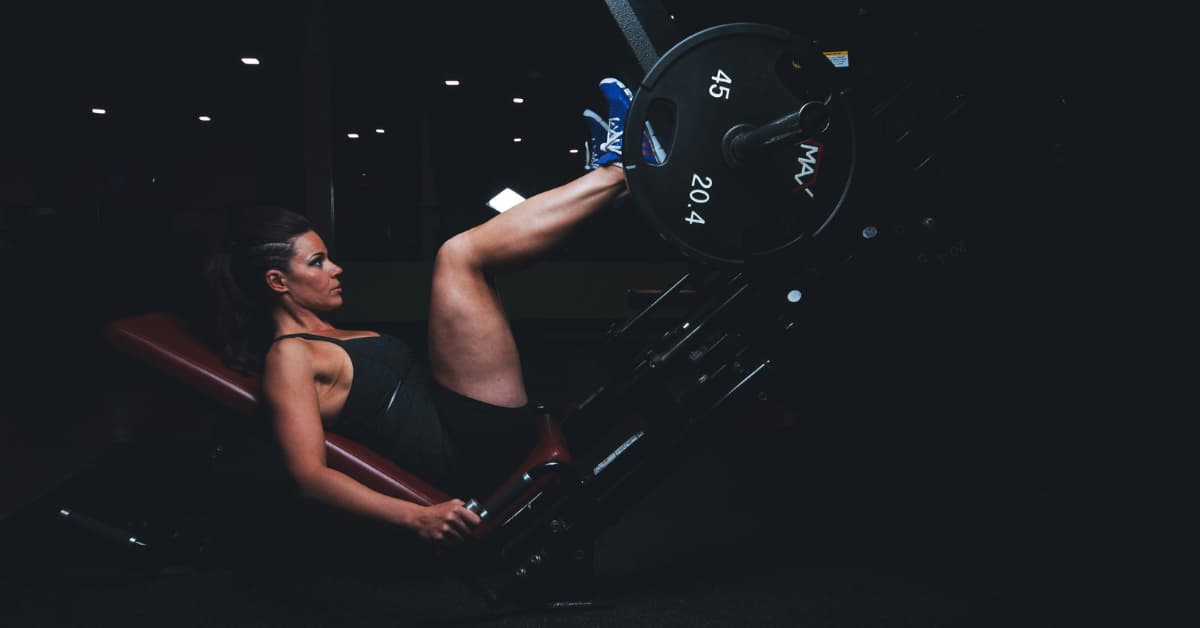
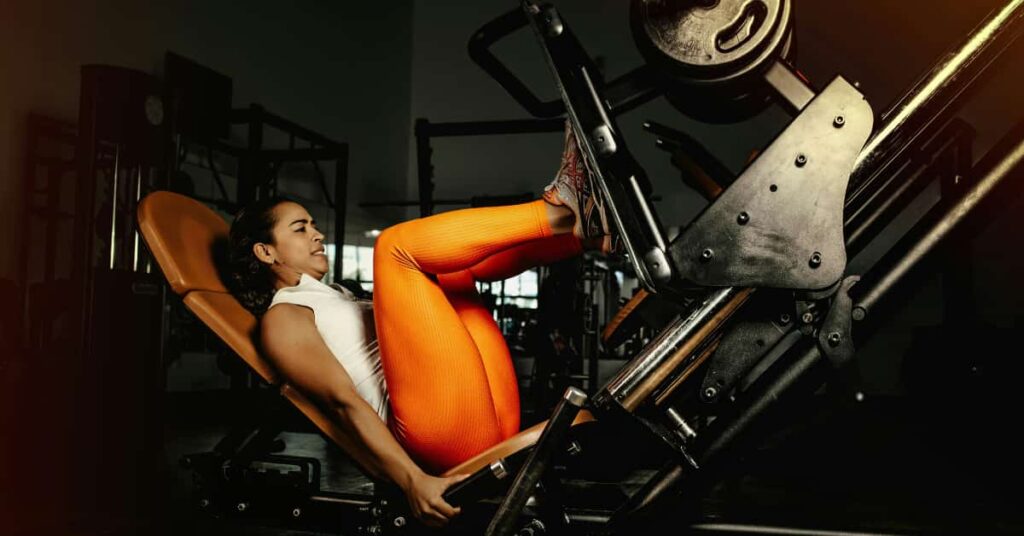
The leg press is a prevalent compound weight-training exercise or movement performed on a specialized machine which targets the major lower-body muscles, including the quadriceps, hamstrings, & glutes. In this training, the user sits or reclines against a padded backrest and utilizes their legs to push a weighted platform away from the body, then slowly returns it to the starting position under control. Often believed to be a safer, more stable alternative to the barbell squat, the leg press permits lifters to move heavy loads with decreased stress on the lower back & core, making it an outstanding choice for both beginners developing foundational strength and advanced athletes aiming for targeted muscle hypertrophy.
Leg Press
Think of the leg press as a squat in a chair. Because the machine keeps the back & guides the movement, you don’t have to worry as much about maintaining balance or straining your spine as you would with free weights. It’s a great way to push the legs to their limit safely. You sit down, put your feet on the plate, and push. It’s a straightforward, effective way to build stronger legs, whether you are just starting at the gym or looking to add serious muscle.
Leg Press Machine
A leg press machine is gym equipment designed to build lower-body strength through a “pushing” motion. It is one of the most valuable ways to overload the legs with heavy weights while keeping the back supported and the body in a stable, fixed position.
Common Types of Machines
You will usually find one of these three versions at the gym:
- 45-Degree (Incline) Leg Press: The most common version has you lie back & push a weighted sled up at an angle. It is usually “plate-loaded,” telling you to add round weight plates to the sides manually.
- Horizontal (Seated) Leg Press: You sit upright & push a footplate straight forward (or the seat moves backward). These are usually “selectorized,” meaning you choose the weight by changing a pin in a stack.
- Vertical Leg Press: Lie flat on your back and push the weight straight up. This is rarer & typically utilized by advanced lifters for intense quadriceps isolation.
The “Golden Rule” of Safety
The most essential rule for the leg press is to never “lock out” the knees. When you push the weight up, keep a tiny, soft bend in the knees at the top. Fully locking the joints transfers the massive weight from the muscles directly onto the bone structure and knee caps, which can lead to serious injury.
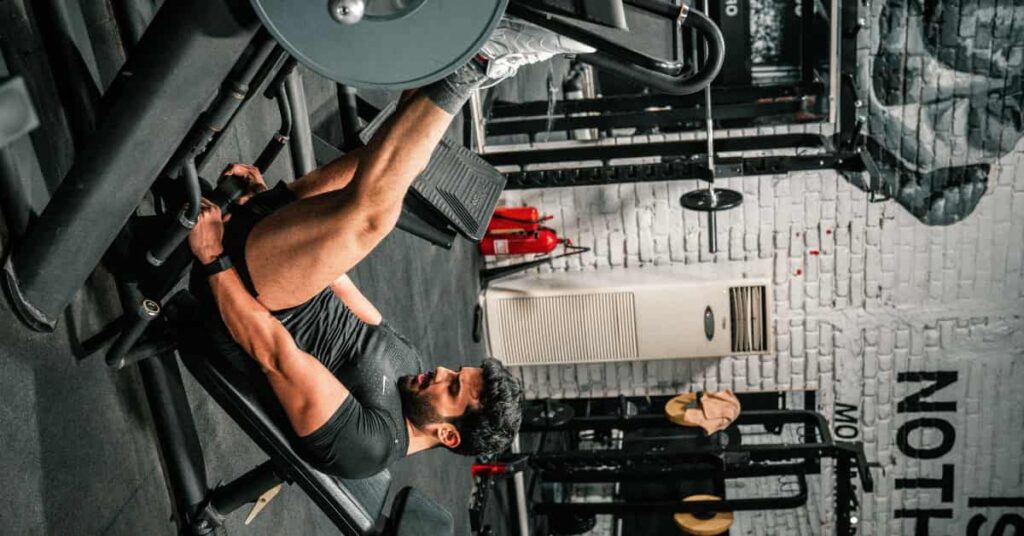
Leg Press Foot Placement
Changing the foot placement on the leg press is like adjusting the “tuning” of the movement. While the entire lower body works in every version, small shifts in where you put the feet change which muscles take on the most tension.
Foot Placement Cheat Sheet
| Position | Target Muscle Focus | Why it Works |
| Middle / Neutral | Overall Leg Development | Balanced distribution between quads, glutes, and hamstrings. |
| High (Top of plate) | Glutes & Hamstrings | Increases the angle of the hips, making the “posterior chain” do more work. |
| Low (Bottom of plate) | Quadriceps (Thighs) | Increases the bend in the knees, forcing the quads to work harder to push back. |
| Wide (Outer edges) | Inner Thighs (Adductors) | Angles the legs outward, engaging the muscles along the inside of the leg. |
| Narrow (Feet close) | Outer Quads | Shifts the load to the “sweep” or the outside portion of the thigh. |
Pro-Tips for Footwork
- The “Heel” Rule: No matter where you place the feet, always keep the heels flat on the platform. If the heels lift (common in “Low” placement), it puts dangerous pressure on the knees. Move the feet slightly higher if this happens.
- Toes Outward: Pointing the toes slightly outward (5 to 10 degrees) is often more relaxed on the hip joints and helps the knees track safely over the toes.
- Calf Raises: You can also place just the balls of the feet on the very bottom edge of the platform to perform calf raises. Just be extra careful that your feet don’t slip!
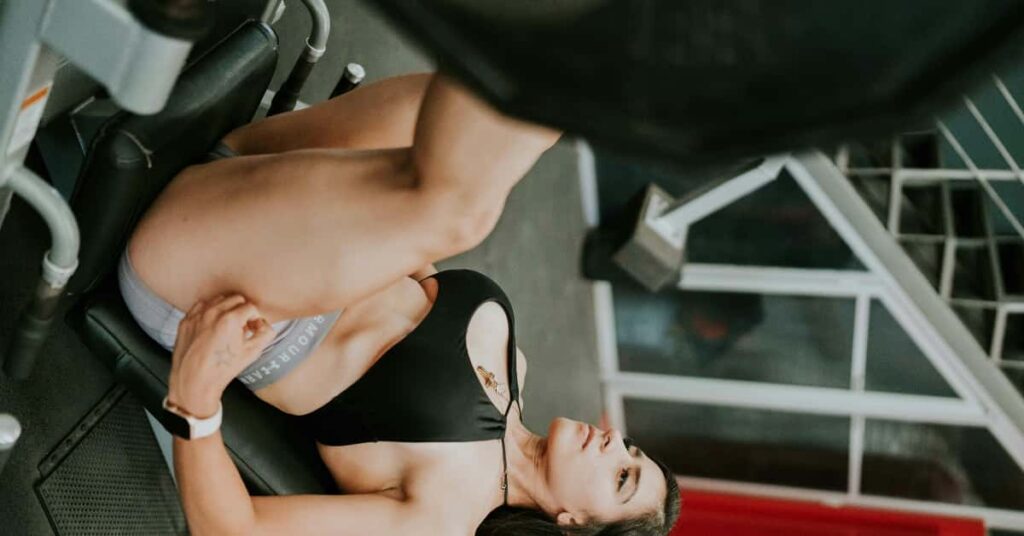
Leg Press Target Muscles
The leg press is a compound workout, meaning it uses multiple joints (the hips & knees) to recruit several large muscle groups at once. While it is mainly known as a “quad builder,” it engages the entire lower body.
Primary Muscles Worked
These are the “prime movers” that do the majority of the heavy lifting:
- Quadriceps (Quads): Located on the front of the thigh, these four muscles are the stars of the show. They work to extend the knee as you push the weight away.
- Gluteus Maximus: The glutes (buttocks) are responsible for hip extension. They power the initial “push” off the bottom of the movement.
Secondary & Stabilizing Muscles
These muscles assist the movement or keep the legs aligned:
- Hamstrings: Located on the back of the thighs, they support the knees & assist the glutes with hip extension.
- Adductors: These inner thigh muscles help stabilize the legs and prevent the knees from collapsing inward or outward.
- Gastrocnemius & Soleus (Calves): Your calves help stabilize the ankles and provide a small amount of extra “push” at the end of the movement.
Leg Press Benefits
The leg press is a very powerful tool for building a strong foundation, recovering from injury, and pushing leg growth to its absolute limit.
Key Advantages of the Leg Press
- Safety and Support: Because the machine guides the weight and supports the back, the risk of “toppling over” or straining the lower back is significantly lower than with free weights, such as squats.
- Maximum Muscle Overload: You can typically press much more weight than you can squat. It permits you to challenge the leg muscles with heavy loads that the back or core might not yet be strong enough to support.
- Beginner-Friendly: It has a very low learning curve. New gym-goers can build significant leg strength & confidence without requiring the complex balance and coordination needed for a barbell squat.
- Joint-Friendly Isolation: For those with “fussy” knees or lower back issues, the leg press shows a way to train legs with high intensity while holding the spine neutral and the joints in a controlled path.
- Unilateral Training: Most machines permit you to use one leg at a time (single-leg press). It is one of the finest ways to fix strength imbalances (where one leg is stronger than the other).
- Bone Density: Like all heavy resistance training, the leg press puts healthy stress on the bones, which allows for increased bone density and strength as you age.
Comparison: Leg Press vs. Squat
When choosing between the leg press & the barbell squat, the “better” training depends entirely on the specific goals. While both target the same primary muscles, the quads, glutes, & hamstrings, they differ enormously in how they impact the body.
1. The Case for the Leg Press
The leg press is a technical tool for muscle isolation. Because you don’t have to balance the weight or brace the core, you can drive the leg muscles to absolute failure safely.
- Why it wins: It is ideal for bodybuilders or those looking to grow larger legs without the “systemic fatigue” that drains the whole body. It is also the safer choice if you have a lower back injury or limited mobility.
- The “Secret” Advantage: You can change foot positions to target specific areas (like the inner thighs or glutes) much more easily than you can during a squat.
2. The Case for the Squat
The Squat is often named the “King of Exercises” because it is a full-body activity. It mimics natural human actions, such as sitting down & standing up.
- Why it wins: It builds “functional strength” that translates to sports and daily life. Because you must balance a free weight, the core, lower back, & tiny stabilizer muscles work overtime.
- The “Secret” Advantage: Squats burn more calories per minute & trigger a greater hormonal response because they recruit so many different muscle groups at once.
Which should you choose?
- Choose Leg Press if: You want to maximize leg size, you are a beginner, or you have back/shoulder issues that make holding a barbell painful.
- Choose Squat if: You want to be an athlete, improve your balance, build a rock-solid core, or only have time for one “all-in-one” exercise.
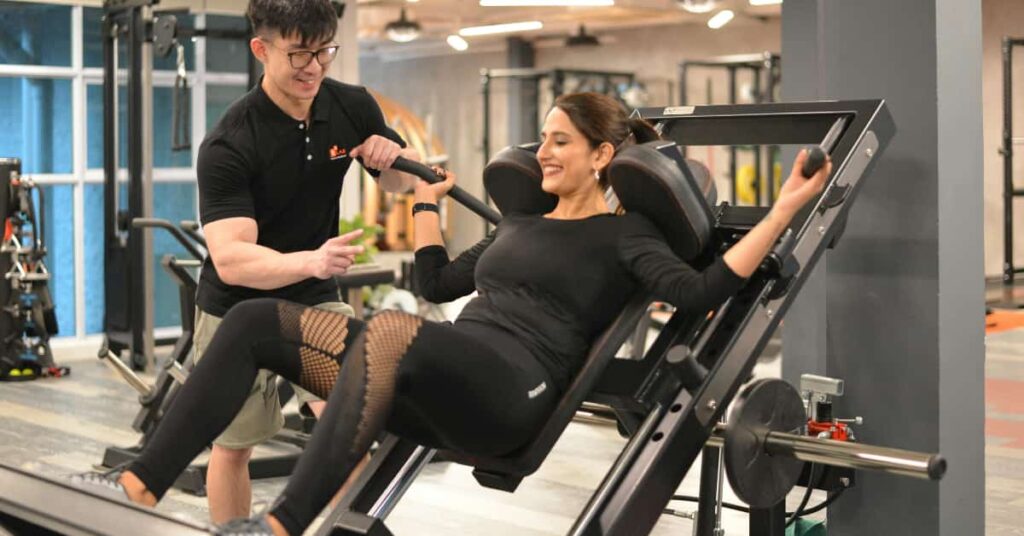
Leg Press Variations
Beyond foot placement, you can vary the machine kind and tempo to keep the workouts challenging and effective. Different machines change the resistance profile, while tempo variations allow breakthrough plateaus.
1. Common Machine Variations
Depending on the gym, you might see these three main versions:
- 45-Degree (Incline) Leg Press: The most famous version. Because you are pushing a sled upward, you can load very heavy weights. It delivers a massive range of motion and is perfect for building overall mass.
- Horizontal (Seated) Leg Press: Usually plate-loaded or pin-selected. It is the most beginner-friendly and offers the most lower back support. It is fantastic for high-repetition “burnouts” or physical therapy.
- Vertical Leg Press: Lie flat on your back and push the weight straight up. It is an advanced variation that provides 100% direct resistance from gravity, placing an extreme focus on the quadriceps.
2. The Single-Leg (Unilateral) Press
It is one of the most useful variations for balance and injury prevention.
- How to do it: Place only one foot on the platform (middle position) and keep the other on the floor or the machine’s frame.
- Why it works: It forces each leg to do 100% of the work, preventing your stronger leg from taking over. It also increases core activation to keep your hips from tilting.
3. Tempo & Intensity Variations
You can change how you move the weight to target different fitness goals:
- Pause Reps: Lower the weight, pause for 2 seconds at the bottom (without letting the weights touch), and then explode up. It builds “starting strength” and enhances the mind-muscle connection.
- Slow Eccentrics: Lower the weight very slowly (taking 3 to 5 seconds) and push back up, usually. It makes more “time under tension,” a key driver of muscle growth (hypertrophy).
- Calf Press: Keep the legs straight (but not locked) and place just the balls of the feet on the bottom edge of the plate. Flex the ankles to push the plate up, focusing entirely on the calves.
Precautions and Common Errors
To get the most out of the leg press while staying safe, focus on these small, actionable steps to avoid common mistakes and protect yourself.
Common Errors (What to Avoid)
- Locking the Knees: Snapping the legs straight at the top transfers the load from the muscles to the joints. Fix: Keep a “soft bend” at the top.
- “Butt Wink” (Lifting your Hips): Lowering the sled too far causes the lower back to curl off the seat. Fix: Stop when the knees reach about 90 degrees.
- Lifting Your Heels: Pushing with just the toes puts extreme pressure on the kneecaps. Fix: Keep the entire foot flat and push through the heels.
- Knees Caving In: Letting the knees drop toward each other can lead to ligament tears (ACL). Fix: Ensure the knees track in a straight line over the toes.
- Partial Reps (Ego Lifting): Moving a massive weight only 2 inches. Fix: Use a weight you can control through a full range of motion.
- Hands on Knees: Pushing the knees with the hands to help move the weight. Fix: Use the side handles to keep the torso stable.
Safety Precautions
- Test the Safeties: Before adding heavy weight, practice locking & unlocking the safety bars with an empty sled.
- Brace Your Core: You have to take a deep breath and tighten the abs before pressing to support the spine.
- Control the Speed: Take 2–3 seconds to lower the weight; never let it “crash” down.
- Warm Up: Always perform 1–2 sets with very light weight to lubricate the joints before going heavy.
- Head Position: Keep the head flat against the backrest to avoid neck strain.
Conclusion
In conclusion, this leg press is an effective & versatile tool for building lower-body strength and muscle mass. While it is often seen as a simpler alternative to the Squat, it offers unique benefits such as back support, ease of use, and the ability to push muscles to failure safely. By mastering proper form & avoiding common mistakes, such as locking the knees or lifting the heels, you may transform the leg press into a staple of the fitness routine. Whether you are a beginner looking for stability or an advanced lifter aiming for maximum quad and glute growth, the leg press is an incredibly effective way to reach your goals.