Table of Contents
Introduction
Understanding the body’s physical capabilities begins with looking at Muscle Fibers, the microscopic building blocks that dictate how you move, lift, and endure. These fibers are not one-size-fits-all; rather, they are generally classified into three distinct types: Slow-Twitch (Type I), Fast-Twitch (Type IIa), & Fast-Twitch (Type IIx), each with its own technical method of producing energy & force. Whether you are naturally gifted at sprinting a short distance or find the strength in trekking long mountain trails, the performance largely reflects the unique “fiber makeup.” By learning how these fibers function, you can stop guessing in the gym and begin training in a way that aligns with the biological blueprint.
1. The Basics: What Are Muscle Fibers?
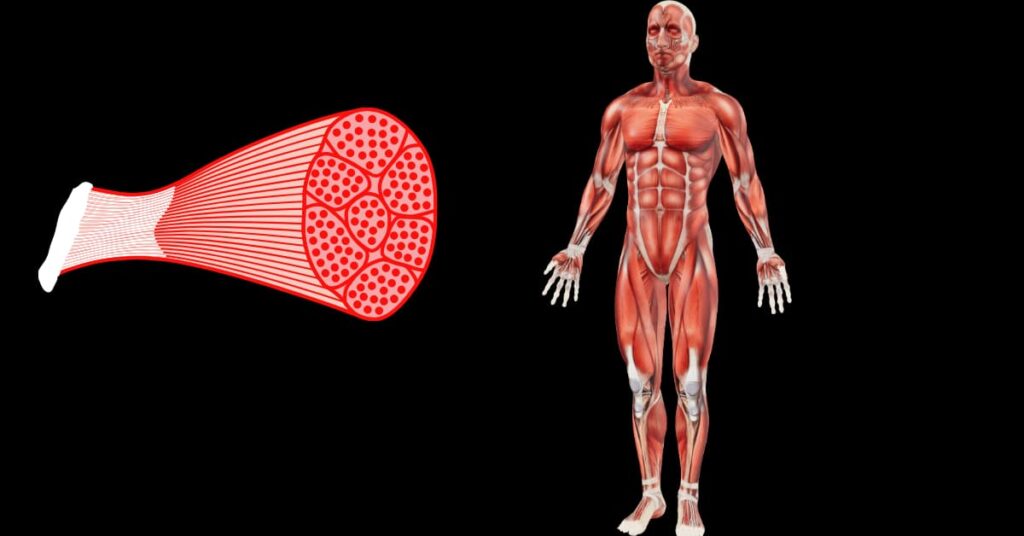
Before we get into the exact kinds, let’s look at the big picture. Every muscle in the body is made up of thousands of individual fibers. Think of a muscle like a heavy-duty cable; that cable is composed of smaller ropes, and those ropes are made of even smaller threads.
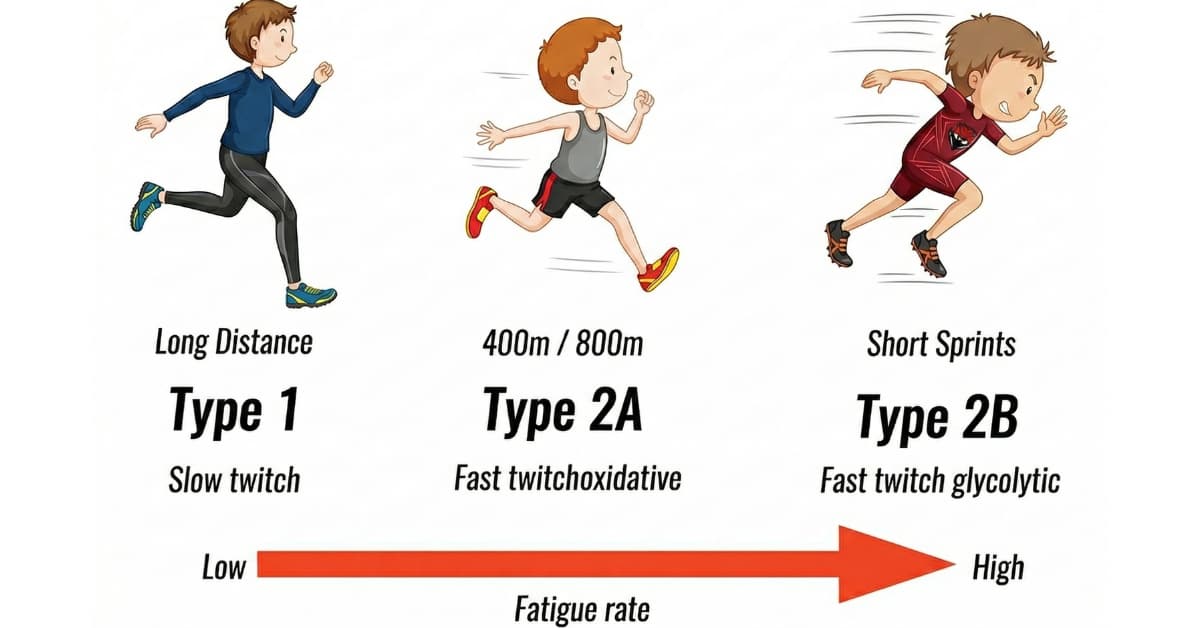
In humans, we organize these “threads” into three primary categories based on how they produce energy and how fast they contract:
- Type I (Slow-Twitch)
- Type IIa (Fast-Twitch Oxidative)
- Type IIx (Fast-Twitch Glycolytic)
While we all have a mix of these fibers, the ratio differs from person to person. Some of this is genetic (thanks, Mom and Dad), but the lifestyle and training habits can also influence how these fibers behave.
2. Type I (Muscle Fibers): The “Slow and Steady” Marathoners
Type I fibers, commonly known as slow-twitch fibers, are the endurance specialists of the body. They are built for the long haul.
Characteristics of Type I Fibers
- High Mitochondrial Density: Mitochondria are the “power plants” of the cell. Type I fibers are loaded with them, allowing for efficient energy production.
- Rich in Myoglobin: Myoglobin is a protein that carries oxygen. It gives Type I fibers a deep red color, which is why they are often called “red fibers.”
- Fatigue Resistance: These fibers are extremely hard to tire out. They can keep firing for hours.
- Low Power Output: The trade-off for their endurance is that they don’t produce much force. They aren’t going to help you jump over a fence, but they’ll help you walk ten miles.
Real-World Examples
- The Postural Muscles: The muscles in the back and neck that keep you upright all day are dominated by Type I fibers. If they were fast-twitch, you’d collapse from exhaustion after sitting at the desk for twenty minutes.
- Distance Running: Elite marathon runners often have upwards of 80% slow-twitch fibers in their legs.
Training for Type I
If you want to strengthen these fibers, concentrate on high-repetition, low-intensity work. Think long-distance cycling, swimming, or high-rep calisthenics.
3. Type IIx (Muscle Fibers) : The “Powerhouses” of the Body
At the opposite end of the spectrum, we have Type IIx fibers (sometimes called Type IIb in older textbooks). These are the “sprinters” of the fiber world.
Characteristics of Type IIx Fibers
- Fast Contraction Speed: These fibers contract significantly faster and with greater force than Type I fibers.
- Anaerobic Energy: They don’t rely on oxygen. Instead, they burn through stored sugar (glycogen) and ATP for immediate energy.
- Quick to Fatigue: They are the “flash in the pan.” They deliver massive power but burn out in seconds.
- Pale Color: Because they don’t need much oxygen, they have less myoglobin and fewer mitochondria, giving them a lighter, “white” appearance.
Real-World Examples
- The 100m Sprint: When Usain Bolt explodes out of the blocks, his Type IIx fibers are doing the heavy lifting.
- Max Effort Lifting: If you are trying a one-rep max on a deadlift, the body is screaming for every Type IIx fiber it can find.
Training for Type IIx
To recruit these Muscle fibers, you need intensity. Heavy weightlifting (1–5 reps), plyometrics (box jumps), and short, all-out sprints are the only ways to really wake these up.
4. Type IIa (Muscle Fibers): The “Best of Both Worlds” (Hybrid Fibers)
Type IIa Muscle fibers are the “middle child” of the muscle world. They are technically fast-twitch, but they’ve adapted to develop some endurance.
Characteristics of Type IIa Muscles Fibers
- Versatility: They can produce a lot of force, like Type IIx, but they also have a decent amount of mitochondria to handle oxygen.
- Adaptability: These are the most “trainable” fibers. Depending on how you work out, they can become more like Type I or more like Type IIx.
- Intermediate Fatigue: They last longer than a pure sprint but shorter than a long walk. Think of them as the 400m or 800m runners of the skeletal system.
Real-World Examples
- Middle-Distance Sports: Basketball, soccer, and hockey players rely heavily on Type IIa Muscles fibers because these sports need bursts of speed followed by periods of lower-intensity activity.
- Typical Gym Workouts: A standard set of 8–12 repetitions in weightlifting mainly targets these hybrid fibers.
5. The Fiber Comparison Table
To make it easier to visualize, here is a quick breakdown of how they stack up against each other:
| Feature | Type I (Slow) | Type IIa (Hybrid) | Type IIx (Fast) |
| Contraction Speed | Slow | Fast | Very Fast |
| Force Production | Low | Intermediate | Very High |
| Fatigue Resistance | Very High | Intermediate | Low |
| Color | Red | Pink/Red | White/Pale |
| Primary Fuel | Oxygen & Fat | Glycogen & Oxygen | Glycogen (Sugar) |
| Best Activity | Walking, Marathons | Basketball, 400m | Powerlifting, Sprints |
6. What Determines the Muscle Fibers Type?
It’s a common question: “Can I change my muscle types?” The ans. is a bit of “yes” & a bit of “no.”
Genetics: The Hand You’re Dealt
Most of us are born with a roughly 50/50 split of slow and fast-twitch Muscle fibers. However, elite athletes are often genetic outliers. A world-class sprinter might be born with 80% fast-twitch Muscle fibers, while a Tour de France cyclist might have 80% slow-twitch. It is why some people seem “naturally” better at certain sports.
Training: Playing the Hand Well
While you can’t easily turn a Type I fiber into a Type IIx fiber, you can change how they function.
- If you do a lot of endurance training, the Type IIa fibers will start to act more like Type I fibers (increasing mitochondrial content).
- If you do a lot of explosive training, the Type IIa fibers will thicken and produce more force, mimicking Type IIx.
Aging and Fiber Loss
As we age, we tend to lose our fast-twitch fibers faster than our slow-twitch ones. It is why elderly people often lose their “zip” or their ability to react quickly to a trip or fall. Staying active with resistance training is the best way to preserve those precious fast-twitch fibers as you get older.
7. How to Identify the Dominant Fiber Type
While you’d need a muscle biopsy (which involves a large needle and isn’t very fun) to know for sure, you can get a good idea through simple observation:
- The “Vertical Jump” Test: If you have a massive vertical leap inherently, you likely have a higher percentage of fast-twitch fibers.
- Repetition Testing: Take a weight that is about 80% of your max. If you can only do 3–5 reps, you are likely fast-twitch dominant. If you can pump out 12–15 reps with that same relative weight, you are likely slow-twitch dominant.
- Natural Inclination: Do you naturally gravitate toward HIIT workouts and heavy lifting, or do you find peace in a two-hour jog? Often, our brains “know” what our muscles are good at.
8. Practical Application: Training for the Goals
Understanding your fibers lets you stop fighting biology and start working with it.
If Your Goal is Muscle Growth (Hypertrophy)
To get bigger muscles, you need to target both Type IIa and Type IIx fibers, as these have the greatest growth potential.
- The Strategy: Use a mix of heavy weights (low reps) and moderate weights (moderate reps). It ensures you’re hitting all the “power” fibers.
If Your Goal is Fat Loss
You want to engage as many fibers as possible to increase “metabolic demand.”
- The Strategy: Circuit training is king here. By moving quickly from a heavy movement (Fast-Twitch) to a sustained cardio movement (Slow-Twitch), you force the body to use all its energy systems.
If Your Goal is Athletic Performance
Concentrate on the specific demands of the sport.
- The Strategy: If you play soccer, don’t just run long distances. You need to train the Type IIa fibers with interval sprints to handle the “stop and go” nature of the game.
9. Common Misconceptions about Muscle Fibers
“Bulky” vs. “Toned”
Many individuals think lifting heavy weights makes you “bulky” because it targets fast-twitch fibers. In reality, “bulk” is mostly a function of diet and total volume. “Toning” is simply having muscle (of any fiber type) with low enough body fat to see it. Don’t be afraid to train the fast-twitch fibers!
“You Can’t Train Slow-Twitch”
Some individuals think slow-twitch fibers don’t grow. While they don’t grow as fast as fast-twitch, they can still thicken and become more defined. Long-distance hikers often have incredibly defined (though not necessarily “huge”) calf muscles due to constant Type I fiber engagement.
Conclusion
At the end of the day, the body is a highly adaptable machine. While genetics provides the blueprint, life-style handles the construction. Whether you are a “red fiber” endurance enthusiast or a “white fiber” power seeker, the key is balance.
By recognizing that the muscles aren’t one-dimensional, you can structure the week to include both steady-state movement (for heart health and Type I fiber maintenance) and explosive or heavy movement (to keep those Type II fibers sharp).
Listen to the body, experiment with different rep ranges, and remember: you aren’t stuck with the “natural” athlete you were at fifteen. You can always train the fibers to meet the challenges you set for them today.