Table of Contents
Introduction
The Rear Delt Fly, or posterior deltoid raise, is a targeted isolation exercise developed to strengthen the posterior head of the deltoid muscle located on the back of the shoulder. By performing a horizontal abduction movement, typically with dumbbells, cables, or a dedicated machine, this exercise assists in counteracting the forward-leaning posture often caused by overdeveloped chest muscles & prolonged sitting. Beyond aesthetics, developing the rear deltoids is vital for overall shoulder stability & joint health, as these muscles aid in pulling the shoulders back & maintaining a balanced, upright skeletal alignment.
Rear Delt Exercise
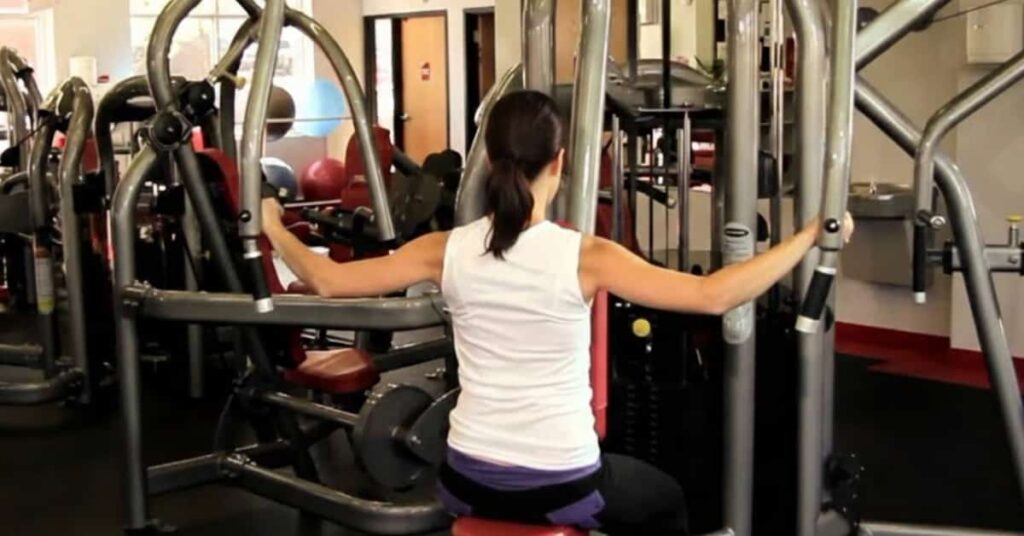
In addition to improving posture, regular rear deltoid exercise or activity enhances or improves performance in major compound lifts, such as the deadlift and overhead press, by providing a stable base for the shoulder girdle under heavy loads. Because the rear delts are relatively small muscles that are easily overpowered by the stronger muscles of the back, this exercise is most effective when performed with controlled tempo and moderate resistance rather than maximum weight.
Focusing on a “squeezing” sensation at the peak of the movement ensures maximum fiber recruitment, which helps create a well-rounded, “3D” shoulder appearance and reduces the risk of impingement during high-intensity training sessions.
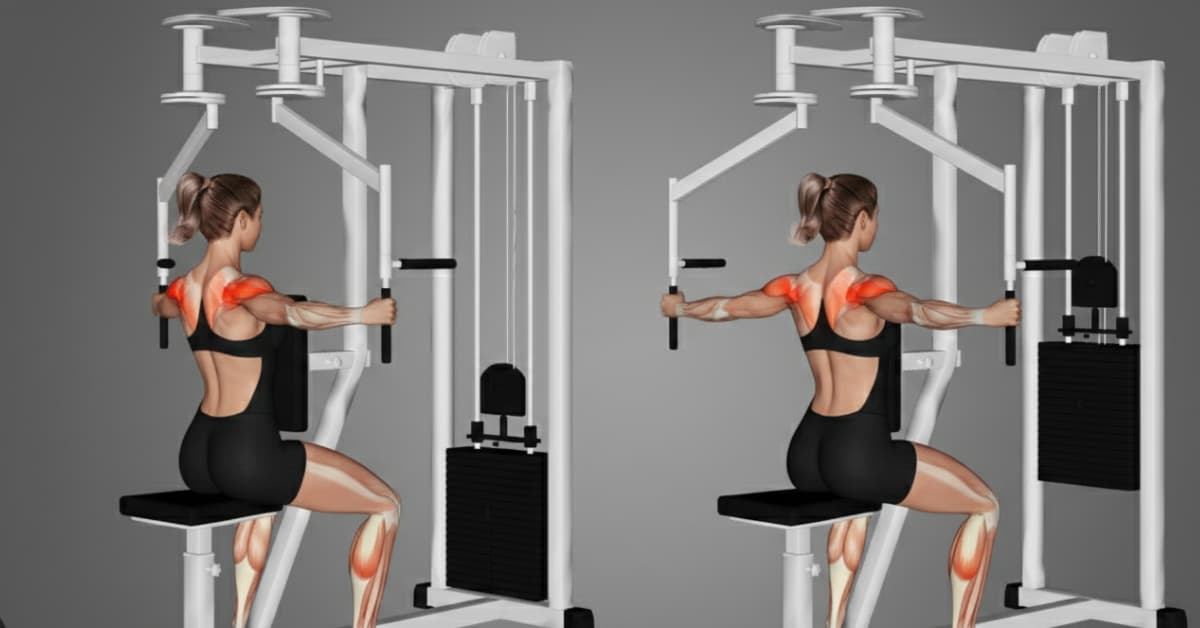
Rear delt Exercise target muscles
While the primary focus is on the back of the shoulder, the rear delt fly is a highly effective movement because it engages a complex group of muscles in the upper back and neck to stabilize the weight.
Primary Muscle Targeted
- Posterior Deltoid (Rear Delts): This is the main driver of the movement. Its primary job is horizontal abduction—pulling your arms back and away from your chest.
Secondary Muscles (Synergists & Stabilizers)
These muscles assist the rear delts to ensure the shoulder blade moves correctly & the weight remains controlled:
- Infraspinatus & Teres Minor: Part of the rotator cuff, these help with external rotation and stabilize the shoulder joint.
- Trapezius (Middle and Lower): These muscles pull the shoulder blades together (retraction) as you lift the weight.
- Rhomboids: Located under the traps, these assist in squeezing the scapula toward the spine.
- Rear Brachialis: To a lesser extent, the muscles of the upper arm stabilize the elbow position during the fly.
Rear Delt Exercise: Form and Instructions
Here are the essential form cues for the Rear Delt Fly in short, actionable points:
The Setup
- Hinge Deep: Lean forward until your torso is nearly parallel to the floor (aim for a 45 °- 60 ° angle).
- Soft Elbows: Keep a slight, fixed bend in your elbows throughout the set; don’t let them straighten or bend further.
- Light Weight: Use lighter dumbbells than you would for side raises to prevent your back muscles from taking over.
The Execution
- Wide Arc: Think about pushing the weights out toward the walls, not just pulling them “up.”
- Pinkies Up: Rotating your hands so your pinky fingers lead the way helps isolate the rear head of the shoulder.
- Stop at Shoulder Height: Don’t swing the weights past your torso; stop when your upper arms are in line with your back.
- Controlled Negative: Lower the weights slowly—don’t let gravity do the work on the way down.
Rear Delt Exercise Benefits
Building strong rear delts is about more than just “3D shoulders”; it’s one of the best things you can do for long-term joint health and lifting performance.
Here are the primary benefits:
1. Improved Posture
Most daily activities—and many chest exercises—pull the shoulders forward. Strengthening the rear delts provides the necessary “rearward” tension to pull the shoulders back, helping to correct a rounded-shoulder appearance and keep your spine in a more neutral alignment.
2. Enhanced Shoulder Stability
The rear delt acts as a crucial stabilizer for the shoulder joint. By strengthening this area, you provide a counterbalance to the much stronger front delts & pectoral muscles, significantly lowering the chance of shoulder impingement and rotator cuff injuries.
3. Increased Strength in Compound Lifts
As you prepare for heavy movements like deadlifts and overhead presses, the rear delts play a vital role:
- Deadlifts: They help keep the bar tight to your body and maintain a “flat” upper back.
- Bench Press: They provide a stable base (the “shelf”) for you to press from.
- Rows: They assist in the final contraction of pulling movements.
4. Balanced Muscle Symmetry
From an aesthetic standpoint, the rear delts are often the “missing link.” Developing them fills out the back of the shoulder, creating a complete, rounded look that makes the shoulders appear broader and more muscular from the side and back.
Rear delt variations
To keep the workouts effective & prevent plateaus, it’s helpful to rotate through different variations. Each of these changes the “resistance curve”—the point at which the exercise feels the heaviest.
1. Cable Rear Delt Fly (Standing)
Unlike dumbbells, cables provide or supply constant tension throughout the entire movement or exercise.
- How: Set the pulleys at head height without handles. Grab the left cable with your right hand and the right cable with your left (cross them).
- Benefit: It’s much harder at the start of the rep compared to dumbbells, leading to better muscle growth.
2. Face Pulls
It is a gold-standard movement for both the rear delts and the rotator cuff.
- How: Using a rope attachment on a high cable, pull the center of the rope toward your forehead while pulling the ends apart.
- Benefit: It incorporates external rotation, which is excellent for shoulder health and posture.
3. Incline Bench Dumbbell Fly
If you find yourself “swinging” the weights or using your legs, this variation is for you.
- How: Lie face down (chest-supported) on a bench set to a 30-degree incline. Let the dumbbells hang and perform the fly.
- Benefit: It completely removes momentum, forcing the rear delts to do 100% of the work.
4. Rear Delt Rows
It is a hybrid between a row and a fly.
- How: Perform a dumbbell row, but flare your elbows out wide (90 degrees from your body) rather than tucking them in.
- Benefit: You can lift slightly heavier weights here, which is excellent for building thickness.
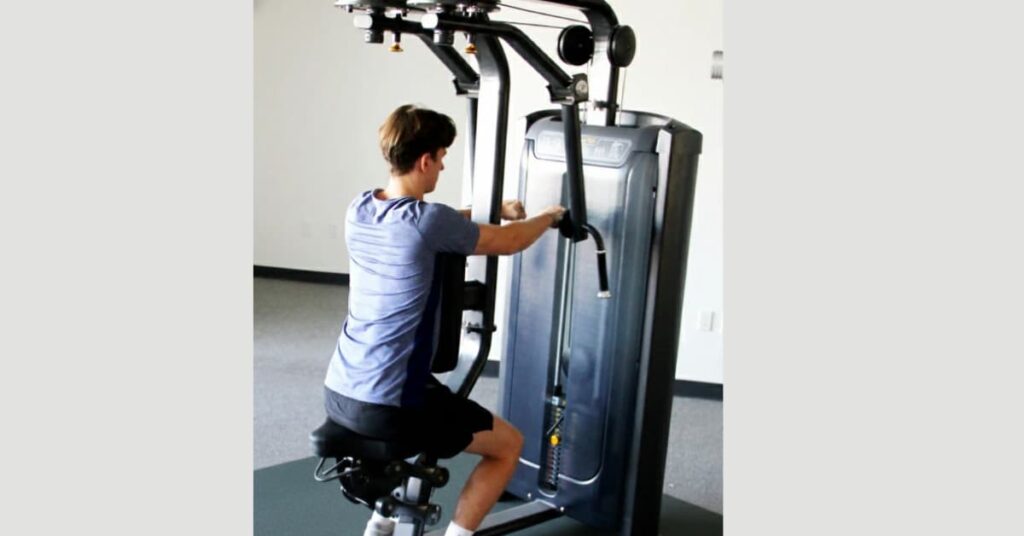
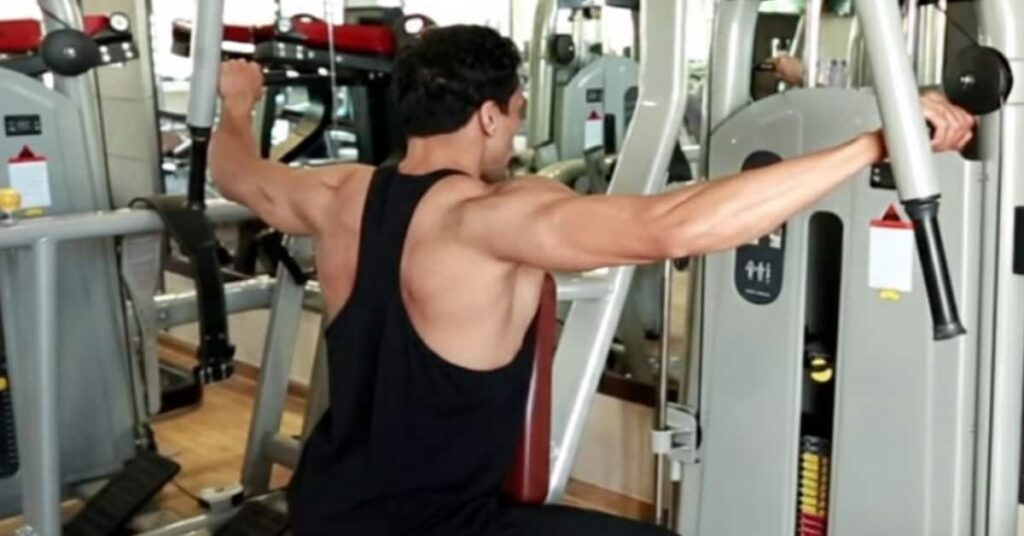
5. Reverse Pec Deck (Machine)
The most stable way to isolate the muscle.
- How: Sit facing the machine, chest against the pad, and push the handles back.
- Benefit: Because the machine guides the path, you don’t have to worry about balance or form as much—you can focus on the “burn.”
Rear Delt alternative
If you don’t have access to traditional gym equipment or find that standard flyes irritate your joints, these alternatives target the same area using different movements or tools:
1. Band Pull-Aparts
It is arguably the best “anywhere” alternative for rear delt health.
- The Move: Hold a resistance band in front of you at shoulder height. Pull the band apart by moving arms out to the sides until the band touches the chest.
- Why it works: It provides a similar horizontal abduction movement and is excellent for high-repetition “pump” work.
2. Single-Arm High Cable Row
If you have a cable machine but flyes feel awkward, try this.
- The Move: Set the cable to chest height. Stand sideways and pull the cable across your body, keeping your elbow high and flared out.
- Why it works: The single-arm nature allows for a greater range of motion and better mind-muscle connection.
3. “Y-T-W” Raises
This bodyweight or light-weight sequence hits the rear delts from multiple angles.
- The Move: Lying face down on the floor or a bench, move your arms into the shape of a “Y,” then a “T” (which is the rear delt fly), then a “W” (bending elbows).
- Why it works: It builds incredible stability in the entire posterior chain and shoulder girdle.
4. Rear Delt Circle (Dumbbells)
- The Move: Instead of a straight fly, move the dumbbells in small, controlled circles at the top of the “bent-over” position.
- Why it works: This keeps the rear delt under tension for an extended period without needing heavy weights.
Rear Delt: Precautions and Common Errors
When training the rear delts, the margin for error is small because the muscle is easily “cheated” by larger back muscles. Avoiding these common pitfalls will ensure you’re actually targeting the shoulder and not just straining your joints.
Common Errors
- Using Too Much Weight: This is the #1 mistake. When the weight is too heavy, your traps and rhomboids take over the lift, or you begin “swinging” your torso to create momentum.
- Excessive Shrugging: If you pull your shoulder blades toward your ears during the movement, you shift the tension to the upper traps. Keep your shoulders “packed” down.
- Bending the Elbows Too Much: If your elbows bend to 90 degrees, the exercise becomes a row. Keep a slight, fixed bend (like you’re hugging a huge barrel).
- Short Range of Motion: Stopping before your arms are parallel to the floor prevents the rear delt from reaching full contraction.
- Looking Up: Craning your neck to look in the mirror puts unnecessary strain on your cervical spine. Keep your gaze toward the floor.
Key Precautions
- Warm Up the Rotator Cuff: Since the rear delt works closely with the rotator cuff, perform a few light sets of external rotations or band pull-aparts before moving to heavier resistance.
- Elbow Health: If you feel a “clicking” or “pinching” in the joint, try rotating your hands to a neutral grip (palms facing each other) rather than a palms-down grip.
- Lower Back Protection: If you perform these “bent-over ” exercises, ensure your core is braced. If you feel any lower back strain, switch to a chest-supported version on an incline bench immediately.
- Controlled Eccentric: Never let the weights “crash” back together at the bottom. The muscle grows significantly during the lowering phase, so keep it slow.
Conclusion
In conclusion, prioritizing the rear delts is a small investment that yields massive returns for both the physique & your long-term lifting career. By dedicating time to isolation movements like the rear delt fly or cable pull, you move beyond just “front-heavy” training & build a resilient, balanced shoulder girdle. This balance is the secret to maintaining a proud, upright posture and protecting yourself from the common shoulder injuries that often plague heavy lifters.