Table of Contents
Introduction
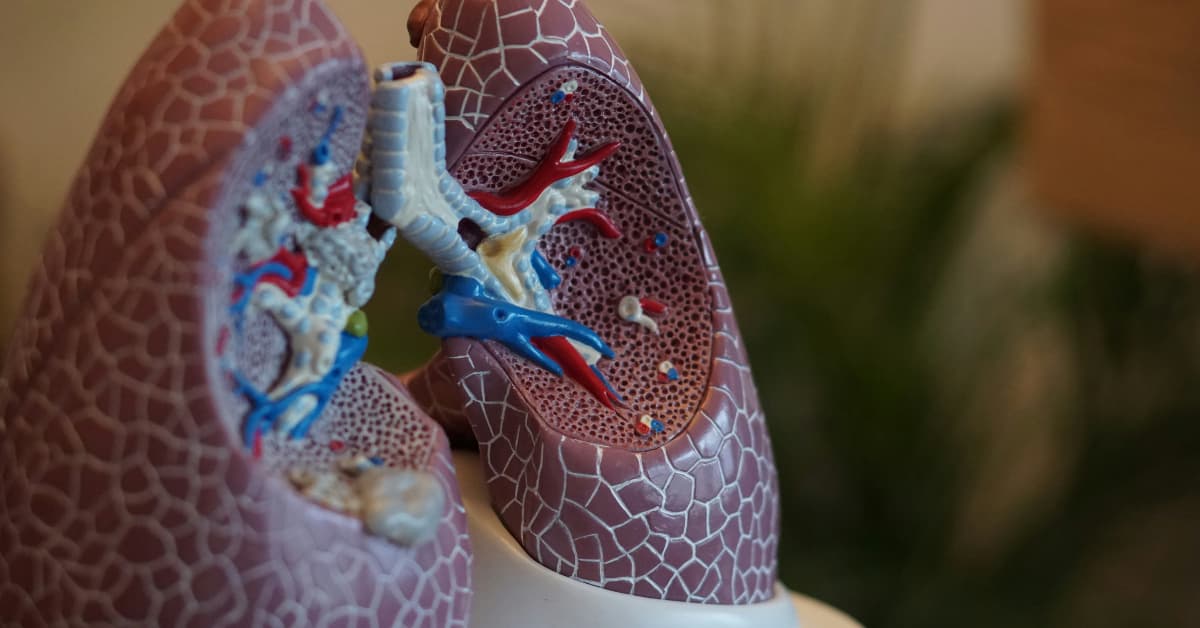
The respiratory system is a complex biological network of organs and tissues, especially the lungs and airways, that enables gas exchange in the human body. Its fundamental role is to supply oxygen to the bloodstream, fueling cellular energy production while simultaneously removing carbon dioxide, a metabolic waste product. Beyond just breathing, this system also helps regulate the body’s pH balance, filters out environmental irritants, and facilitates vocalization, acting as a vital bridge between the external environment and our internal physiological needs.
We take it for granted every second of the day. Whether you are sleeping, running for a bus, or giggling at a joke, the body is performing a silent, life-sustaining miracle: breathing. But the respiratory system is much more than just moving air in and out. It is a complex, high-speed delivery service that fuels every single cell in the body.
In this talk, we’re going to break down how this system works, why it matters, and most importantly, how you can take care of it through simple lifestyle changes, nutrition, and movement.
What Exactly is the Respiratory System?
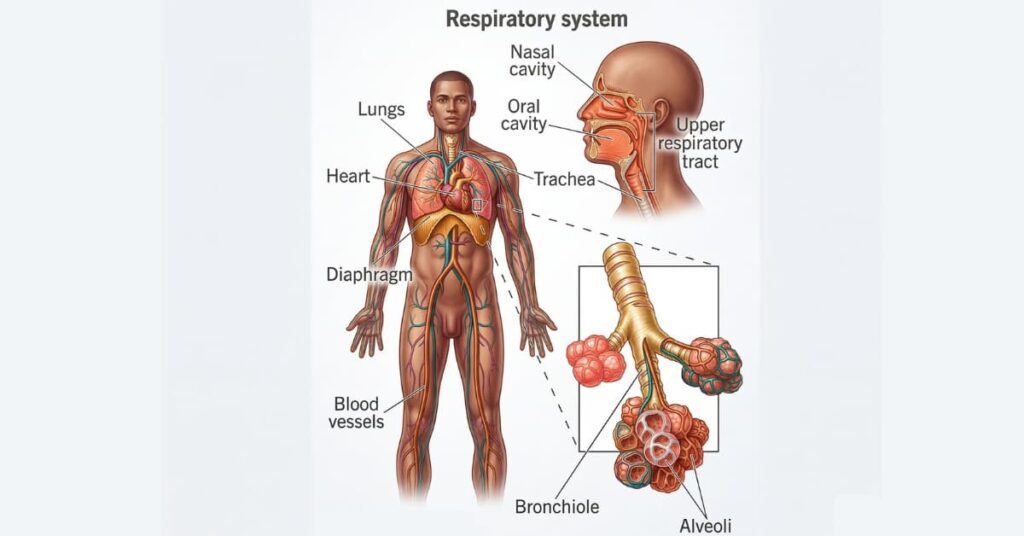
At its simplest, the respiratory system is the network of organs & tissues that help you breathe. Its immediate mission is to deliver oxygen to the body (which we need for energy) and remove carbon dioxide (a waste product).
Think of the body like a car. Oxygen is the fuel, and carbon dioxide is the exhaust. Without a functional exhaust and fuel intake system, the engine eventually shuts down.
The Key Parts of the Respiratory System and Their Functions
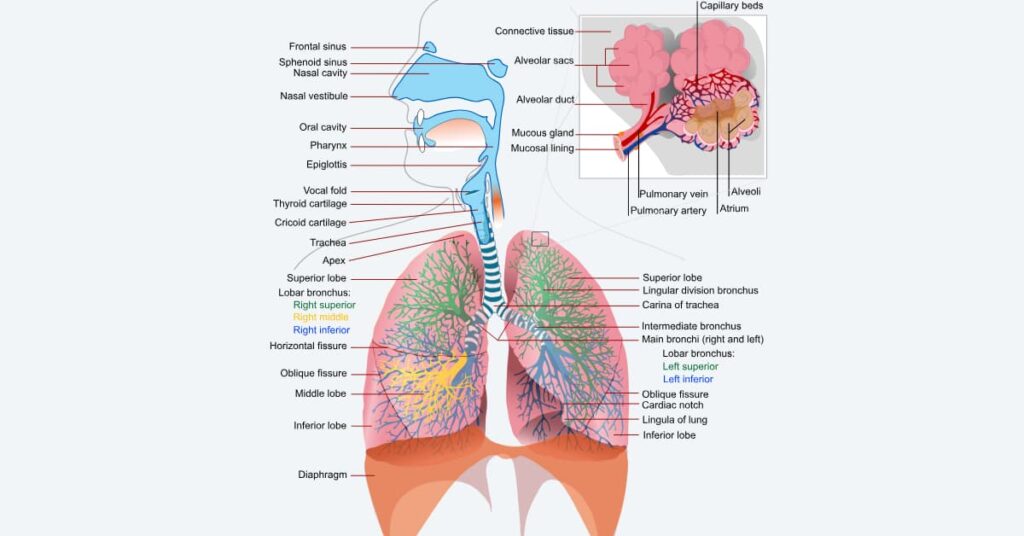
The system is divided into two main areas: the upper and lower respiratory tracts.
1. The Entry Point: Nose and Mouth
Air enters here. The nose is actually a sophisticated filter. It’s lined with tiny hairs (cilia) and mucus that trap dust, pollen, & smoke before they can reach the lungs. It also warms and moistens the air, so it doesn’t irritate the delicate internal tissues.
2. The Throat (Pharynx and Larynx)
The pharynx acts as a hallway for both air and food. The larynx, or voice box, sits just below it. It protects the windpipe and, of course, includes vocal cords that allow you to speak.
3. The Windpipe (Trachea)
It is a sturdy tube reinforced by cartilage rings. It’s the main highway for air traveling down into the chest.
4. The Bronchi and Bronchioles
The trachea branches into two primary tubes called bronchi (one for each lung). These then branch into smaller and smaller tubes, reaching bronchioles, looking much like the upside-down roots of a tree.
5. The Alveoli (The Magic Spot)
At the very end of those “roots” are tiny air sacs called alveoli. It is where the real work happens. Oxygen passes from these sacs into the blood, & carbon dioxide moves or runs from the blood into the sacs to be exhaled.
Fun Fact: You have about 480 million alveoli in the lungs. If you spread them all out, they would cover a whole tennis court!
6. The Diaphragm
It is a dome-shaped muscle located at the bottom of the ribs. When you breathe in, it flattens and pulls down, creating a vacuum that sucks air into your lungs. When it relaxes, air is pushed out.
Why Is Respiratory system Health So Important?
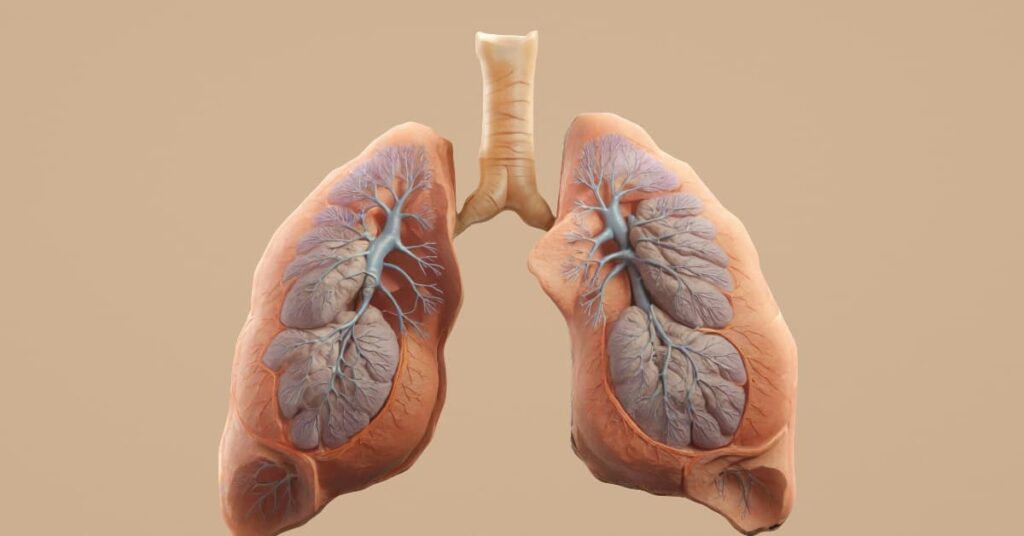
When the lungs are healthy, you have more energy, the brain stays sharp, and the immune system is stronger. When they are struggling due to pollution, smoking, or poor habits, you might feel constantly tired, get sick often, or feel “puffed out” doing basic tasks.
Poor respiratory health doesn’t just affect breathing; it also affects the heart. Because the heart and lungs work as a team, if the lungs are weak, the heart has to pump much harder to get oxygen to the muscles.
How to Keep the Respiratory System Healthy
Supporting healthy lungs isn’t just about avoiding bad habits; it’s about proactive care. Here are the most useful ways to keep the “inner bellows” in top shape.
1. Stop Smoking (and Avoid Second-hand Smoke)
It is the big one. Smoking causes chronic inflammation, destroys the cilia (those cleaning hairs), and can lead to serious diseases or issue such as COPD (Chronic Obstructive Pulmonary Disease) and lung cancer. Even “vaping” introduces chemicals into the lungs that can cause long-term scarring.
2. Improve the Indoor Air Quality
We spend about 90% of our time indoors. Dust the home regularly, use a vacuum with a HEPA(High-Efficiency Particulate Air) filter, and keep indoor plants like Spider Plants or Peace Lilies, which naturally filter toxins from the air.
3. Practice Deep Breathing
Most of us are “shallow breathers,” only using the top part of our lungs.
- Try this: Place one hand on the belly. Breathe in slowly through the nose, making sure the belly rises more than the chest. It engages the diaphragm and improves lung capacity.
4. Stay Hydrated
Thin mucus is easier for the lungs to clear. When you’re dehydrated, the mucus in the airways becomes thick and sticky, making you more prone to infections and irritation.
Fueling the Lungs: What to Eat
Nutrition plays a massive role in respiratory health. Certain foods contain antioxidants & anti-inflammatory elements or compounds that protect lung tissue.
Best Foods for Respiratory System and Lung Health
| Food Group | Why it helps | Examples |
| Cruciferous Veggies | Contain sulforaphane, which helps clear harmful bacteria. | Broccoli, Cauliflower, Cabbage |
| Omega-3 Fatty Acids | Powerful anti-inflammatories that help with asthma and COPD. | Walnuts, Flaxseeds, Chia seeds, Salmon |
| Berries | Loaded with anthocyanins that protect lung tissue from oxidative stress. | Blueberries, Strawberries, Raspberries |
| Magnesium-Rich Foods | Helps relax the muscles in the airways. | Spinach, Pumpkin seeds, Dark chocolate |
| Bright Orange Produce | High in Beta-carotene, which converts to Vitamin A for lung repair. | Carrots, Sweet potatoes, Pumpkins |
Herbs and Spices
- Turmeric: Curcumin, a natural anti-inflammatory. Adding a pinch to the milk or meals can help reduce airway inflammation.
- Ginger: Helps decongest the lungs and break down mucus.
- Garlic: Has antimicrobial properties which help fight off respiratory infections.
Movement for Better Breathing and for the Respiratory System: Exercises That Work
You don’t need to be a marathon runner to improve lung function. The goal is to make the heart and lungs work a little harder so they become more efficient.
1. Aerobic Exercise (Cardio)
Activities like brisk walking, swimming, or cycling are excellent.
- Example: Aim for thirty minutes of brisk walking five days a week. As the fitness improves, the lungs don’t have to work as hard to move the air you need.
2. Yoga and Pranayama
Yoga emphasizes the connection between movement & breath. Specific breathing exercises (Pranayama), like Anulom Vilom (alternate nostril breathing) or Kapalbhati, can significantly increase lung volume and respiratory muscle strength.
3. Strength Training
Working the core and upper body muscles helps improve posture. Good posture allows the chest cavity to expand fully, giving the lungs more room to inflate.
4. Swimming
Swimming is arguably the best exercise for the respiratory system. The moist air is gentle on the lungs, and the pressure of the water against the chest acts like a “weight” that the breathing muscles have to work against, strengthening them.
Common Signs the Lungs Need Help
Sometimes our bodies try to tell us something is wrong. Don’t ignore these “red flags”:
- A cough that lasts longer than three weeks.
- Shortness of breath during activities which used to be easy.
- Chronic mucus production.
- Wheezing or noisy breathing.
- Unexplained pain in the chest when breathing.
If you experience these, it’s always a good idea to chat with a healthcare professional.
The most common diseases and disorders that affect our breathing and Respiratory System:
1. COPD(Chronic Obstructive Pulmonary Diseases)
COPD is term for a group of progressive lung diseases, mostly commonly emphysema & chronic bronchitis.
- What happens: The airways become damaged or clogged with mucus, making it harder to get air out of the lungs.
- Common Cause: Long-term smoking is the leading cause, though air pollution also plays a role.
- Symptoms: Frequent coughing, wheezing, and a “tight” feeling in the chest.
2. Asthma
Asthma is a condition or issue in which the airways narrow and swell, often producing excess mucus.
- What happens: During an “attack,” the muscles around the airways tighten, making breathing feel like you are trying to suck air through a very thin straw.
- Triggers: Allergies (pollen, dust), cold air, exercise, or even stress.
- Example: An individual might feel perfectly fine until they go for a run on a cold morning, when a sudden bout of wheezing & coughing occurs.
3. Pneumonia
It is an infection that inflames the air sacs (alveoli) in one or both lungs.
- What happens: The alveoli can fill with fluid or pus, creating it difficult for oxygen to reach the bloodstream.
- Causes: Bacteria, viruses, or fungi.
- Symptoms: High fever, chills, and a cough that produces thick phlegm.
4. Lung Cancer
One of the most serious respiratory disorders, lung cancer involves the un-controlled growth of abnormal cells in the lungs.
- What happens: These cells form tumors that interfere with the lung’s ability to function and can eventually spread to other parts of the whole body.
- Prevention: While genetics play a part, avoiding tobacco and radon gas significantly lowers the risk.
5. Tuberculosis (TB)
TB is a serious infectious issue or illness caused by bacteria which primary affects the lungs.
- What happens: The bacteria can stay “latent” (sleeping) in the body for years before becoming active and damaging lung tissue.
- Symptoms: A persistent cough which lasts more than three weeks, often accompanied by coughing up blood and night sweats.
6. Pulmonary Edema
It is an issue caused by excess fluid in the lungs.
- What happens: Fluid collects in the numerous air sacs in the lungs, creating it difficult to breathe. In most cases, heart problems lead to pulmonary edema when the heart can’t pump blood efficiently, causing it to back up into the lungs.
Conclusion
The respiratory system is an incredible piece of biological engineering. From the moment you were born until the very last breath, it works tirelessly to keep you energized and alive. While we can’t control the outdoor air quality perfectly, we have immense power over how we treat our lungs.
By choosing a diet rich in antioxidants, staying active, & practicing mindful breathing, you aren’t just “living”, you’re giving the body the energy it needs to thrive. Remember, every deep breath you take is a chance to reset & nourish the system. Begin today by taking one deep, conscious breath. Your lungs will thank you for it!