Table of Contents
Introduction
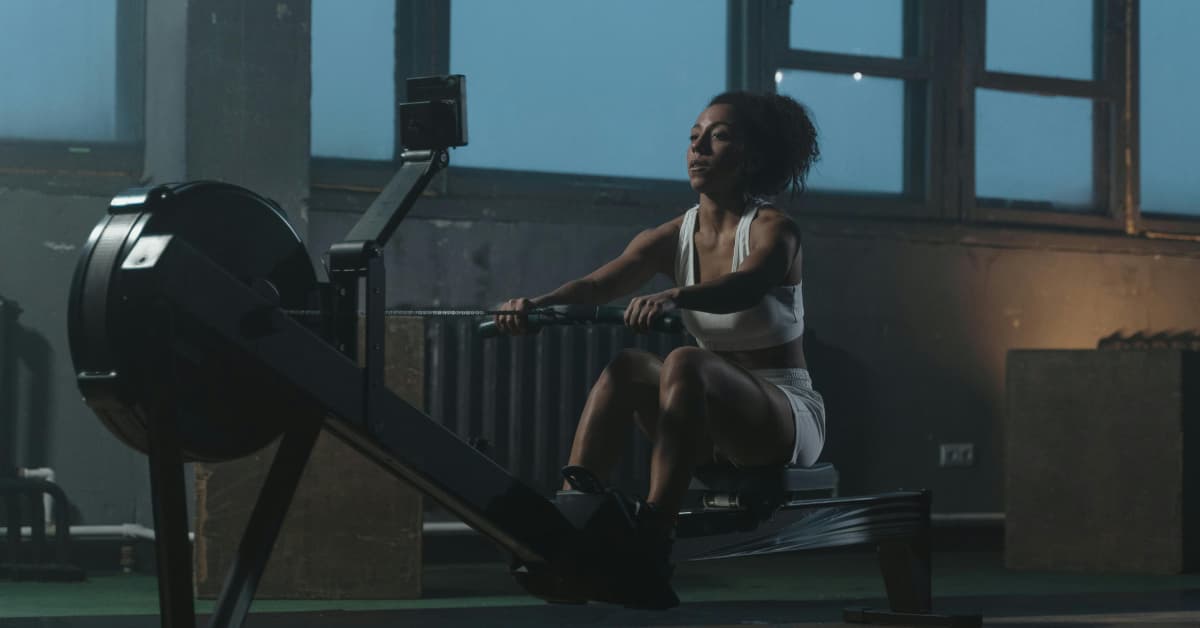
A rowing machine, also understood as an ergometer or “erg,” is a stationary fitness machine which simulates the mechanics of rowing a watercraft, presenting a rare combination of high-intensity cardiovascular training and full-body muscular endurance. Unlike treadmills or exercise bikes that mainly target the lower body, rowing recruits approximately 86 percent of the body’s muscle mass—gripping the legs, back, core, and arms simultaneously via a fluid, four-phase stroke: catch, drive, finish, and recovery. This mechanism supplies a highly efficient, calorie-burning training that is entirely low-impact, offering superior aerobic advantages without stressing the knees or ankles, creating it an ideal training tool for everyone from rehabilitation patients to elite athletes.
A Rowing Machine, technically understood as an ergometer (or “erg”)(An ergometer is described as a device utilized to measure and quantify human physical performance, especially designed to affect the physical load experienced during training in different sports, such as cycle ergometers for cyclists and treadmills for runners.), is a component of stationary gym equipment designed to simulate the action of rowing a boat on water.
Rowing Machine
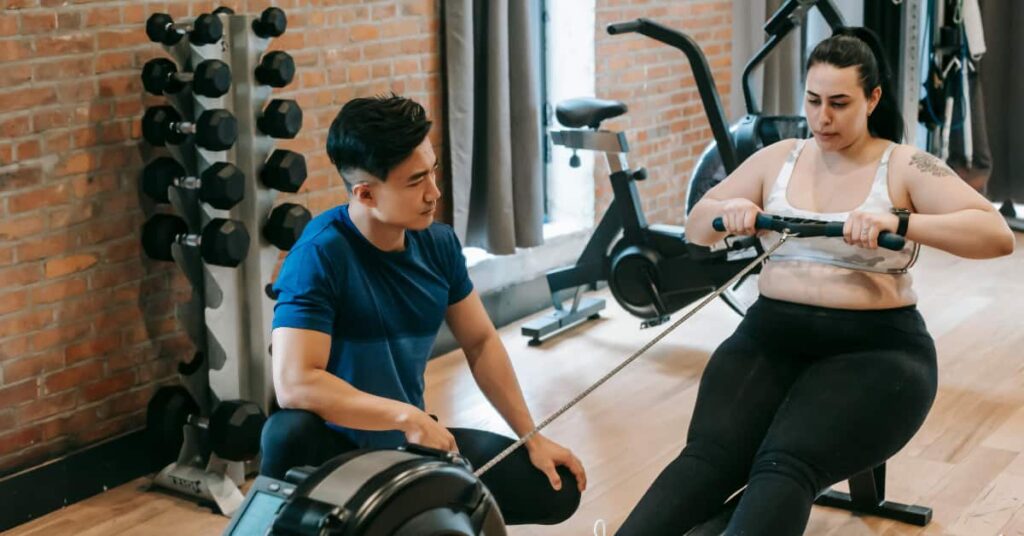
It is unique in the fitness world for bridging the gap between cardio & strength training. While most cardio devices (like treadmills or bikes) focus heavily on the lower body, the rower forces the upper and lower body to work together in a rhythmic, collaborative effort.
Why Is It So Effective?
- Total Body Activation: It involves approximately 86% of the body’s muscle mass. Every stroke engages the legs, core, glutes, back, and whole arms.
- Zero Impact: Because you are seated and the feet are fixed, there is no impact shock on the joints. It’s safer than running on knees & ankles while still allowing high-intensity training.
- Scalable Difficulty: The resistance is dynamic (particularly on air and water rowers). The harder you push, the more resistance the machine gives back, meaning it automatically adjusts to your fitness level.
The Mechanism: How It Moves
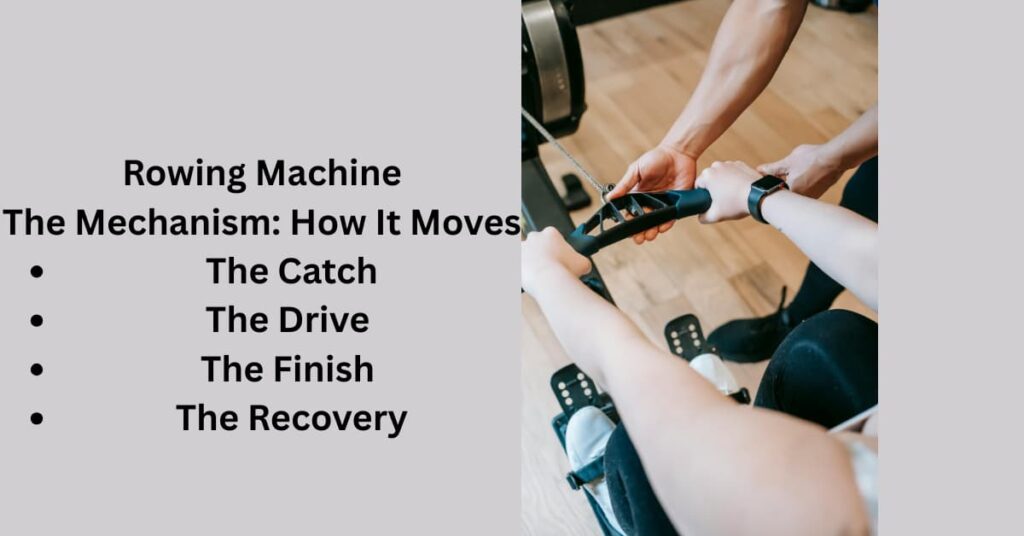
The rowing stroke is not just “pulling.” It is a series of four distinct phases that produce a smooth cycle:
- The Catch: The starting position. You are compressed ahead, arms straight, knees bent, willing to explode.
- The Drive: The work phase. You push especially with the legs (60 percent), then swing the body (30 percent), and finally pull with your arms (10 percent).
- The Finish: The end of the stroke. Legs are flat, core is braced, and the handle is at the lower chest.
- The Recovery: You slide back to the start, letting the muscles relax briefly before the next stroke.
Types of Machines
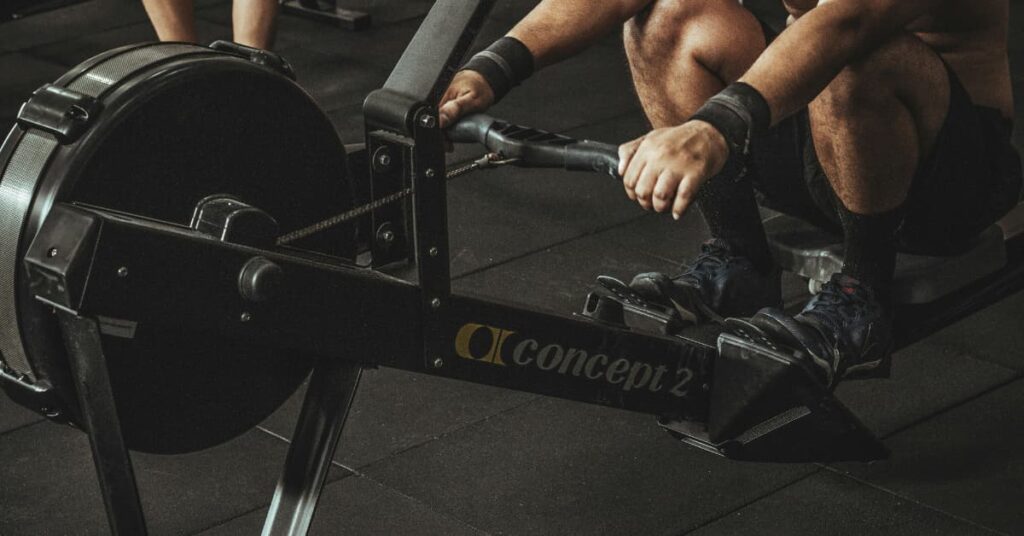
- Air Rowers (e.g., Concept2): The industry standard. Resistance arrives from a fan flywheel; the faster you row, the harder it gets.
- Magnetic Rowers: Use magnets for resistance. They are generally silent and compact, making them famous for home usage.
- Water Rowers: Use a paddle inside a water tank. They supply a realistic “whoosh” sound & a smooth, natural feel.
Rowing Machine benefits
Rowing is one of the most efficient activities available because it is a hybrid workout that combines cardiovascular endurance with muscular strength.
Here are the preliminary advantages of adding the rowing machine to the routine.
1. The “86%” Full-Body Workout
Unlike a stationary bike (which works legs) or an elliptical (which is mostly momentum), rowing actively recruits roughly 86% of your body’s muscle mass.
- Lower Body (60%): You drive with the quads, glutes, & calves.
- Core (20%): Your abs and obliques must brace to move power from the legs to the arms.
- Upper Body (20%): You finish the pull with your lats, rhomboids, shoulders, and biceps.
2. High Intensity, Zero Impact
It is the rowing machine’s “superpower.” It lets you reach the maximum heart rate zones without the pounding effect of running.
- Joint Safety: Because the feet are fixed and you are seated, there is no shockwave crossing up your ankles, knees, or hips.
- Longevity: It is sustainable for older adults or those recovering from injury who still require a serious cardio challenge.
3. Torch Calories Efficiently
Because so many muscle groups are working simultaneously, your body needs enormous amounts of oxygen to fuel them.
- The Burn: A vigorous rowing session can burn between 600 and 1,000 calories per hour (depending on weight and intensity).
- Afterburn (EPOC(Excess Post-Exercise Oxygen Consumption)): Like deadlifts, high-intensity rowing keeps your metabolism elevated for hours after you complete, as the body recovers.
4. Improves Posture & Posterior Chain
Modern life involves a lot of sitting and hunching forward (computers, phones, driving). Rowing is the antidote.
- Opens the Chest: The rowing motion strengthens the upper back (rhomboids/traps) and pulls the shoulders back.
- Strengthens the Back: It builds endurance in the lower back and hamstrings, helping to support the spine and reduce everyday back pain.
5. Versatility for All Levels
The machine does not force a speed on you.
- Self-Paced: On air and water rowers, resistance is created by your effort. If you row gently, it feels light. If you row aggressively, the resistance fights back instantly. It’s equally valid for a grandmother and an Olympic athlete.
6. Mental Focus (Meditative Rhythm)
Rowing requires a consistent, rhythmic “Catch, Drive, Finish, Recovery” cycle. This repetitive motion, combined with the “whoosh” of the flywheel or water, can induce a meditative state that lowers stress while you exercise.
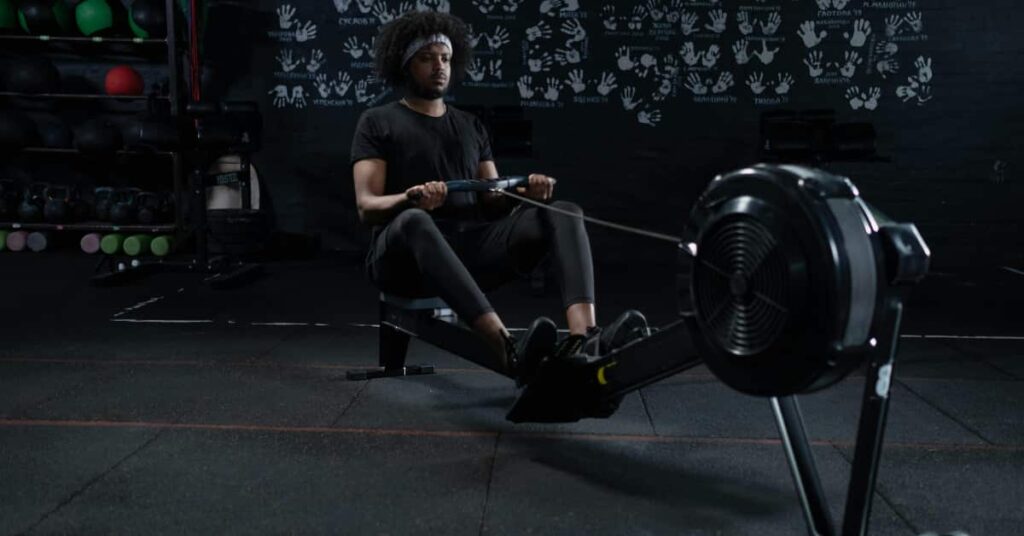
Rowing Machine Precautions
While the rowing machine is low-impact, it is highly technical. Poor form is the primary cause of lower back injuries.
Here are the critical precautions to ensure a safe workout.
1. The “Damper Setting” Trap (Don’t set it to 10!)
The Mistake: Most beginners sit down and immediately slide the air damper (the lever on the side of the fan) to level 10, thinking “higher number = better workout.”
The Risk: A setting of 10 is like riding a bicycle in the highest gear up a steep hill. It places a heavy, dragging load on your lower back muscles with every stroke.
The Fix: Set the damper to 3-5. This best mimics the feel of water. It allows for a quicker, smoother stroke that relies on aerobic power rather than brute strength, saving your back.
2. Protect the Lower Back (Lumbosacral Strain)
The Mistake: Rounding the spine (slumping) at the “Catch” (the start) or leaning too far back at the “Finish.”
The Risk: Like the deadlift, rowing requires a strong core. If you round the back, the force from the legs is transferred directly into the spinal discs rather than the handle.
The Fix: Sit tall on your “sit bones.” Hinge at the hips, keeping the chest lifted. At the finish, lean back slightly (only to 11 o’clock), engaging your core, not your spine.
3. Knee Safety (Over-Compression)
The Mistake: Sliding too far forward at the catch so that your heels pop up high and your shins go past vertical.
The Risk: This places excessive shear force on the knee joint, reducing your power.
The Fix: Stop sliding forward the moment your shins are vertical (perpendicular to the floor). Even if you are flexible, don’t go further. Your heels can lift slightly, but they shouldn’t feel disconnected from the footplate.
4. Avoid “Shooting the Slide.”
The Mistake: Pushing the legs straight while the handle & upper body stay behind.
The Risk: This disconnects your legs from the handle. Once your legs are straight, you are forced to yank the handle with only your lower back, which is a recipe for injury.
The Fix: Everything must move together. Imagine your handle is connected to your feet by a chain. As your feet push, the handle must move back instantly.
5. Grip and Forearms
The Mistake: Applying a “death grip” to the handle.
The Risk: This causes forearm burnout, tennis elbow, and nasty blisters on your palms.
The Fix: Hold the handle loosely—hook your fingers around it like “hooks.” You should be able to wiggle your thumbs while rowing. The power comes from your legs, not your hands.
Contraindications (When to Avoid Rowing)
- Acute Sciatica or Disc Herniation: The repetitive flexion and extension of the spine can aggravate active nerve pain.
- Hip Impingement: Deep compression during the “Catch” phase can pinch the hip joint in individuals with limited hip mobility.
Conclusion
A rowing machine, also understood as an ergometer or “erg,” is a stationary fitness machine which simulates the mechanics of rowing a watercraft, presenting a rare combination of high-intensity cardiovascular training and full-body muscular endurance. It is unique in the fitness world for bridging the gap between cardio & strength training. While most cardio devices (like treadmills or bikes) focus heavily on the lower body, the rower forces the upper and lower body to work together in a rhythmic, collaborative effort.