Table of Contents
Introduction
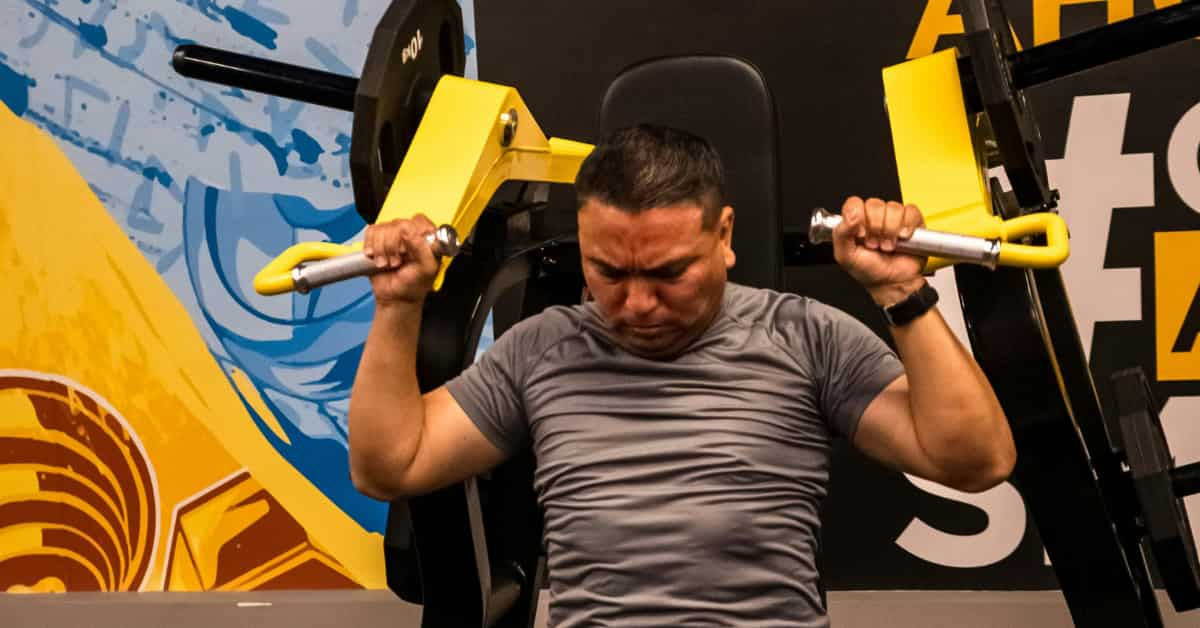
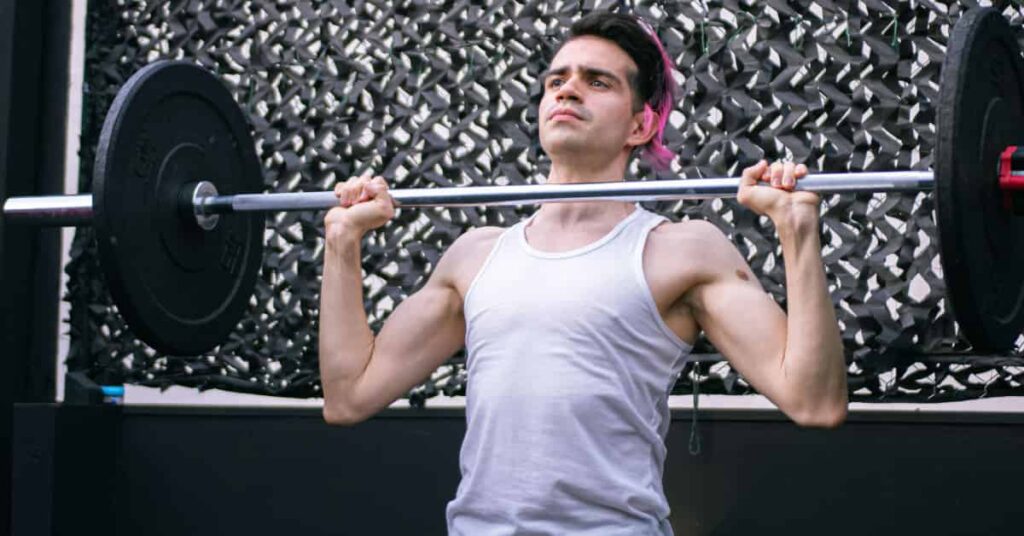
The shoulder press, also understood as the overhead press, is a fundamental compound exercise or movement especially designed to strengthen and sculpt the deltoid muscles while working the triceps & upper back. Completed either seated or standing using dumbbells, a barbell, or a machine, the training involves pushing a weight vertically from shoulder height until the arms are fully extended or stretched overhead. Above its reputation for building impressive upper-body width & power, the shoulder press is vital for enhancing scapular stability & functional overhead mobility, making it a cornerstone lift for both athletic performance & regular physical health.
Shoulder Press
While the training is a staple for aesthetics, its actual value lies in the synergistic recruitment of the core & stabilizing muscles. When performed in a standing position, the body must engage the abdominals, glutes, & spinal erectors to keep a rigid torso & prevent the lower back from arching under the load. It makes the shoulder press a total-body exercise that bridges the gap between raw strength & functional balance. By mastering the rhythm of the lift, clearing the chin & locking out the elbows, people can particularly enhance their vertical pushing power & long-term joint integrity.
Shoulder Press Form and Instructions
Conquering the shoulder press needs a blend of vertical power & rigid stability. Whether you are using a barbell or dumbbells, the goal is to shift the weight in a straight vertical line while keeping the joints protected.
Step-by-Step Instructions
- The Setup: Stand with the feet hip-width apart (or sit on a bench with back support). If utilizing a barbell, grip it slightly wider than shoulder-width. If using dumbbells, keep them at shoulder height, palms facing forward or slightly inward.
- Brace Your Pillar: Before you lift, squeeze the glutes and tighten the core as if you are about to take a punch. The “bracing” helps prevent arching in the lower back.
- The Press: Exhale and drive the weight upward. Keep the forearms vertical and the elbows slightly tucked forward at about a 45-degree angle. rather than flared out to the sides.
- The Lockout: Push until the arms are fully extended. If utilizing a barbell, move the head slightly forward (“head through the window”) once the bar clears the forehead to align the weight over the spine.
- Controlled Descent: Inhale as you slowly or steadily lower the weight back to the starting position. Do not let the weight “drop”; controlling the eccentric (lowering) phase is where much of the muscle growth occurs.
shoulder press target muscles
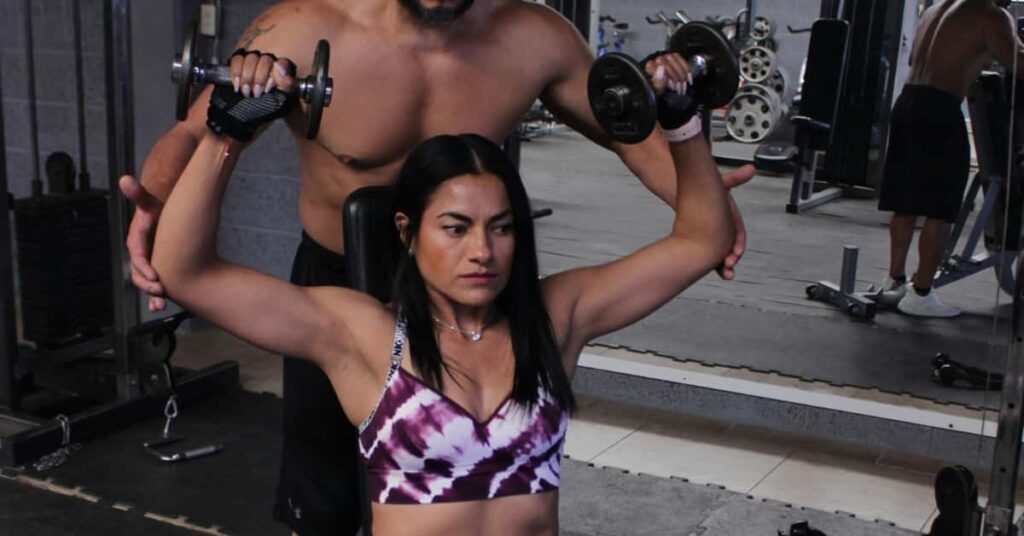
The shoulder press is a multi-joint compound activity, meaning it recruits several muscle groups simultaneously. At the same time, the shoulders do the heavy lifting; the arms, chest, & core act as critical power sources & stabilizers.
Primary Target Muscles
These are the “prime movers” accountable for the majority of the lifting force:
- Anterior Deltoid (Front Shoulder): The most active muscle during the press. It is responsible for lifting the arm forward & upward.
- Medial Deltoid (Side Shoulder): Delivers the “width” of the shoulder. It is laboriously engaged to stabilize the weight & push it vertically, especially when using dumbbells.
- Triceps Brachii: Found on the back of the arm, the triceps are liable for extending the elbow to “lock out” the weight at the top of the rep.
Secondary & Stabilizing Muscles
These muscles help the preliminary movers work to keep the body balanced:
- Upper Pectoralis Major (Upper Chest): The “clavicular head” of the chest helps initiate the lift from the shoulder level.
- Trapezius (Upper & Middle Back): The “traps” stabilize the shoulder blades (scapulae) and support rotating them upward as you reach overhead.
- Serratus Anterior: Often called the “boxer’s muscle,” it runs along the ribs & helps keep the shoulder blades pinned to the ribcage for a stable base.
- Core (Abs & Obliques): Mostly in a standing press, the core acts as a “pillar” to prevent the spine from bending or arching under the weight.
Muscle Activation Comparison
| Feature | Barbell Press | Dumbbell Press |
| Anterior Deltoid | High (Primary focus) | High |
| Medial Deltoid | Moderate | Higher (requires more balance) |
| Triceps | Highest (allows for heavier load) | High |
| Core Activation | High (Standing) | Highest (requires independent arm control) |
Shoulder Press Benefits
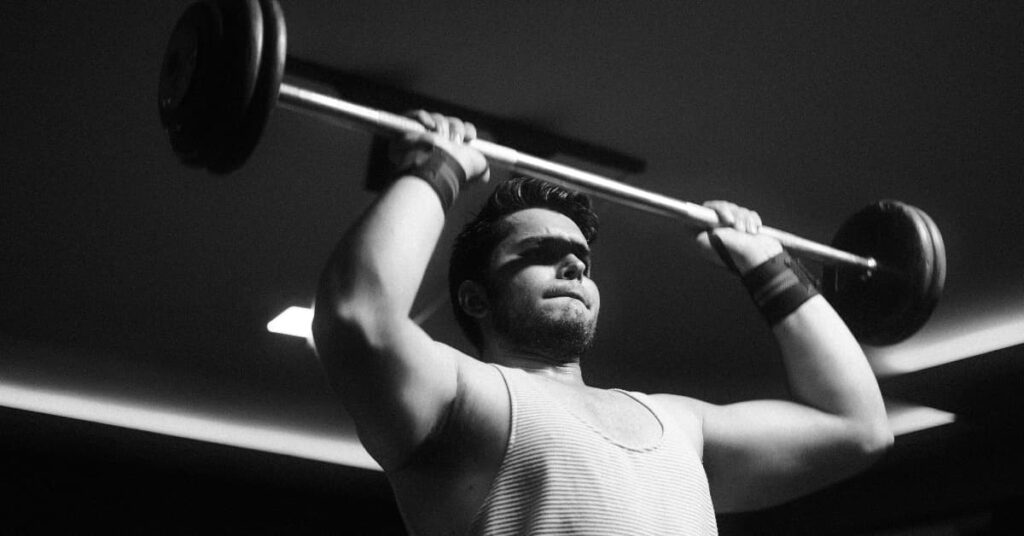
The shoulder press is often considered the “gold standard” for measuring upper-body strength. Beyond just building muscle, it offers a wide range of functional and physiological benefits.
1. Functional Strength & Daily Utility
The shoulder press is a functional training that mimics real-world actions. Whether you are lifting a heavy box onto a high shelf, placing luggage in an overhead bin, or lifting a child, the overhead press builds the exact strength & coordination needed for these tasks.
2. Core Stability & Posture
When you press weight overhead significantly while standing, the core must work overtime to stabilize the spine.
- Anti-Extension: The abs & obliques engage to prevent the lower back from arching.
- Spinal Support: It strengthens the erector spinae (muscles along the spine), enabling the shoulders to be pulled back & improving overall posture.
3. Increased Bone Density
As a weight-bearing activity, the shoulder press puts healthy “stress” on the bones in the arms, shoulders, & spine. This mechanical load triggers osteoblasts (bone-building cells) to increase bone mineral density, a key factor in preventing osteoporosis & fractures as you age.
4. Performance “Carryover.”
Strength gained in the shoulder press translates straight to other lifts and sports:
- Bench Press: More powerful shoulders provide a more stable base & better “drive” for chest-focused pressing.
- Athletic Power: It enhances performance in sports demanding overhead force, such as volleyball, swimming, tennis, & basketball.
shoulder press variations
To keep the training effective and prevent plateaus, you can swap the standard press for these ordinary variations. Each one shifts the focus slightly, prioritizing either raw power, muscle “rounding,” or joint safety.
1. The Arnold Press
Anointed after Arnold Schwarzenegger, this variation involves a 180-degree wrist rotation.
- The Movement: Begin with dumbbells in front of the chest, palms facing you. As you press up, rotate the hands so palms face forward at the top.
- The Benefit: It targets all three heads of the deltoids (front, side, & rear) more evenly than a standard press & improves the total range of motion.
2. The Push Press
It is a “power” variation that uses a lower-body “dip” to assist in moving the weight.
- The Movement: Perform a quick quarter-squat & then explosively drive upward through the legs to help launch the bar or dumbbells overhead.
- The Benefit: It allows you to lift 20-30% more weight than a strict press, which overfills the muscles & builds explosive full-body power.
3. The Z-Press
One of the most challenging variations is executed while sitting flat on to the floor with the legs spread wide.
- The Movement: Without the support of a bench or the legs, you must press the weight purely using the shoulders & core.
- The Benefit: It is the ultimate test of core stability & vertical pressing mechanics. If you lean back, you’ll lose balance, forcing you to maintain perfect upright posture.
4. Landmine Press
A fantastic “shoulder-friendly” alternative, particularly for those with limited overhead mobility.
- The Movement: Place one end of a barbell in a landmine swivel (or a corner) & press the weighted end upward at an angle.
- The Benefit: Because you are pressing at a diagonal rather than straight up, it lowers the stress on the shoulder joint & is often safer for individuals with impingement issues.
5. Military Press
Often used interchangeably with the shoulder press, but specifically refers to a standing barbell press with a very narrow “military” stance.
- The Movement: Stand with the heels touching or nearly touching.
- The Benefit: The narrow base of support makes it much harder to balance, significantly increasing the demand on the internal stabilizers and abdominal muscles.
Variation Quick-Reference
| Variation | Primary Goal | Equipment | Difficulty |
| Arnold Press | Shoulder “Pop” & Aesthetics | Dumbbells | Intermediate |
| Push Press | Raw Power & Strength | Barbell/Dumbbells | Advanced |
| Z-Press | Core Stability | Barbell/Dumbbells | Expert |
| Landmine Press | Joint Health / Rehab | Barbell | Beginner |
shoulder press alternative
If the standard shoulder press doesn’t fit the current requirements, whether due to shoulder pain, shortage of equipment, or a desire for variety, several effective alternatives target the same muscle groups.
1. The Bodyweight Alternative: Pike Push-Up
This is the best “no-equipment” replacement for the shoulder press.
- The Movement: Begin in a standard or quality push-up position, then lift the hips high until the body forms an upside-down “V.” Keeping the legs straight, lower the top of the head toward the floor between the hands, then push back up.
- Why it works: It shifts the body weight onto the shoulders & upper chest, mimicking the vertical pressing angle of a shoulder press.
2. The Shoulder-Friendly Alternative: Landmine Press
If overhead pressing causes “pinching” or pain, the landmine press is a safer diagonal option.
- The Movement: Connect one end of a barbell to a corner or landmine attachment. Have the other end at shoulder height and press it upward & forward at a 45-degree angle.
- Why it works: The diagonal path is more natural for the shoulder joint and lowers the demand for perfect overhead mobility, making it ideal for those with limited flexibility.
3. The “No-Press” Alternative: Dumbbell Raise Combo
If you cannot press weight overhead at all (due to injury), you can still hit all the target muscles using raises.
- The Movement: Execute a Front Raise (lifting dumbbells to shoulder height in front of you) followed by a Lateral Raise (lifting dumbbells out to the sides).
- Why it works: These isolation drives target the anterior & medial deltoids directly without requiring the vertical “pushing” motion that can aggravate some injuries.
Precautions and Common Errors
To maximize the gains and protect the joints, it is necessary to address the fine details of the form. The shoulder is the most mobile and therefore most vulnerable joint in the body, making proper mechanics a non-negotiable part of the lift.
1. Common Errors to Avoid
- Excessive Lumbar Arching: When the weight is too heavy, numerous lifters lean back to engage the chest. It puts harmful pressure on the lower spine. The Fix: Squeeze the glutes and pull the belly button toward the spine to “lock” your torso.
- Flaring the Elbows: Pushing the elbows straight out to the sides (forming a “T”) can cause shoulder impingement, where the rotator cuff is pinched against the bone. The Fix: Keep the elbows slightly tucked forward at a 30–45-degree angle (the “scapular plane”).
- Hyperextending the Wrists: Letting the weight bend the wrists backward creates a weak link and can lead to wrist strain. The Fix: Stack the wrists directly over the elbows so the weight drives straight down through the forearm.
- Using Leg Drive (Cheating): Unless you are intentionally performing a “Push Press,” the legs should remain still. The Fix: Keep the knees “soft” but locked to ensure the shoulders are doing all the work.
2. Safety Precautions
- Proper Warm-up: Never jump into heavy pressing cold. Complete dynamic stretches like arm circles, wall slides, or light face pulls to lubricate the joint & activate the rotator cuff.
- Shoulder Mobility Check: If you cannot raise the arms straight up until the biceps touch the ears without arching the back, you may have limited mobility. In this case, use dumbbells or the landmine press until the flexibility improves.
- Avoid “Behind-the-Neck” Pressing: This variation forces the shoulder into an excessive, unnatural position, especially increasing the risk of rotator cuff tears. Stick to pressing from the front.
3. Breathing Technique (The “Brace”)
Correct breathing acts as an internal weight belt for the spine.
- Inhale & Brace: Take a deep breath into the belly (not the chest) and hold it before you start the lift. It increases the intra-abdominal pressure.
- The Ascent: Push the weight up while maintaining that tension.
- The Exhale: Exhale once you have cleared the “sticking point” or caught the very top of the movement.
- The Reset: Inhale again as you control the weight back down to the shoulders.
Conclusion
The shoulder press remains one of the most effective practices for building a strong, functional, & aesthetically balanced upper body. By integrating this compound training into your routine, you aren’t just sculpting broader shoulders; you are enhancing total-body stability, increasing bone density, & enhancing the ability to perform everyday overhead tasks with ease.