Table of Contents
Introduction
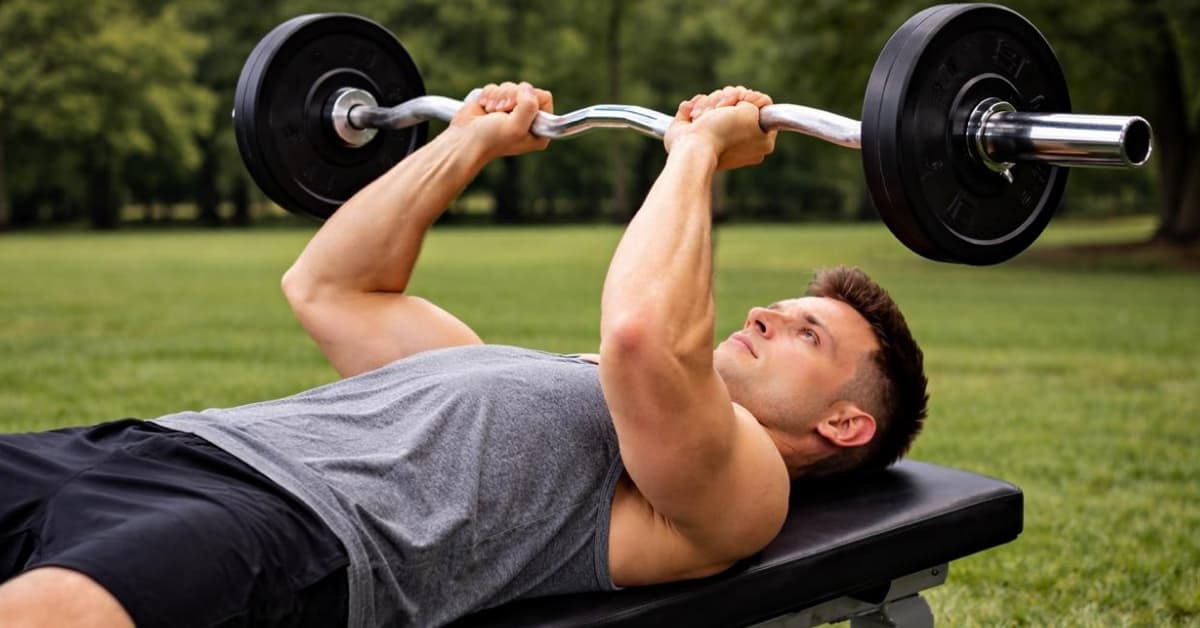
The Skull Crusher, technically understood as the lying triceps extension, is an exclusive isolation training designed to build significant mass & strength in the triceps brachii. Commonly performed lying flat on a bench with an EZ bar or dumbbells, the action involves lowering the weight toward the forehead (the “skull”) by hinging just at the elbows while keeping the upper arms stationary & perpendicular to the floor. By isolating the elbow extension, this training effectively targets 3 heads of the triceps, the long, lateral, & medial heads, making it a staple in bodybuilding & strength schedules for developing the “horseshoe” look of the back of the arms.
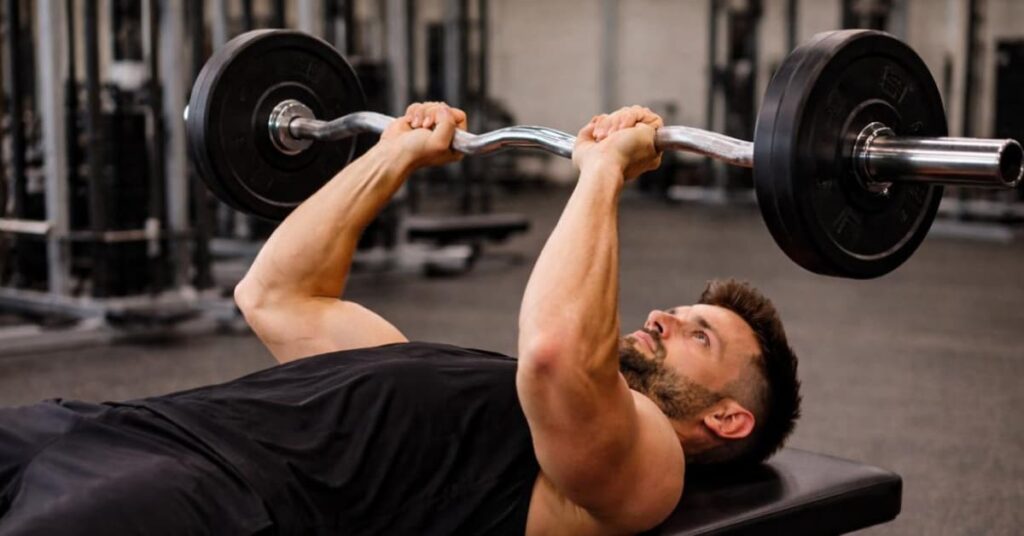
Skull Crusher
Beyond its importance for building muscle mass, the Skull Crusher is highly valued for its ability to enhance lockout strength, which is crucial for heavy pressing activities like the bench press & overhead press. Unlike many triceps movements that lose tension at the top of the activity, the Skull Crusher carries a high level of mechanical tension throughout the mid-range of the lift, particularly when performed on a slight decline or by holding the upper arms tilted little back toward the head. This precise positioning controls the triceps engaged even at full extension, making it a refined tool for breaking through strength plateaus & providing that the elbows remain stable under heavy loads.
Skull Crusher target muscles
While the Skull Crusher is especially an isolation training, indicating it focuses almost completely on one joint (the elbow), it commits several muscle groups to complete the training & maintain stability.
Primary Target: The Triceps Brachii
The Skull Crusher is designed to hammer all three “heads” of the triceps, which create up the bulk of the upper arm:
- Long Head: This is the enormous part of the tricep. Because it attaches to the shoulder blade, the Skull Crusher is extremely effective at targeting it, specifically if you lower the weight slightly behind the head.
- Medial Head: Found deeper in the arm, this head delivers a lot of the power for the final “lockout” at the top of the rep.
- Lateral Head: This is the outer part of the tricep that makes the “horseshoe” shape when considered from the side.
Secondary & Stabilizing Muscles
To keep the form steady & protect the joints, several other muscles act as “supporting actors”:
- Anterior Deltoids (Front Shoulders): These contract isometrically to keep the upper arms vertical & steady as the weight moves.
- Forearms & Wrists: These muscles work hard to grip the bar & prevent the wrists from collapsing or bending under the weight.
- Pectoralis Major (Chest): Your upper chest delivers a small amount of stability to keep the arms from drifting backward toward the floor.
- Core (Abs and Obliques): The core engages to keep the back flat against the bench and prevent the ribcage from flaring up as you lower the weight.
Skull Crusher Instructions and Form
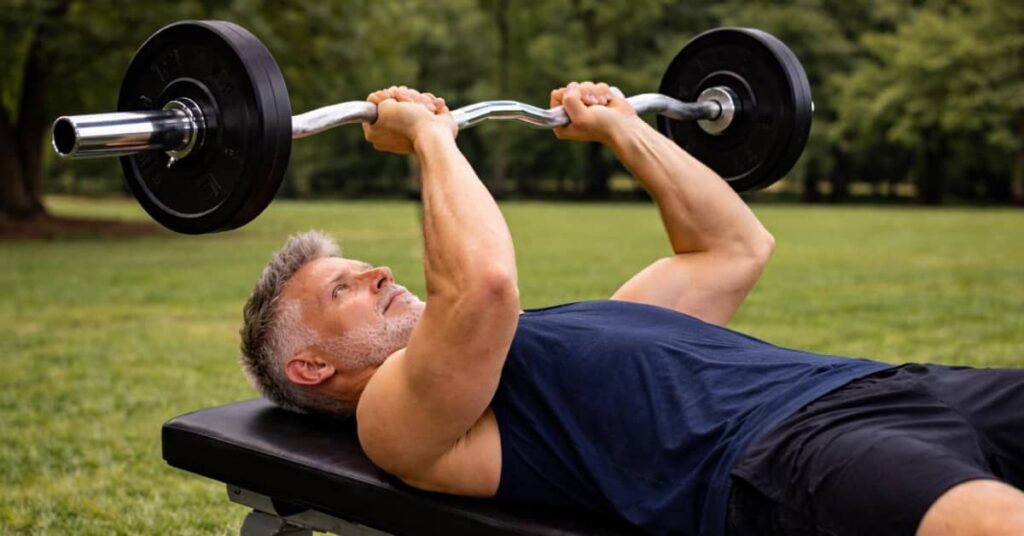
Here are the crucial points for Skull Crusher form & instructions:
The Setup
- Lie Flat: Back flat on the bench, feet firmly on the floor.
- Grip: Hold an EZ-bar or dumbbells with a shoulder-width grip.
- Starting Position: Arms extended, but tilted 15° back toward the head (not straight up).
The Movement
- Freeze the Shoulders: Keep the upper arms perfectly still; only the forearms should move.
- The Lowering: Bend the elbows to lower the weight toward the forehead or just behind the head.
- The Squeeze: Extend the arms back to the start & squeeze the triceps hard at the top.
Critical Form Checks
- Tuck the Elbows: Keep elbows pointing forward; do not let them flare out.
- Slow Tempo: Lower the weight for 2–4 seconds, then hold it constant.
- Straight Wrists: Keep wrists stiff to bypass strain.
- Range of Motion: Go deep enough that the elbows bend past 90 degrees.
Skull Crusher Benefits
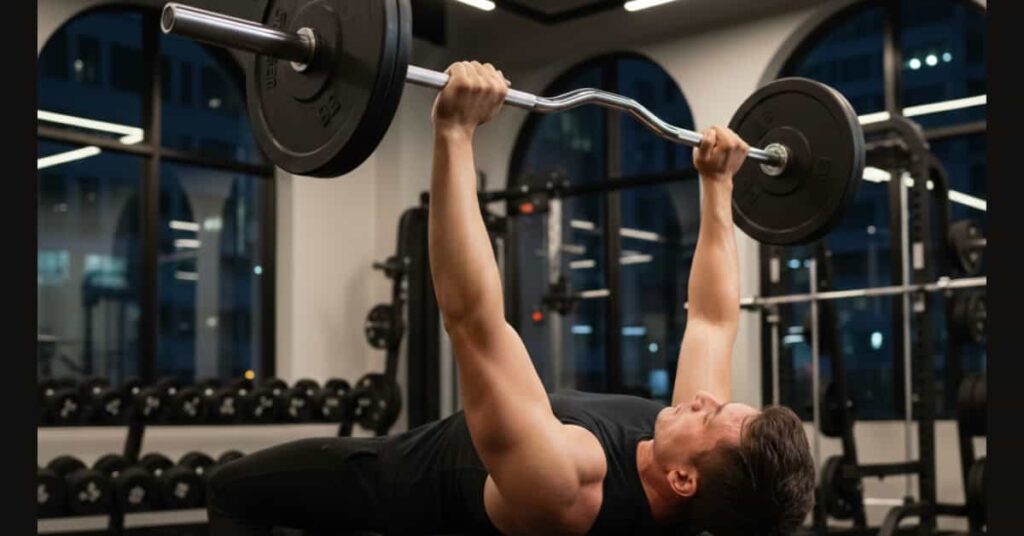
Skull crushers (scientifically understood as lying triceps extensions) are one of the most effective isolation movements for building the back of the arms. Because the activity involves a deep stretch under load, it offers distinct benefits for both aesthetic appeal & athletic performance.
Here are the immediate benefits of incorporating skull crushers into the routine:
1. Complete Triceps Development
While many triceps movements favor one part of the muscle, skull crushers are renowned for hitting all three “heads” of the triceps:
- Long Head: Found on the inner back of the arm; it makes up the most mass. Skull crushers provide a deep stretch to this head, which is important for arm “thickness.”
- Medial & Lateral Heads: These provide the “horseshoe” look. Skull crushers encounter these heavily during the lockout phase.
2. Improved Compound Lifting Power
Stronger triceps translate instantly to better performance in “push” activities. The triceps are the preliminary “lockout” muscles in:
- Bench Press: Allows you push the bar through the final few inches.
- Overhead Press: Provides the stability & power to get the weight fully above the head.
- Dips and Push-ups: Improve endurance & strength for bodyweight movements.
3. Greater Muscle Hypertrophy (Growth)
Skull crushers load the triceps in a lengthened position. Analysis suggests that training muscles in a stretched state (eccentric loading) can trigger more muscle growth than activities that only work the muscle in a shortened state (like triceps kickbacks).
4. Versatility and Scalability
You don’t need a precise machine to reap the benefits. This activity can be adapted to the equipment and joint health:
- EZ Bar: The most famous choice; the angled grip relieves strain on the wrists.
- Dumbbells: Allow for a great range of movement and help fix muscle imbalances by forcing each arm to work alone.
- Cables: Provide “constant tension” throughout the entire campaign, unlike free weights, where the tension drops off at the top.
5. Joint Stability and Health
When executed with proper form (maintained weight, no elbow flaring), skull crushers strengthen the tendons around the elbow & the stabilizers in the shoulder. This builds a more resilient upper body for daily tasks & sports like basketball or volleyball.
Skull Crusher variations
While the standard flat bench skull crusher is a classic, transforming the equipment or body angle can shift the focus to different parts of the triceps or make the move safer for “cranky” elbows.
Here are the most useful skull crusher variations:
1. Equipment Variations
- Dumbbell Skull Crushers (Neutral Grip):
- The Benefit: By having the dumbbells with a “hammer” grip (palms facing each other), you put the wrists & elbows in a more natural alignment. This is often the most suitable choice for joint health.
- The Difference: It forces each arm to work alone, correcting muscle imbalances.
- EZ Bar Skull Crushers:
- The Benefit: The undulating handle of the EZ bar permits a semi-supinated grip, which greatly eases the strain on the wrists compared to a straight barbell.
- The Difference: It permits heavier loading than dumbbells, causing it great for building pure strength.
- Cable Skull Crushers:
- The Benefit: Unlike free weights, where tension drops off at the top of the activity, cables provide constant tension throughout the entire range of motion.
- The Difference: Incredibly safe to take to “failure” because you can simply let go of the bar without the chance of a weight dropping on you.
2. Bench Angle Variations
- Incline Skull Crushers:
- The Benefit: Placing the bench at a 30-45 degree incline puts the triceps in a more extended position at the start.
- The Target: This places a tremendous emphasis on the long head (the largest part of the triceps), which is critical for overall arm thickness.
- Decline Skull Crushers:
- The Benefit: The decline angle changes the “line of pull,” permitting you to lower the weight further past the head.
- The Target: It delivers a greater range of motion and keeps higher tension on the triceps during the lockout phase compared to the flat version.
3. Advanced Form Variations
- The “Behind the Head” Extension:
- The Change: Rather than lowering the bar to the forehead, you lower it past the top of the head toward the bench.
- Why do it? This removes the “skull-crushing” danger & shifts the stress from the elbow tendons onto the muscle belly, making it much more elbow-friendly.
- JM Press:
- The Change: A hybrid between a close-grip bench press & a skull crusher. You lower the bar toward the upper chest/neck while keeping the elbows tucked.
- Why do it? It allows you to move especially more weight, making it a favorite for powerlifters looking to enhance their bench press lockout.
Comparison Table: Which variation is right for you?
| Variation | Primary Goal | Joint Impact | Difficulty |
| Dumbbell | Fixing imbalances | Very Low | Beginner |
| EZ Bar | Max Strength/Mass | Moderate | Intermediate |
| Incline | Long Head Growth | Moderate | Intermediate |
| Cable | Constant Tension | Low | Beginner |
| JM Press | Lockout Power | High | Advanced |
Skull Crusher alternatives
If you’re bypassing skull crushers due to equipment limits or elbow pain, here are the best options categorized by their immediate benefit:
For Raw Power (Compound)
- Close-Grip Bench Press: Best for lifting the heaviest weight; great for overall arm thickness.
- Weighted Dips: The “squat of the upper body” makes massive triceps & pressing strength.
- JM Press: A hybrid between a bench press & a skull crusher; elite for bench press lockout power.
For Size & Stretch (Isolation)
- Overhead Cable Extensions: Focuses on the long head (the inner back of the arm) by delivering a deep stretch.
- Dumbbell French Press: Can be done seated or standing; concentrates on the stretch without the “skull-crushing” risk.
- PJR Pullovers: A pullover variation with a deep elbow bend; delivers the most intense triceps stretch possible.
For Joint Health (Elbow-Friendly)
- Cable Pushdowns (Rope): The safest choice; delivers constant tension without the heavy shearing force on the elbows.
- Dumbbell Floor Press: The floor limits the range of motion, stopping you from over-stretching “cranky” elbows.
- Tate Press: A technical dumbbell move that hits the triceps at a special angle while being very easy on the joints.
No Equipment (Bodyweight)
- Diamond Push-ups: Hands form a diamond shape; the most useful bodyweight triceps builder.
- Bodyweight Skull Crushers: Utilize a waist-high bar or table; lean into the weight of your own body.
Precautions and Common Errors
To maximize triceps growth and avoid the “elbow tax” that often comes with this exercise, keep these small, important points in mind.
Common Errors
- Elbow Flaring: Allowing elbows point out to the sides. This shifts the load to the chest/shoulders & strains the elbow joints.
- Ego Lifting: Utilizing a weight that is too heavy. This normally leads to “cheating” by swinging the upper arms or arching the back.
- Moving the Upper Arms: Letting the upper arms move back & forth like a pullover. Your upper arms should stay locked & perpendicular to the floor (or slightly angled back).
- Locked Elbows: Snapping the elbows into a hard lockout at the top. This transfers the weight from the muscle to the joint.
- Short Reps: Eliminating the weight is too high. Not going deep enough misses the “stretch” phase, where most muscle development happens.
Critical Precautions
- Lower Behind the Head: Rather than aiming for the forehead, decrease the weight toward the top of the bench. This is much safer for the elbows & delivers a better stretch.
- Wrist Alignment: Keep the wrists straight. Letting them “break” or bend backward under the weight can cause strain & weaken the grip.
- Controlled Descent: Never drop the weight fast. Use a 3-second “negative” to keep the triceps under tension & protect the skull.
- The “Greasy” Elbow Hack: If you feel pain, try a “neutral grip” with dumbbells (palms confronting each other). This is the most joint-friendly way to complete the move.
- Higher Reps: Treat skull crushers as a “pump” training. Stick to 10–15 reps rather than attempting to lift heavy for 3–5 reps.
Conclusion
The skull crusher is an important isolation movement for anyone looking to build powerful arm thickness & pressing power. By delivering a deep stretch to the triceps, particularly the long head, it triggers superior muscle development compared to most other activities. Nevertheless, success relies on precision; keeping the elbows tucked & holding the weight behind the head is vital for protecting the joints. Whether you utilize a barbell, dumbbells, or cables, getting this lift will instantly improve the bench press and give the arms that classic “horseshoe” look.