Table of Contents
Introduction
Tricep dips are efficient compound bodyweight movements designed to strengthen and define the muscles on the back of the upper arm, known as the triceps brachii. By supporting the body weight with the hands & lowering the hips toward the floor, you engage not only the triceps but also the anterior deltoids, chest, & core for stability.
This universal movement or exercise may be performed on various surfaces such as parallel bars, a sturdy bench, or even a chair, making it a staple in both gym-based and home workout routines. Because the intensity can be easily adjusted by adjusting leg positioning or adding weight, tricep dips are suitable for wide range of fitness levels looking to enhance upper-body pushing power and muscle tone.
Tricep Dips
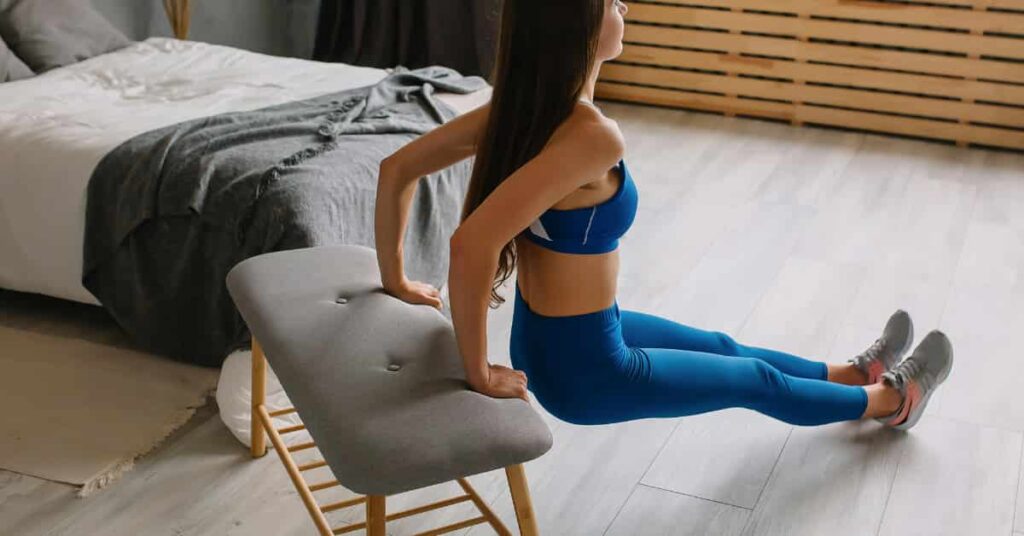
Tricep dips are a simple yet powerful movement that strengthens the back of the arms, also known as the triceps. To do them, you grip the edge of a sturdy surface, such as a chair, bench, or parallel bars, and utilize the arms to lower and lift the body weight. This activity is great for building “pushing” strength and toning the arms, but it also works the shoulders and chest. Because you can make them more comfortable by bending the knees or harder by straightening the legs, they are a perfect addition to almost any workout routine, whether you are at home or in a gym.
Tricep Dips: Form and instructions
- Hand Placement: Grab the edge of a bench or bars with hands shoulder-width apart.
- Chest Up: Keep the chest open and proud; do not let the chest collapse forward.
- Shoulder Position: Keep shoulders pulled down and away from the ears (don’t shrug).
- Elbow Direction: Point elbows straight back behind you, not out to the sides.
- The Descent: Lower yourself until your elbows reach 90 °.
- Body Proximity: Keep the back/butt very close to the bench to avoid shoulder strain.
- Full Extension: Push up until arms are straight, but avoid “locking” the elbows.
- Core Control: Keep the abs tight to prevent the body from swinging.
Tricep Dip Muscles Worked
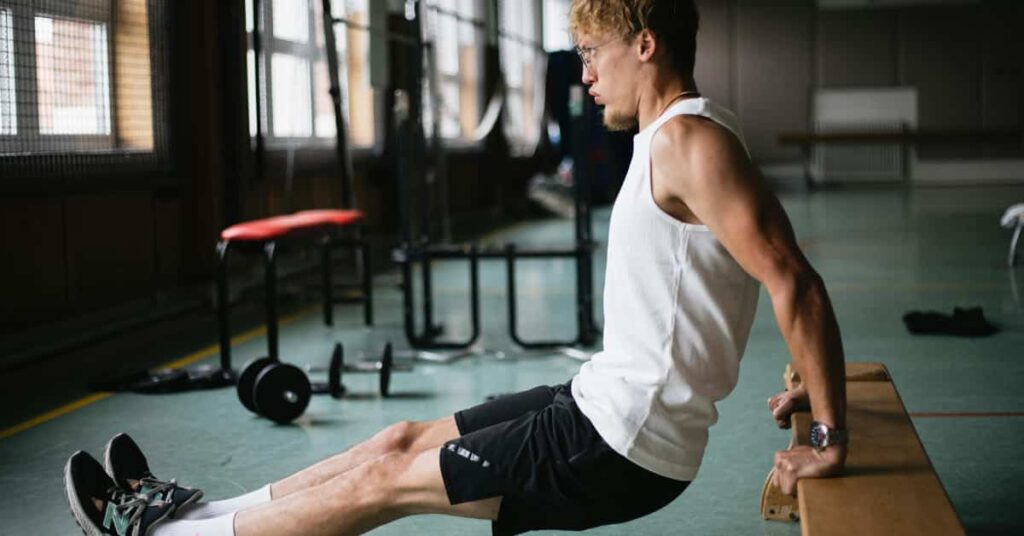
Tricep dips are one of the most useful compound movements or exercise because they engage multiple muscle groups across the arms, chest, & shoulders simultaneously.
Primary Muscles (The Movers)
These muscles do the majority of the heavy lifting:
- Triceps Brachii: The star of the show. Dips hit all three heads (long, lateral, & medial), though they particularly excel at targeting the medial and lateral heads for that “horseshoe” look.
- Anterior Deltoid: The front part of the shoulder helps stabilize the joint & assists in pushing the body weight back up.
- Pectoralis Major & Minor: Your chest muscles work alongside the triceps, especially during the bottom half of the activity.
Secondary & Stabilizing Muscles
These muscles provide support to help you stay balanced & keep the form intact:
- Trapezius & Rhomboids: These muscles in the upper back help keep the shoulders pulled back and down, preventing you from shrugging.
- Latissimus Dorsi (Lats): Your “wing” muscles provide stability as you lower your body.
- Core (Rectus Abdominis & Obliques): Your midsection stays tight to prevent the torso from swinging or the hips from sagging.
- Forearms: The hold on the bar or bench engages the muscles in the wrists & forearms to keep a steady base.

Tricep Dips Benefits
Tricep dips are often called the “squat of the upper body” because they are a foundational movement that delivers a broad range of physical benefits.
10 Key Benefits of Tricep Dips
- High Tricep Activation: The American Council on Exercise (ACE) ranks dips among the most valuable exercises for isolating & strengthening all three heads of the triceps.
- Increased Arm Size: Because the triceps make up roughly 60% of the upper arm, mastering dips is the fastest way to build thicker, more defined arms.
- Compound Efficiency: While focusing on the arms, dips also engage the chest (pectoralis major) & front shoulders (deltoid).
- Core Stabilization: Whether on a bench or bars, the core must remain tight to stabilize the hips, effectively turning the move into a “hidden” ab workout.
- Improved “Push” Strength: The strength gained from dips directly enhances the performance in other heavy lifts, such as the bench press & overhead press.
- Functional Movement: Dips mimic real-life actions, such as pushing yourself up from a chair or pushing a heavy object away from your body.
- Joint Health & Flexibility: When performed with proper form, dips enhance shoulder range of motion & strengthen the connective tissues around the elbows.
- Extreme Versatility: You don’t need a gym; you can complete them anywhere using a sturdy chair, a park bench, or even a staircase.
- Easy Scalability: Beginners can keep their knees bent to ease the load, while advanced athletes can add weight or use gymnastic rings to increase the challenge.
- Metabolic Boost: As a compound bodyweight exercise, dips burn more calories than isolation movements (like bicep curls) & help boost the resting metabolism.
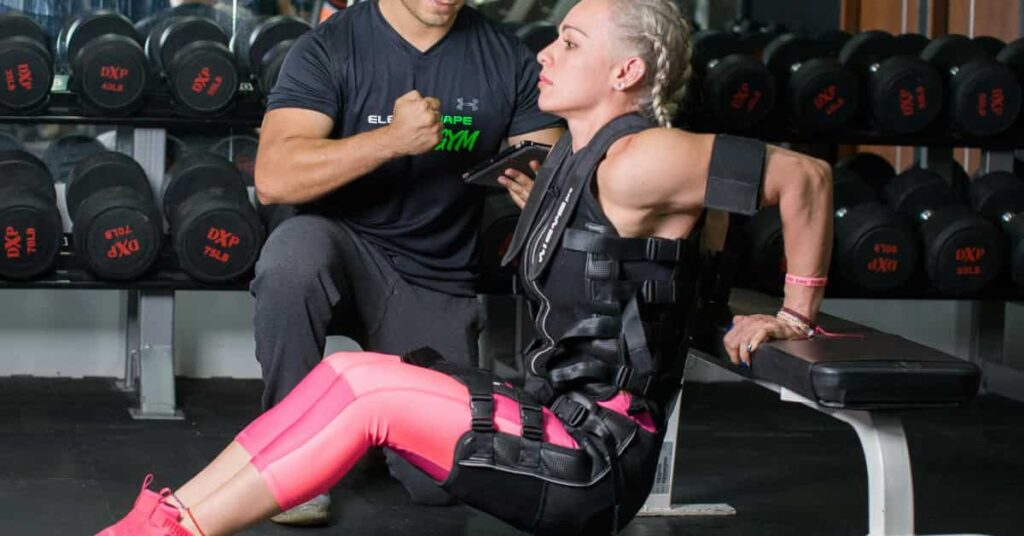
Tricep Dips variations
Tricep dips can be adjusted for any fitness level. Below are the variations categorized by difficulty, progressing from beginner to expert.
1. Beginner Variations (Lower Resistance)
- Bent-Knee Bench Dips: Perform on a bench or chair with knees bent and also feet flat on the floor. It uses the legs to take some of the weight off the arms.
- Floor Dips: Sit on the floor with knees bent, hands behind you, & lift the hips. It has the smallest range of motion & is the easiest way to start.
- Assisted Dip Machine: Common in gyms; you kneel on a weighted platform that pushes upward, making or creating the body feel lighter.
2. Intermediate Variations (Full Bodyweight)
- Straight-Leg Bench Dips: Extend the legs straight out in front of you. It enhance the weight the triceps must lift.
- Elevated-Foot Bench Dips: Put the feet on a second bench or chair of equal height. It shifts even more weight onto the upper body.
- Parallel Bar Dips (Tricep Focus): Support the full weight on two bars. Keep the body completely vertical & elbows tucked to keep the focus on the triceps rather than the chest.
3. Advanced & Expert Variations (High Intensity)
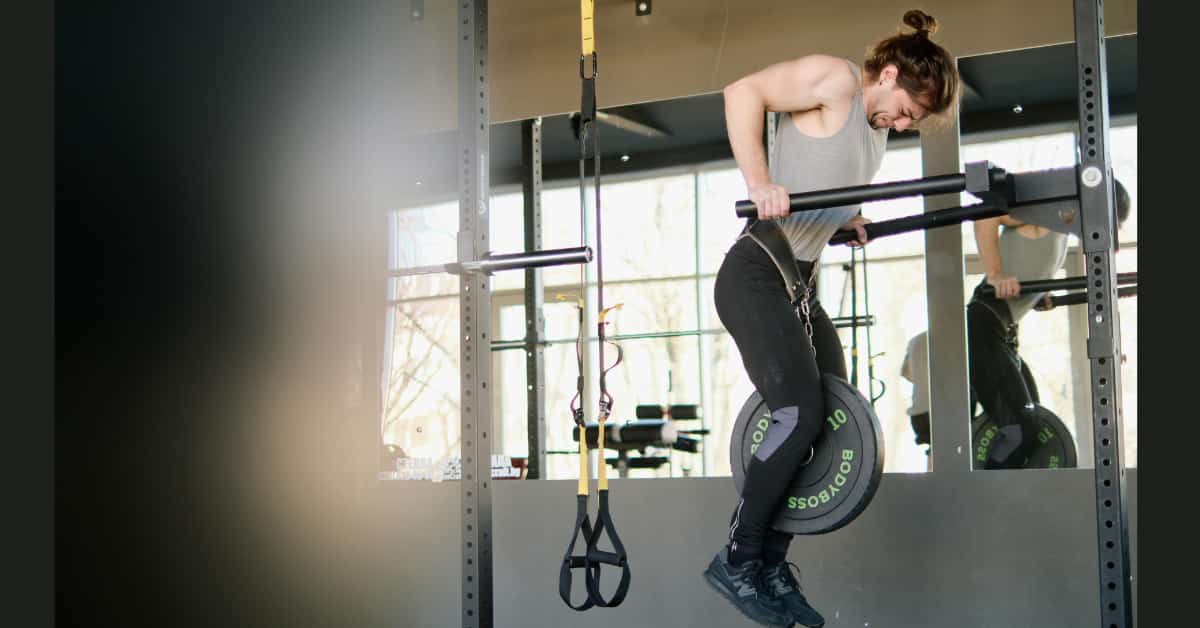
- Weighted Dips: Wear a dip belt with plates or hold a dumbbell between the feet to increase resistance beyond the body weight.
- Ring Dips: Utilize gymnastics rings. Because the rings move, the triceps and core must work extremely hard to keep you stable.
- L-Sit Dips: While on parallel bars, hold the legs straight out in front of you while dipping. It needs extreme core and tricep strength.
- Single-Arm Dips: A rare, high-level feat performed on a bench, placing all the weight on one arm at a time.
Tricep Dip Alternatives
If tricep dips are too hard, that cause shoulder pain, or you want to switch things up, here are the great options categorized by how they work:
1. Bodyweight Alternatives (No Equipment)
- Diamond Push-Ups: Place the hands together so the index fingers & thumbs form a diamond shape. This narrow grip shifts the focus from the chest directly to the triceps.
- Close-Grip Push-Ups: Similar to a standard push-up, but keep the hands directly under the shoulders and the elbows tucked tight against the ribs.
- Plank to Push-Up: Begin in a forearm plank and push yourself up into a high plank one arm at a time. It builds stability and tricep endurance.
2. Gym & Weight Alternatives
- Close-Grip Bench Press: Using a barbell, keep the hands about shoulder-width apart. It is the best way to “overload” the triceps with heavy weight without the shoulder strain of a dip.
- Skull Crushers: Lying on a bench, lower a bar or dumbbells toward the forehead by bending only at the elbows. It targets the triceps’ “long head ” explicitly.
- Tricep Pushdowns: Utilizing or using a cable machine with a rope or bar, push the weight down until the arms are straight. It provides constant tension throughout the movie.
- Overhead Dumbbell Extension: Hold one dumbbell with both hands & lower it behind the head. It stretches and strengthens the triceps in a way that dips cannot.
3. Shoulder-Friendly Alternatives
If dips hurt the shoulders, these options limit the range of motion to keep the joint safe:
- Floor Press: Perform a chest press while lying on the floor. The floor stops the elbows from going too deep, protecting the shoulder capsule.
- Dumbbell Kickbacks: Lean forward & extend the arm straight back. It isolates the tricep without putting any vertical pressure on the shoulder joint.
Tricep Dips at home
Performing tricep dips at home is one of the most valuable ways to build upper-body strength without needing a gym. You can adapt the practice using everyday household items, provided they are stable and secure.
Best Household Surfaces
- A Sturdy Chair: Use a dining chair or a heavy wooden chair. Bypass rolling office chairs or light plastic chairs that might tip or slide.
- The Edge of a Bed: Good for newbies as the surface is softer, but ensure the bed frame is solid and doesn’t move.
- A Couch or Sofa: These are very stable. Use the edge of the seat cushions or the armrest if it’s firm.
- Staircase: Using the first or second step is fantastic because you have plenty of room for your feet and can easily adjust your depth.
- The Floor: If you have no furniture, you can do “Floor Dips” (sitting like a crab and pulsing your hips).
Quick Tips for Home Safety
- Wall Support: If you’re using a chair, place the back of it against a wall so it cannot slide backward while you’re dipping.
- Hand Grip: Make sure the palms are flat, and the fingers are wrapped over the edge to prevent the hands from slipping.
- Footing: Wear shoes or work on a non-slip rug. Doing dips in socks on a wooden floor can cause the feet to slide out from under you.
- Clear Space: Ensure there are no objects behind you; you want a clear path for the hips to move vertically.
How to Progress at Home
- Level 1 (Easiest): Feet close to the chair with knees bent.
- Level 2 (Medium): Legs straight out in front of you.
- Level 3 (Hard): Feet elevated on a second chair or a footstool.
- Level 4 (Expert): Hold a heavy book or a water jug in the lap to add weight.
Precautions and Common Errors
To perform tricep dips safely & effectively, you must focus on protecting the shoulders & wrists. Below are the most necessary precautions & the most common errors to avoid.
Top 5 Precautions
- Warm-Up First: Never perform dips with “cold” shoulders. Do 2–3 minutes of arm circles & light push-ups to lubricate the joints.
- Check Surface Stability: Ensure the bench or chair is pushed against a wall. If it slides backward while you are mid-rep, it can generate a serious shoulder injury.
- Wrist Alignment: Keep the wrists in a neutral (straight) position. If they bend too far back, use “parallettes” or dumbbells as handles to take the pressure off.
- Stop at Pain: There is a difference between “muscle burn” and “joint pain.” If you feel a sharp pinch in the shoulder or sternum, stop immediately.
- Avoid Ego Lifting: If you are a beginner, don’t try to add extra weight or straighten your legs until you can do 15 clean reps with bent knees.
Common Errors (and how to fix them)
| Common Error | The Risk | The Fix |
| Shrugging Shoulders | Causes neck strain and shoulder impingement. | Actively push your shoulders down and away from your ears. |
| Going Too Deep | Stretches and weakens the anterior shoulder capsule. | Stop when your elbows reach a 90° angle (arms parallel to the floor). |
| Flaring Elbows | Shifts the work to your chest and strains the elbow joint. | Keep your elbows tucked in and pointing straight back. |
| Drifting Forward | Creates a “shearing” force on the shoulder joint. | Keep your back and glutes shaving the edge of the bench or chair. |
| Using Momentum | Keep your back and glutes on the edge of the bench or chair. | Use a controlled tempo: 2 seconds down, 1 second up. |
| Locking Elbows | Puts excessive stress on the bone and joint at the top. | Reduces muscle growth and increases the risk of joint injury. |
Conclusion
In conclusion, tricep dips are a cornerstone of upper-body movement, offering a strong way to build strength, size, & definition in the arms and shoulders. Whether you are a newbie using a sturdy chair at home or an advanced athlete executing weighted reps on parallel bars, the key to success lies in strict form, keeping the elbows tucked, the chest proud, and the movements controlled. By respecting the body’s limits & avoiding common errors, such as flaring the elbows or going too deep, you can turn this simple bodyweight move into a highly effective tool for long-term fitness.