

Table of Contents
Introduction
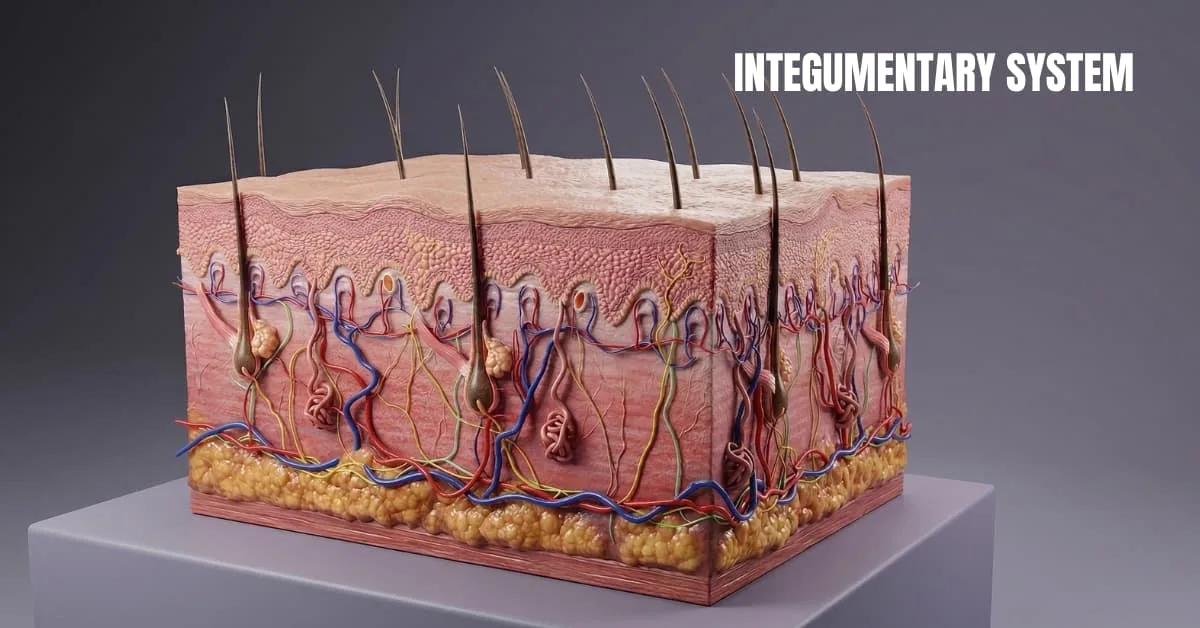
The integumentary system is the body’s most visible and comprehensive organ system, acting as a multifaceted biological shield that encompasses the skin, hair, nails, and sweat glands. Far from being a simple outer wrapping, it serves as a dynamic first line of defense, protecting internal tissues from pathogens, physical trauma, & dangerous ultraviolet radiation, while also recreating a vital role in maintaining homeostasis.
By regulating body temperature through sweat & blood flow, synthesizing vital Vitamin D from sunlight, and housing a complex network of sensory receptors which allow us to perceive touch, heat, & pain, this system functions as our direct interface with the external world. Its health & appearance often reflect our internal well-being, making it an essential element of overall human physiology.
When we think about our health, we often focus on things we can’t see, such as our heart rate, lung capacity, and digestion. But there is an entire organ system that works 24/7 to protect every other part of you, and it’s the only one you see in the mirror every single day: the Integumentary System.
Composed primarily of the skin, hair, nails, and glands, this system is far more than just a “wrapper” for the body. It is a complex, living barrier that breathes, heals, and communicates with the world around you. In this article, we’ll dive deep into how it works, the parts that make it up, and the common issues that can affect it.
What Exactly is the Integumentary System?
At its most straightforward, the integumentary system is the body’s outer layer. The word “integument” comes from the Latin integumentum, meaning “a covering.”
While it might look simple from the outside, it is, in fact, the body’s largest organ system. If you were to stretch out the skin of a normal adult or human, it would cover about 20 square feet and weigh nearly 10 pounds. It is our main interface with the environment.
Core Functions of the Integumentary System: Why We Need It
If we didn’t have this system, our internal organs would be exposed to bacteria, excessive temperatures, and harmful UV rays. Here are the primary roles it plays:
1. Protection (The First Line of Defense)
Think of the skin as a security guard. It prevents pathogens (e.g., bacteria and viruses) from entering the bloodstream. It also delivers a physical cushion against bumps, scrapes, and minor injuries. Also, it produces melanin, a pigment that helps shield the deeper cells from damaging solar radiation.
2. Temperature Regulation
The skin is like a built-in thermostat. When you get too hot, the sweat glands release moisture to cool you down through evaporation. When you’re cold, the blood vessels in the skin constrict (get narrower) to keep heat trapped near the core.
3. Sensation
Through a wide network of nerve endings, the skin tells you if something is hot, cold, sharp, or soft. It is a survival mechanism; it tells you to pull the hand away from a hot stove before you even realize you’ve been burned.
4. Vitamin D Synthesis
When sunlight hits the skin, this sunlight triggers the production of Vitamin D. This is vital for bone health and immune function.
5. Excretion
While the kidneys do the heavy lifting, the skin helps “breathe out” small amounts of metabolic waste, such as salt and urea, through sweating.
The Masterpiece of Design: Parts of the Integumentary System
To comprehend how to care for this system, we have to look at its components. It’s not just “skin”; it’s a multi-layered structure with specialized attachments.
1. The Skin (The Main Event)
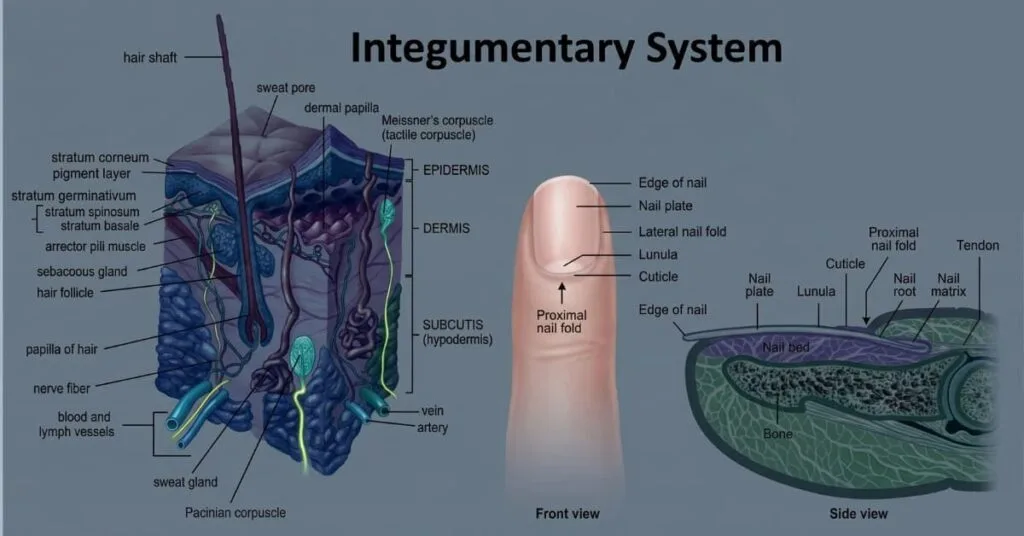
The skin is divided into three preliminary layers:
- The Epidermis: The thin, outermost layer. It is what you touch. It’s waterproof and constantly shedding dead cells to make room for new ones.
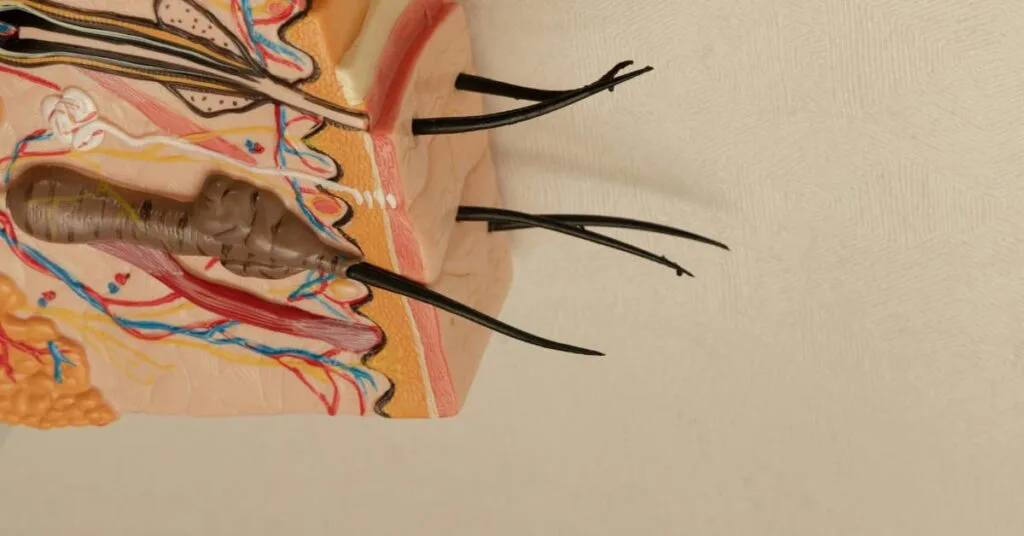
- The Dermis: The “thick” middle layer. It includes the tough connective tissue, hair follicles, and sweat glands. It is where the skin’s “machinery” lives.
- The Hypodermis (Subcutaneous Layer): The deepest layer is made of fat and connective tissue. It acts as an insulator and a shock absorber.
2. Hair
Hair isn’t just for style. It assists with insulation and protection. For example, eyelashes protect our eyes from dust, and the hair on our heads protects the scalp from sun damage.
3. Nails
Made of a tough protein named keratin, nails cover the sensitive tips of the fingers and toes. They also allow us to pick up small objects and provide structural support.
4. Glands
- Sebaceous Glands: These produce oil (sebum) that helps moisturize the skin & hair, preventing them from becoming brittle.
- Sweat Glands: Essential for cooling the body and maintaining salt balance.
Common Diseases and Disorders of the Integumentary System
Because the integumentary system is on the front lines, it is prone to a wide range of conditions. Some are minor annoyances, while others require serious medical attention.
1. Acne
Perhaps the most familiar skin condition in the world. It happens when hairs follicles become plugged with oil and dead skin cells.
- Example: A teenager undergoing a “breakout” before a big event is usually dealing with an overproduction of sebum triggered by hormones.
2. Eczema (Atopic Dermatitis)
It is an inflammatory condition that causes the skin to become red, itchy, and cracked. It’s often linked to an overactive immune system or environmental triggers.
- Example: Somebody might notice their hands get extremely dry and itchy every time they use a specific brand of scented soap.
3. Psoriasis
A chronic autoimmune disorder where skin cells build up too quickly, forming scales and itchy, dry patches. Unlike a normal skin cycle, which takes weeks, psoriasis causes cells to rise to the surface in days.
4. Skin Cancer
It is the most serious threat to the integumentary system. The 3 main kinds are Basal Cell Carcinoma, Squamous Cell Carcinoma, & the most dangerous, Melanoma. These are largely caused by cumulative UV damage from the sun or tanning beds.
5. Fungal Infections
Situations like Athlete’s Foot or Ringworm occur when fungi thrive in warm or hot, moist areas of the skin.
- Example: Forgetting to wear flip-flops in a public gym shower can often lead to the itchy, peeling skin associated with Athlete’s foot.

How to Keep Your Integumentary System Healthy
You wouldn’t ignore a check-engine light in the car, so don’t ignore the skin. Maintaining this system needs a two-pronged approach: what you put in the body and how you move the body.
Here is a breakdown of how to optimize the system through diet and exercise.
1. Fueling from Within: The Diet Plan
Every cell in the skin and every strand of hair is created from the building blocks you provide at mealtime.
A. Essential Nutrients for the Structure of the Integumentary System
- Protein (The Building Block): Hair and nails are primarily made of a protein called keratin, while the skin relies on collagen and elastin. Without enough protein, the skin can become thin, and the hair brittle.
- Examples: Lean meats, eggs, beans, and lentils.
- Vitamin C (The Glue): Vitamin C is a “co-factor” for collagen production. Without it, the body can’t effectively “knit” skin tissue together.
- Examples: Citrus fruits, bell peppers, strawberries, and broccoli.
- Healthy Fats (The Moisture Barrier): If the skin is chronically dry or flaky, you might be low on healthy fats. These create the oily barrier that keeps moisture trapped inside.
- Examples: Walnuts, flaxseeds, avocado, & fatty fish like salmon (rich in Omega-3s).
B. Protection and Repair
- Vitamin E (The Shield): This powerful antioxidant assists in protecting skin cells from UV damage and inflammation.
- Examples: Sunflower seeds, almonds, & spinach.
- Zinc (The Healer): Zinc is essential for cell division & wound healing. It’s often used to treat acne and skin irritations.
- Examples: Pumpkin seeds, chickpeas, and oysters.
- Hydration: Water is the most underrated “beauty” product. It supports skin elasticity (the “snap-back” factor) and helps the skin flush out metabolic waste through sweat.
2. The “Glow” Protocol: Working Out
Exercise does more than burn calories; it works as a deep-cleansing treatment for the integumentary system.
A. Improved Circulation
When you perform cardiovascular exercise (running, cycling, brisk walking), the heart pumps more blood to the extremities.
- The Benefit: This rush of blood carries oxygen and fresh nutrients directly to the dermis (the middle layer of the skin), encouraging faster cell turnover and a natural, healthy color.
B. Stress Management (The Cortisol Connection)
High stress may lead to high levels of cortisol, a hormone that can trigger acne, hair thinning, and even conditions like eczema or psoriasis flares.
- The Benefit: Routine physical activity lowers cortisol levels. By managing stress through movement, you prevent “stress-induced” skin issues before they start.
C. Sweating as a Detox
While the liver & kidneys do the heavy lifting in detoxification, sweating helps clear debris from the pores.
- Important Tip: Always wash the face and body shortly after a workout. If sweat, salt, and bacteria sit on the skin for too long, they may clog pores and lead to “backne” or breakouts.
3. Practical Daily Habits
To see real results in the skin and hair, consistency is more important than intensity.
Focus Area Action Step Why it works
Hydration Carry a 1-liter bottle and refill it twice. Plumps skin cells and reduces fine lines.
Post-Workout Rinse off within 15 minutes of finishing. Prevents bacterial buildup and “gym acne.”
Sun Protection Apply SPF even if you’re walking to the gym. Prevents the UV damage that breaks down collagen.
Snacking Swap chips for a handful of almonds or walnuts. Provides the Vitamin E and Zinc your skin craves.
4. The Power of Movement (Exercise and Skin)
Working out isn’t just for the muscles; it’s a detox for the skin.
- Increased Blood Flow: When the heart rate increases, blood vessels dilate. It sends a rush of oxygen-rich blood to the skin’s surface, giving you that “post-workout glow” and delivering nutrients to skin cells.
- Sweating it Out: Sweat helps unclog pores (make sure to wash the face afterward so the grime doesn’t settle back in!).
- Stress Reduction: Exercise lowers cortisol (the stress hormone). High cortisol levels are often linked to acne breakouts and skin aging.
5. Protection Habits
- Wear Sunscreen: This is non-negotiable. Even on cloudy days, UV rays penetrate the epidermis.
- Don’t Smoke: Smoking narrows the tiny blood vessels at the outermost layers of the skin, decreasing oxygen & making the skin look dull & aged.
- Gentle Cleansing: Stop scrubbing! Utilizing harsh chemicals or scrubbing too hard can strip away the natural oils that protect or save the skin.
Conclusion
The integumentary system is comfortable to take for granted because it’s always there. Nevertheless, it is a dynamic, living shield which mirrors our internal health. If you are stressed, dehydrated, or poorly nourished, the skin, hair, & nails will be the first to tell you.
By feeding the whole body the right nutrients, staying active to keep the circulation moving, & protecting yourself from the harsh compounds, you aren’t just looking better; you are ensuring that the body’s first line of defense remains strong for years to come. Treat the skin with the respect it deserves; after all, it’s been looking out for you since the day you were born.