Table of Contents
Introduction
When we think about staying healthy, we often focus on the heart pumping blood or the lungs taking in oxygen. But there is a silent, hardworking team in the body that is just as vital: the Excretory System, especially the Urinary System.
Think of the body like a high-end restaurant. While the digestive system handles the “kitchen” (turning food into energy), the urinary system is the “cleaning crew.” It needs that every chemical, toxin, and excess water be managed to prevent the restaurant from becoming cluttered with trash.
In this manual, we’ll break down how this system works, why it matters, and how you can keep it running or working like a well-oiled machine through simple lifestyle choices.
The urinary system, often referred to as the excretory system, serves as the body’s refined internal filtration plant, accountable for maintaining chemical balance and removing liquid waste. Comprising the kidneys, ureters, bladder, and urethra, this important system constantly monitors the bloodstream to filter out toxins, excess salts, and urea while carefully regulating water retention and blood pressure. By processing the blood and converting metabolic byproducts into urine, the system ensures that our internal environment remains stable and free of harmful buildup, effectively acting as the body’s primary defense against internal toxicity.
1. What Exactly is the Urinary System?
The primary or main job of the urinary system is to filter the blood. Every single minute, the blood passes through the kidneys to be cleaned. This process assists maintain a delicate balance of water, salts, & minerals (like sodium, calcium, & potassium) in the blood.
Without this system, the blood would quickly become toxic, leading to severe illness. It is the ultimate detoxifier, working 24/7 without you ever having to think about it.
2. Meet the Team: Key Parts and Their Functions
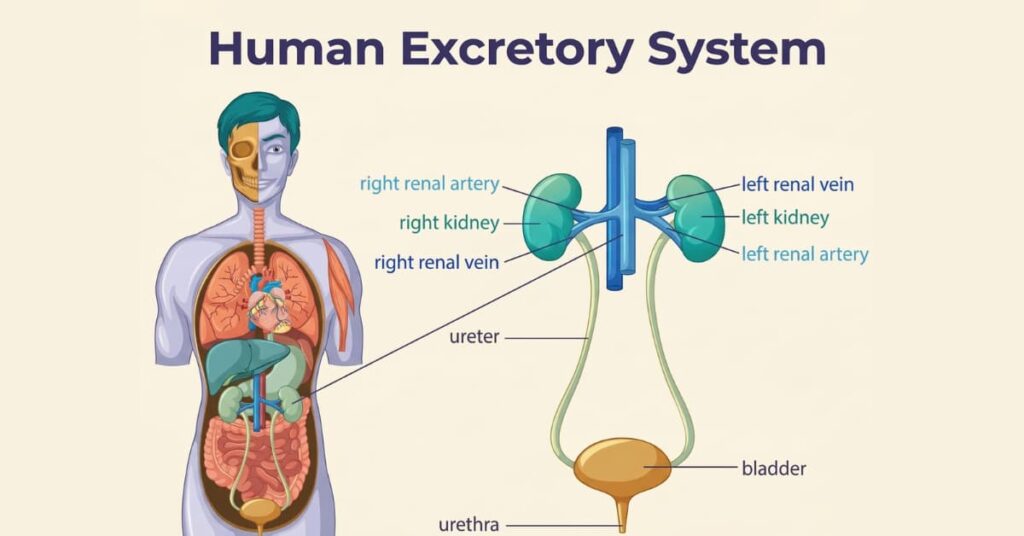
The urinary system is a “downstream” process. It begins in the mid-back & ends at the exit point. Here are the 4 main players:
The Kidneys: The Master Filters
Most individuals have two kidneys, each about the size of a computer mouse, located just below the rib cage.
- Function: They act as sophisticated sieves. Inside each kidney are millions of tiny units named nephrons. These nephrons filter waste products (such as urea) and excess water, producing urine.
- Example: Imagine pouring muddy water through a coffee filter. The clean water goes through, and the dirt stays behind. The kidneys do this with the blood.
The Ureters: The Delivery Tubes
Once the kidneys have created urine, it needs a way to travel.
- Function: These are two thin tubes (one from each kidney) which carry urine from the kidneys to the bladder. They use small muscle contractions to “squeeze” the urine downward, so it doesn’t flow back up.
The Bladder: The Storage Tank
The bladder is hollow, muscular organ that sits in the pelvis.
- Function: It’s essentially a balloon. It expands as it fills with urine. Most individuals feel the “urge” to go when the bladder is about half full. It can comfortably hold about 1.5 to 2 cups of fluid.
The Urethra: The Exit Gate
- Function: This is the tube that takes urine from the bladder out of the body. In men, the urethra is longer as it travels through the penis; in women, it is shorter, which is why women are often more prone to specific types of infections.
3. How the System Works (The Step-by-Step Process)
To comprehend how you stay healthy, you have to comprehend the flow:
- Filtration: Blood enters kidney through the renal arteries.
- Reabsorption: The kidneys are smart. As they filter, they “grab back” the good stuff, like glucose and certain minerals, and put it back into the bloodstream.
- Collection: The waste left over (urine) is contained in the center of the kidney.
- Transport: Urine is carried through the ureters.
- Storage: The bladder holds the urine until you’re ready to find a bathroom.
- Excretion: The brain signals the bladder muscles to contract and the “gate” (sphincter) to open, allowing urine to flow out of the urethra.

4. Keeping the System Healthy: The Role of Diet
What you put into the body directly affects how hard the kidneys have to work. Here is how to eat for urinary health:
Hydration is King
Water is the “solvent” that helps the kidneys flush out waste. Without enough water, waste products may build up and form crystals (the start of kidney stones).
- Tip: Look at the urine. If it’s pale yellow (like lemonade), you’re likely well-hydrated. If it’s dark (like apple juice), drink up!
Watch the Salt (Sodium)
High salt intake increases blood pressure. Since kidneys are packed with tiny blood vessels, high blood pressure is one of the greatest causes of kidney damage over time.
- Example: Instead of reaching for the salt shaker, try seasoning the food with lemon juice, garlic, or fresh herbs like parsley.
Manage Protein Intake
While protein is essential for muscle, excessive intake of animal protein can place an acidic burden on the kidneys.
- Tip: Balance the plate with an abundance of fiber-rich vegetables to help neutralize this effect.
Kidney-Friendly Superfoods
- Cranberries: Contain compounds which prevent bacteria from sticking to the bladder wall.
- Blueberries: High in antioxidants that decrease inflammation.
- Red Bell Peppers: Low in potassium (good for those watching kidney function) and high in Vitamin C.
5. Movement and the Urinary System: The “Workout” Connection
You might not think a gym session helps the bladder, but it does!
Exercise and Blood Pressure
As mentioned, the kidneys rely on healthy blood vessels. Regular cardio (walking, swimming, cycling) keeps the blood pressure stable, protecting the delicate nephrons in the kidneys.
Weight Management
Carrying excess weight may put pressure on the bladder, leading to “stress incontinence” (leaking when you cough or sneeze). Exercise helps keep the weight within a range that the bladder can comfortably handle.
Pelvic Floor Exercises (Kegels)
The bladder is held in place by a “hammock” of muscles.
- The Workout: Strengthening these muscles through Kegel exercises (the action of stopping flow of urine mid-stream) can prevent bladder leakage and improve control as you age.
6. Common Diseases and Disorders
When things go wrong in the excretory system, it’s usually quite painful or noticeable. Here are the most common issues:
1. Urinary Tract Infections (UTIs)
These occur when bacteria (usually E. coli) enter the urethra and ascend into the bladder.
- Symptoms: Burning sensation during urination, frequent urge to go, and cloudy urine.
- Prevention: Drink plenty of water and practice good hygiene.
2. Kidney Stones
These are hard minerals and salt deposits that form inside the kidneys. Passing them can be incredibly painful.
- The Cause: Often caused by dehydration or a diet too high in salt and oxalates (located in some greens and nuts).
- The Fix: Staying hydrated is the one way to prevent these “little rocks.”
3. Chronic Kidney Disease (CKD)
It is a long-term disease where the kidneys don’t work as well as they should. It’s often a “silent” disease because symptoms don’t show up until the damage is advanced.
- Key Drivers: Diabetes and High Blood Pressure.
- Management: Regular check-ups and managing blood sugar levels.
4. Incontinence
It is the loss of bladder control. It’s common in older adults or after childbirth.
- Management: Pelvic floor physical therapy and lifestyle changes.
7. Signs You Should See a Doctor
The body is great at sending “warning lights.” Don’t ignore these:
- Blood in the urine (even a tiny pink tint).
- Persistent pain in the side or lower back (flank pain).
- Waking up multiple times during the night to urinate.
- Swelling in the ankles or feet (this can mean kidneys aren’t removing enough fluid).
8. Putting It All Together: A Daily Routine for a Healthy System
If you want to maintain a healthy excretory system beginning today, follow this simple checklist:
Core Habits for a Healthy System
- Hydrate Proportionally: Don’t just drink water for the sake of it; aim for a volume that keeps the urine a pale, straw-colored yellow. Water is the primary “fuel” the kidneys use to filter out nitrogenous waste and salts.
- Don’t “Hover” or “Hold”: * Empty the bladder fully: When you use the restroom, don’t rush. Ensure the bladder is empty to prevent stagnant urine, which may become a breeding ground for bacteria (UTIs).
- Go when you feel the urge: Habitually holding the urine can overstretch the bladder walls and weaken the muscles over time.
- Manage the Blood Pressure: The kidneys are essentially a bundle of very delicate blood vessels. High blood pressure is the leading cause of kidney failure because it scars and weakens these filters.
- Control Blood Sugar: High glucose levels act like “sand” in the delicate machinery of the kidneys. If you are pre-diabetic or diabetic, managing the sugar is the single most important thing you can do for your excretory health.
Dietary Do’s and Don’ts
- Slash the Sodium: Excess salt forces the kidneys to retain water to dilute it, raising the blood pressure. Try to stay under 2,300mg (about one teaspoon) of salt per day.
- Be Careful with Supplements: Long-term, high-dose use of certain supplements (for e.g Vitamin C or Calcium) may increase the chance of kidney stones in some people. Continuously consult a professional before starting a rigorous regimen.
- Limit NSAIDs: Common over-the-counter painkillers like ibuprofen or naproxen can be hard on the kidneys if taken daily for long periods. Use them sparingly.
- Eat “Flow-Friendly” Foods: Incorporate foods like celery, cucumbers, and watermelon. These have high water content and act as natural, mild diuretics to keep things moving.
The Physical Connection
- Engage in Deep Core Work: While cardio is great for blood pressure, core-strengthening exercises (like Pilates) help support the organs in the pelvic floor, keeping the bladder in its proper position.
- Maintain a Healthy Weight: Obesity is a higher chance factor for both kidney disease and kidney stones. It also puts physical pressure on the bladder, directing to stress incontinence.
- Quit Smoking: Smoking slow the flow of blood to vital organs like the kidneys and increases the chance of bladder cancer due to significantly concentrated toxins in the urine.
Conclusion
The urinary and excretory systems are the unsung heroes of our daily lives. They work tirelessly to keep our internal environment clean, balanced, and safe. By understanding the simple parts of the kidneys, ureters, bladder, and urethra, we can see why our daily habits matter so much.
Maintaining this system isn’t about complex medical routines; it’s about the basics: staying hydrated, eating whole foods, moving the body, and listening to the signals the body sends you.